

Most dog owners truly believe they are doing the right thing.
They wake up early for walks, throw the ball until their arm hurts, take their dog to the park, and make sure their pet gets plenty of physical activity every day. Yet, despite all this effort, many dogs still struggle with excessive barking, chewing furniture, jumping on guests, anxiety, or an inability to calm down indoors.
This leaves owners confused and frustrated.
“How can my dog still behave like this when they get so much exercise?”
The truth is simple but often overlooked: physical exercise alone is not enough for dogs. While movement is important for physical health, it does very little to satisfy a dog’s mental and emotional needs. And when those needs go unmet, behavior problems appear—no matter how many miles your dog walks each day.
Understanding this difference can completely change the way you train your dog and is the reason why brain-based programs like Brain Training for Dogs are becoming so important.
The Myth of “A Tired Dog Is a Good Dog”
For years, dog owners have been told that the solution to bad behavior is more exercise. The logic seems sound. If a dog has too much energy, burning it off should make them calm.
But many owners discover the opposite. Their dog comes back from a long walk and, after a short rest, is once again pacing the house, barking at noises, or getting into trouble. In some cases, dogs even become more restless over time as their stamina increases
This happens because physical exercise only tires the body. It does not challenge the brain. Dogs may be physically exhausted, but mentally they are still searching for stimulation. When they don’t get it, they create their own activities—often destructive ones.
Why Dogs Still Misbehave After Plenty of Exercise
If exercise were enough, working breeds like Border Collies, German Shepherds, or Labradors would be perfectly behaved all the time. Instead, these breeds often struggle the most with behavior problems when they are under-stimulated mentally.
Dogs misbehave after exercise because they are not learning how to relax, focus, or control impulses. Walking or running is repetitive and predictable. Once a dog masters it, there is no mental challenge involved. The brain remains underused.
This mental underuse often shows up as constant alertness, inability to settle, or anxiety-based behaviors. The dog isn’t being difficult on purpose—it simply doesn’t know what to do with its unused mental energy.
Dogs Are Mentally Driven Animals
Dogs were never meant to simply walk, eat, and sleep. Historically, they were bred to solve problems, follow complex cues, make decisions, and work alongside humans. Herding dogs had to read movement patterns. Hunting dogs had to track scents and adjust strategies. Guard dogs had to assess threats.
Modern pet dogs rarely get these opportunities.
When a dog’s brain is underused, frustration builds. This frustration doesn’t disappear through physical exhaustion alone. Instead, it leaks out through unwanted behaviors. Mental engagement gives dogs something meaningful to focus on, which naturally calms the nervous system.
Physical Exercise vs Mental Exercise: Why the Difference Matters
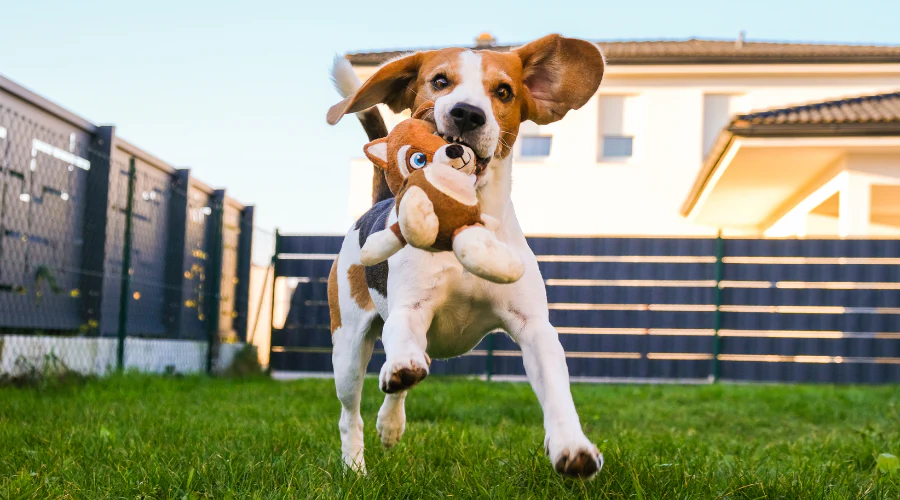
Physical exercise keeps a dog’s body healthy. Mental exercise keeps a dog’s behavior balanced. One without the other creates an incomplete routine.
Physical exercise mainly helps with:
- Muscle strength and joint health
- Weight control
- Releasing surface-level energy
Mental exercise, on the other hand, helps with:
- Focus and attention
- Impulse control
- Emotional regulation
- Reducing anxiety and boredom
A short mental workout can often calm a dog more effectively than a long walk because it forces the brain to slow down and engage.
Why Mental Stimulation Creates Calm Behavior
Mental training works because it engages the dog’s brain in a purposeful way. Instead of reacting to every sound or movement, the dog learns to pause and think. This pause is what reduces impulsive behavior.
When dogs regularly engage in problem-solving tasks, their stress levels drop. They feel satisfied, not overstimulated. Over time, this creates a calmer baseline temperament, making everyday obedience much easier.
This is why many professional trainers now emphasize mental stimulation as the foundation of good behavior rather than endless physical activity.
The Problem With Just Increasing Exercise
When owners notice bad behavior, they often respond by increasing physical exercise. Longer walks, more playtime, more running. While this might help temporarily, it often creates a new problem: the dog becomes physically fitter but mentally unchanged.
As endurance increases, the dog needs more and more activity to feel tired. This creates a cycle that is exhausting for the owner and ineffective for behavior correction. Anxiety, reactivity, and boredom remain unresolved.
Mental training breaks this cycle by addressing the cause, not the symptom.
Why Brain Training for Dogs Is So Important

This is exactly where Brain Training for Dogs becomes valuable.
The program is designed to provide structured mental stimulation that most dogs never receive. Instead of relying on punishment, shouting, or physical exhaustion, it uses simple brain games and challenges that teach dogs how to think, focus, and self-regulate.
What makes this approach powerful is that it works with a dog’s natural intelligence rather than against it. The exercises are designed to be engaging without being overwhelming, making them suitable for dogs of all ages and breeds.
How Brain Training for Dogs Complements Physical Activity
Brain Training for Dogs does not replace walks or playtime. Physical exercise remains important for overall health. However, mental training fills the gap that physical exercise cannot.
When mental training is combined with regular walks, dogs become calmer more quickly, respond better to commands, and show fewer stress-related behaviors. Owners often notice that their dog settles more easily at home and seems more content overall.
This balanced approach—body plus mind—is what creates lasting behavioral change.
Why Traditional Training Often Misses This Piece
Many traditional training methods focus heavily on commands and repetition. While these methods can teach obedience, they often fail to address emotional and mental needs. A dog might learn to sit on command but still struggle with anxiety, boredom, or impulsive reactions.
Mental training goes deeper. It teaches dogs how to manage themselves, not just how to respond to instructions. This is why brain-based training often produces more reliable, long-term results.
The Value of Brain Training for Dogs for Owners

For dog owners, the value of Brain Training for Dogs lies in its practicality and accessibility. The training can be done at home, without special equipment or fixed schedules. Sessions are short and easy to fit into daily routines.
The program is especially helpful for owners who have tried obedience classes or increased exercise without seeing lasting improvements. It offers a different perspective—one that focuses on understanding the dog rather than controlling it.
👉 You can explore the Brain Training for Dogs program here
(Review the full training system and decide if it suits your dog)
How Long Before You See Results?
Results vary depending on the dog and the behavior being addressed. Some dogs show improvements in focus and calmness within days. More ingrained behaviors may take a few weeks of consistent practice.
What makes mental training effective is that the changes tend to last. Instead of constantly managing behavior, owners begin to notice genuine improvement in their dog’s ability to relax and respond appropriately.
Signs Your Dog Needs Mental Stimulation
Many dogs that receive plenty of exercise still show signs of mental under-stimulation. These signs often include restlessness indoors, difficulty settling, attention-seeking behaviors, or destructive habits. These are not signs of a “bad dog,” but of an under-challenged mind.
Mental training provides an outlet for this unused intelligence.
Final Thoughts: Exercise the Mind, Not Just the Body
Physical exercise is necessary, but it is not a complete solution. Dogs need mental engagement just as much as they need movement. When the brain is ignored, behavior problems appear—no matter how active the dog is physically.
By adding mental stimulation through structured programs like Brain Training for Dogs, owners can create calmer, happier, and better-behaved dogs without relying on punishment or exhaustion.
If you want lasting change, the answer isn’t more miles walked—it’s a better-trained mind.
FAQs
Last Updated on February 10, 2026 by furryadminblog
