
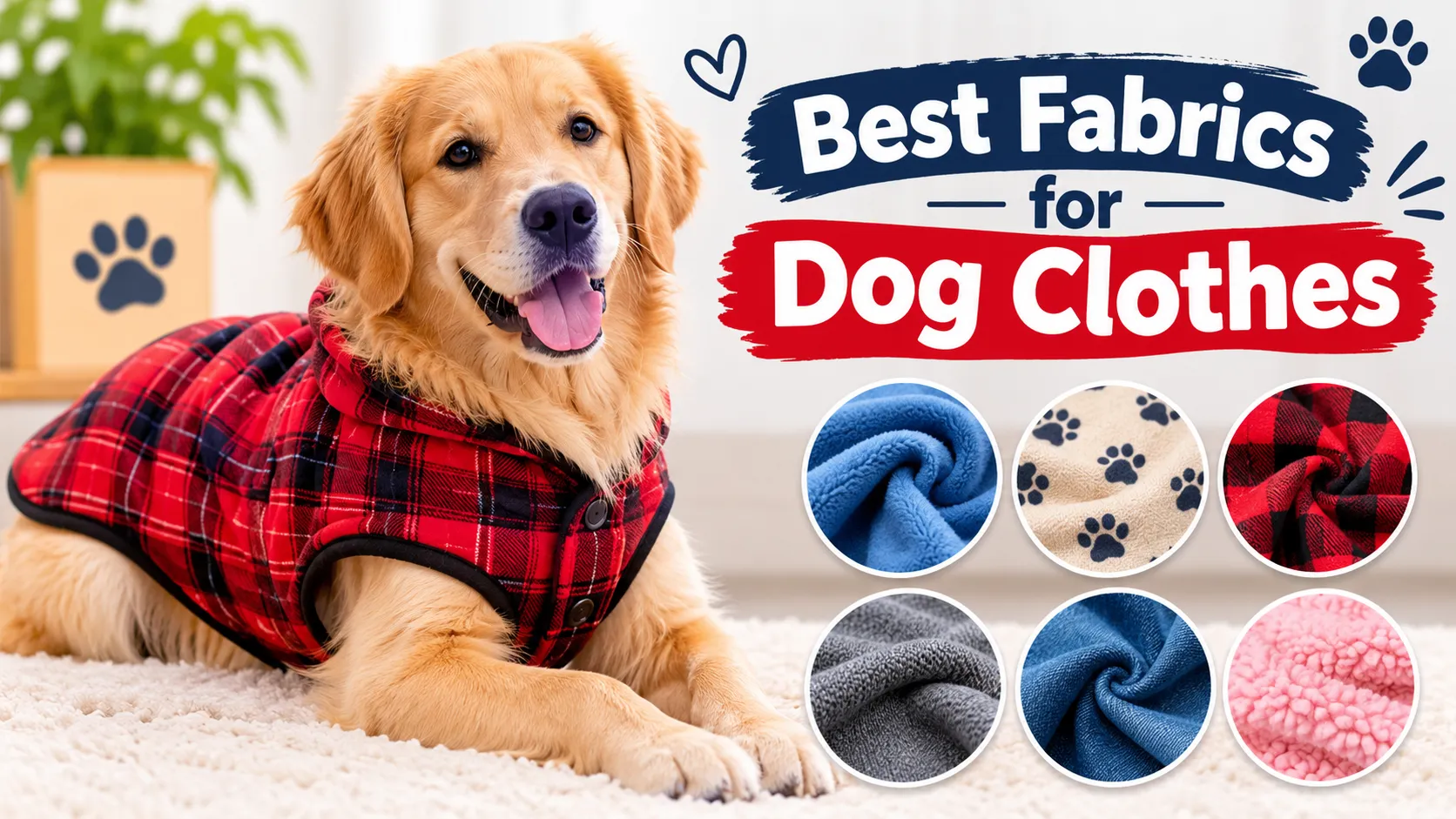
A dog can’t tell you the sweater itches. He can only scratch, shake, freeze on the spot or refuse to walk. That’s why fabric matters more than the colour, the print or the price tag.
The best fabrics for dog clothes are the ones your dog forgets he’s wearing: soft on the skin, light enough to breathe, and easy to wash after a muddy walk. Pick wrong and you end up with an overheated, itchy, sulking pet by the front door.
This guide goes through each material one by one, explains how coat type, breed and season change the answer, and gives you a simple checklist to use before you buy. It is written with Indian weather in mind, from Delhi’s summer heat to the damp of the monsoon.
Key Takeaways
- Cotton and bamboo are the safest all-round picks for warm weather and sensitive skin.
- Fleece is the easiest way to add warmth without adding weight.
- Coated polyester and ripstop nylon work for rain, but only as short-wear outer layers.
- Wool and cheap synthetic blends are the usual suspects behind itching.
- Your dog’s coat, breed and size matter as much as the fabric name on the label.
- Fit, seams and washing habits decide whether a good fabric stays comfortable.
What Are the Best Fabrics for Dog Clothes?
The best fabrics for dog clothes are soft, breathable and washable. Cotton and bamboo suit warm weather and sensitive skin, fleece suits cold weather, and coated polyester or ripstop nylon suits rain. The right choice depends on your climate, your dog’s coat and how long the garment stays on.
Why Fabric Matters More Than You Think
Dogs don’t sweat the way we do. They cool down mostly by panting, so a garment that traps heat hits them harder than it would hit you in the same weather. A shirt that feels fine to you can turn a small dog into a panting, restless one within half an hour.
Skin is the other half of the story. Vets have repeatedly pointed out that wool, nylon and polyester-heavy blends can set off itching in sensitive dogs. Even a “cotton blend” label deserves a second look, because the rest of it is often polyester or nylon, and that is where the trouble starts.
Your dog also can’t take the outfit off when it bothers him. So the job of spotting a problem falls to you. After any new garment, watch for these signs:
- Constant scratching or rubbing against furniture
- Red patches, bald spots or small scabs under the fabric
- Head shaking, itchy ears or a runny nose
- Heavy panting or restlessness indoors
- Freezing in place or refusing to walk
If you see any of these, take the garment off and let the skin settle. If the redness or scratching continues, speak to your vet.
Fabric-by-Fabric Breakdown
Cotton
Cotton is the reliable workhorse. It’s soft, lets air move through, and washes without drama. Choose a tight weave if you hate picking hair off clothes, since loose weaves hold on to fur. This is also why cotton is the first choice for neckwear, and our guide to the best dog bandanas for every season leans on it for the warmer months.
Its weakness is moisture. Wet cotton gets heavy and cold, so skip it for monsoon walks.
Bamboo Fabric
Bamboo feels almost silky and handles moisture well. It’s a smart pick for dogs with sensitive skin or allergies, and for pyjama-style loungewear. The trade-off is a higher price and a little less toughness than cotton, so it suits indoor and light outdoor use better than rough play.
Fleece
Fleece is light for the warmth it gives, which makes it the go-to for winter coats and indoor layers. It dries quickly too. Keep it off thick-coated breeds, though, because they overheat fast. For a full cold-weather kit beyond clothing, see our list of dog accessories for winter walks.
Light Mesh and Jersey Knit
A midweight jersey with a little spandex moves with your dog instead of against him, which makes it a solid base layer for walks and play. Open mesh panels add airflow on hot days. Check the stitching, because cheap knits pill quickly and lose their stretch after a few washes.
Polyester and Ripstop Nylon
These two earn their place in raincoats and windbreakers. They’re tough, they dry quickly, and ripstop’s crosshatch weave stops small tears from spreading.
The catch is breathability. Treat them as short-wear outer layers and never as everyday shirts, and choose a mesh or cotton lining if the coat will be on for more than a short walk.
Wool
Wool is warm, no argument there. It is also itchy for many dogs and slow to dry. If you want a knit for a festive photo or a chilly evening, pick fine, soft wool and keep the first session short. Our roundup of dog Christmas outfits and accessories covers which festive pieces are comfortable enough to wear for a while.
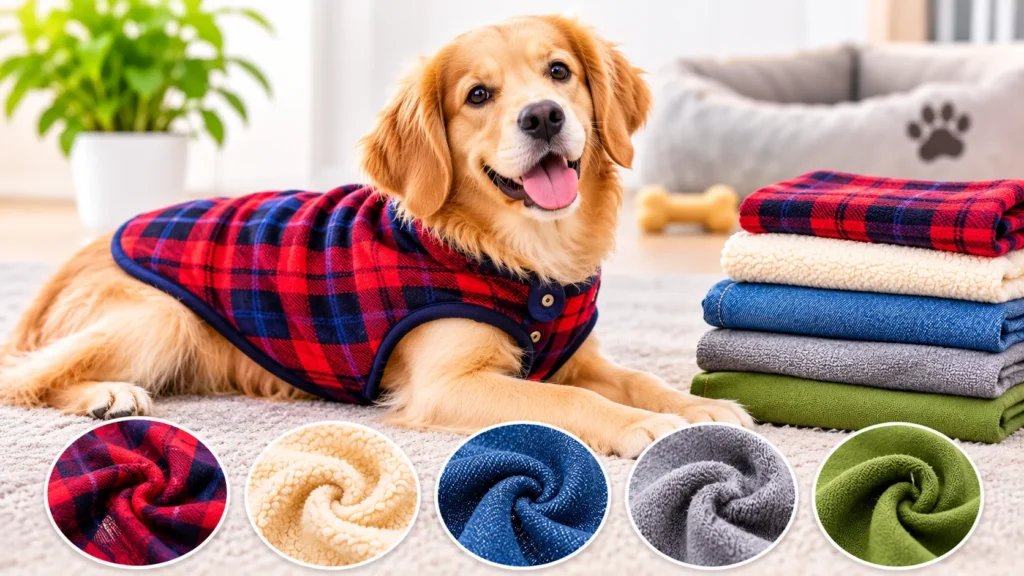
| Fabric | Best For | Watch Out For |
| Cotton | Summer shirts, bandanas, everyday wear | Gets heavy and cold when wet |
| Bamboo | Sensitive skin, loungewear, pyjamas | Higher price, less hard-wearing |
| Fleece | Winter coats, indoor warmth | Overheating on thick-coated dogs |
| Light mesh / jersey knit | Hot days, active dogs, base layers | Cheap versions pill and lose shape |
| Coated polyester / ripstop nylon | Raincoats, windbreakers | Low breathability, short wear only |
| Wool | Cold, dry weather, short sessions | Itching, slow drying, special washing |
How Coat Type and Breed Change the Choice
Short-haired and lean dogs such as Beagles, Dachshunds and Greyhounds lose heat quickly. A fleece or soft knit layer makes a real difference for them in winter.
Thick-coated dogs such as Huskies, Golden Retrievers and Labradors usually don’t need extra insulation, and a heavy garment can overheat them. For these dogs, clothes are about rain or protection, not warmth.
Flat-faced breeds such as Pugs and Bulldogs struggle with heat because of their short airways. Stick to the lightest cotton or mesh, and read our guide to accessories for Pugs and other flat-faced breeds before you dress them.
Small and toy breeds feel the cold sooner and also tire under heavy fabric. Light, soft layers work best, and our list of accessories for small dogs shows what pairs well with them. Fluffy breeds like Shih Tzus and Pomeranians are a separate case, since their coats trap heat, so check the accessories for Shih Tzus and Pomeranians too.
Matching Fabric to the Indian Season
Summer: Light cotton or bamboo, a loose fit, and only for short outings. Many dogs here are better off with no clothes at all in peak heat.
Monsoon: A coated polyester or nylon raincoat with a mesh lining. Take it off as soon as you’re home and dry your dog properly, since damp fur under fabric is where skin problems begin.
Winter: Fleece or a soft knit, mainly for short-haired, small or older dogs. Big dogs with dense coats rarely need an extra layer.
Festive season: Diwali and wedding season bring dressy outfits. Choose a cotton-based kurta or bandana over shiny synthetic fabric, and keep the wear time short. Our ideas for Diwali, Christmas and birthday outfits follow the same rule.
How to Choose the Right Fabric: 6 Steps
- Check your dog’s coat. Short-haired, small, senior and lean dogs feel the cold. Thick-coated breeds usually don’t need clothes.
- Decide the job. Warmth, rain protection or just style? The job picks the fabric.
- Read the label. Look for the exact fibre percentage. Vague phrases like “soft blend” tell you nothing.
- Test the feel. Rub the inside against your own inner arm. If it scratches you, it will scratch your dog.
- Check the fit. You should be able to slide two fingers under the garment. Your dog must be able to walk, sit and relieve himself freely.
- Do a trial run. Keep the first wear to 15 or 20 minutes at home, then check the skin and watch his behaviour.
Washing and Care
Even the best fabric goes wrong if it’s looked after badly. Dirt, drool and damp breed bacteria against the skin, so wash garments after every few wears. Use a mild, fragrance-free detergent, rinse well, and dry fully before the next use. Leftover soap irritates skin just as much as a rough fibre does.
The same rules apply to anything your dog lies on. If you’re comparing fabrics for bedding too, our guide to premium dog mats worth buying explains which materials hold up to washing.
FAQ
What is the safest fabric for dog clothes?
Cotton and bamboo are the safest choices for most dogs. Both are soft, breathable and less likely to cause skin trouble than wool or low-grade synthetics.
Is polyester bad for dogs?
Not always, but it can bother dogs with sensitive skin and it traps heat. It works best in short-wear items like raincoats, not in all-day shirts.
Can dogs wear wool sweaters?
Some can, but wool itches many dogs and stays damp for long. Fleece or soft knits are an easier option for most pets.
Do all dogs need clothes?
No. Thick-coated breeds rarely need them, while small, short-haired and senior dogs often do. Clothes should solve a real problem like cold or rain, not just add style.
Final Thoughts
Picking the best fabrics for dog clothes comes down to three things: the weather, your dog’s coat and how long the garment stays on. Choose breathable, soft materials, test them slowly, wash them well, and take the outfit off at the first sign of discomfort.
Ready to dress your dog the comfortable way? Browse the FurryInSwag range of dog accessories and pick something your pet will actually enjoy wearing.