
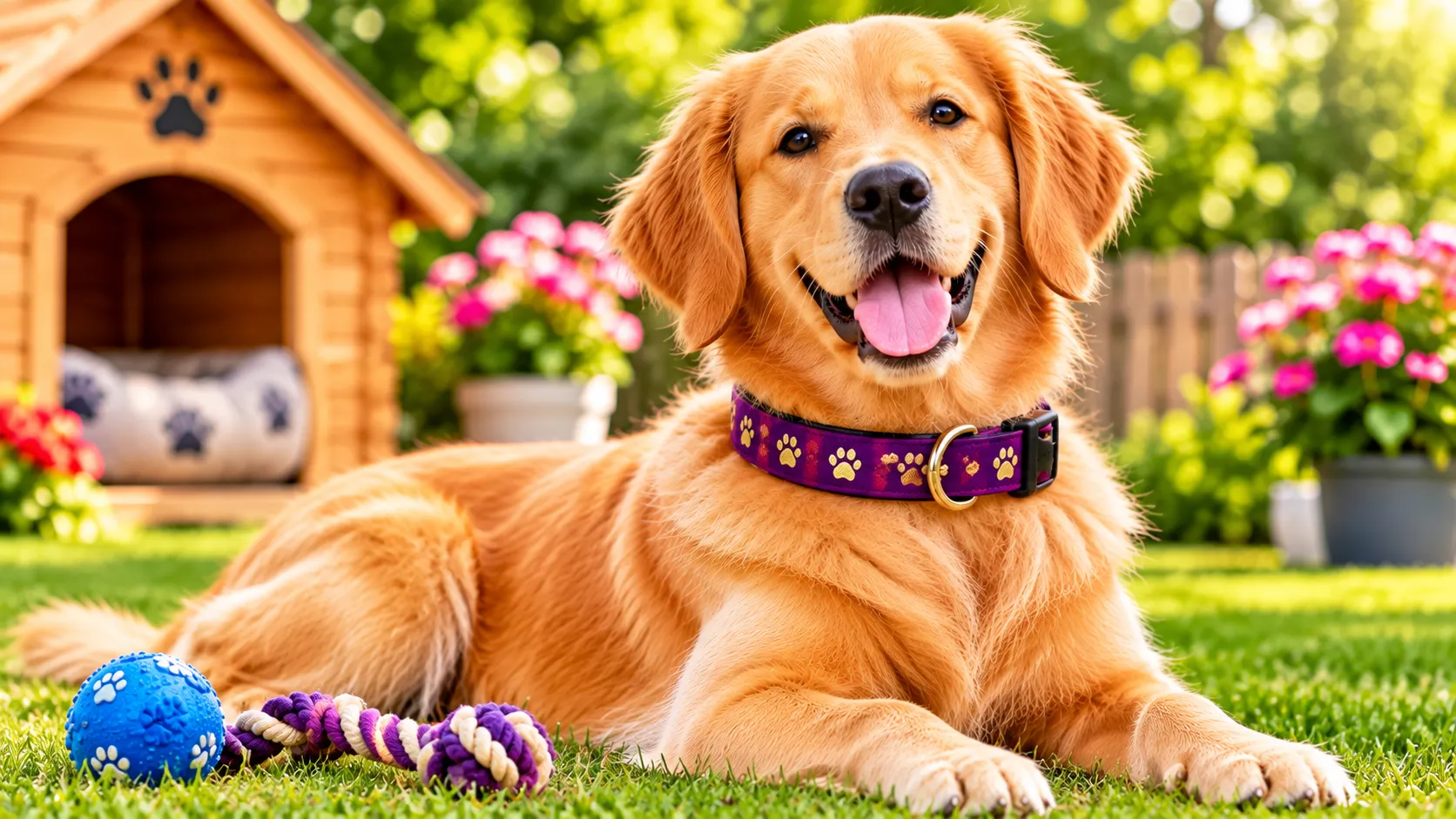
The healthiest dog collar is the one your dog forgets they are wearing. It sits flat, never squeezes the throat, does not rub the skin, and does not stay damp for hours after a rain walk. That sounds simple, yet plenty of collars fail at least one of those tests.
Table of Contents
Some are stiff. Some trap moisture against the neck. And many get clipped to a leash that yanks on the throat every time a dog lunges at a pigeon. This guide covers what makes a collar healthy, which materials are gentlest on skin, which dogs should not walk on a collar at all, and how to fit one properly.
Key Takeaways
- A healthy collar is lightweight, smooth-edged, breathable, and fitted so you can slide two fingers under it (one finger for very small dogs).
- Cotton, hemp and Biothane are the gentlest everyday materials. Nylon suits many dogs but can irritate sensitive skin.
- For walking, a harness is usually easier on the neck. Keep a flat collar on as well, mainly for ID tags.
- Pugs, bulldogs and other flat-faced dogs, small breeds, and dogs with airway, neck or eye problems should walk on a harness.
- Prong, choke and other metal collars put concentrated pressure on the neck and are best avoided.
What Is a Healthy Dog Collar?
A healthy dog collar is a well-fitted, lightweight collar made from soft, breathable material that does not press on the windpipe, rub the skin, or trap moisture. It holds ID tags comfortably and is paired with a harness for walks when the dog pulls or has a neck, airway or eye concern.
Why the Healthiest Dog Collar Matters
A dog’s neck packs the windpipe, major nerves, the thyroid and a lot of delicate muscle into a small space. Veterinary guidance from Preventive Vet points out that even a plain flat collar can injure the neck, trachea, front-leg nerves, eyes, ears and thyroid when a dog bolts to the end of a leash. One sudden jerk is enough.
The risk is higher for some dogs. Pulling on a collar can aggravate a collapsing trachea and can seriously hurt a dog with intervertebral disc disease, according to PetsRadar’s guide on collars and harnesses.
Skin matters too. A collar that stays damp or has a rough edge can cause chafing and hair loss over weeks, long before you notice. The good news is that most of these problems are easy to prevent once you know what to look for.
Collar or Harness: Which Is Healthier for Walks?
For everyday walking, a harness is usually the gentler option because it spreads leash pressure across the chest instead of the throat. Dr. Leanne Lilly, a veterinary behaviorist at Ohio State University, told Business Insider that harnesses are generally the best walking choice for this reason. She also advises checking with your own vet first.
It is not all or nothing. A Thornbury veterinary clinic guide suggests a flat collar for medium and large dogs that never pull, and a Y-shaped harness for dogs under about 15 kg or any dog that pulls even occasionally. It also warns against flat-band harnesses, because they restrict shoulder movement.
Harness design matters as well. A back-clip harness can make pulling easier, so a front-clip or Y-front design is often the better pick for dogs that tug.
The strongest setup for most dogs is both pieces of gear. The collar holds ID and rabies tags all day. The harness handles the leash.
Dogs that should walk on a harness, not a collar
- Flat-faced breeds: Pugs, bulldogs and other flat-faced (brachycephalic) breeds, who often have narrow airways
- Small dogs and puppies: Toy and small breeds and young puppies, whose necks are delicate
- Dogs with health conditions: Any dog with a collapsing trachea, spine or neck problem, heart condition or eye condition. Your vet should confirm the right setup.
- Pullers: Dogs that lunge or pull, since each tug lands on the throat
Healthiest Dog Collar Materials Compared
Material decides whether a collar is comfortable at hour one and still comfortable at week six. Here is how the common options compare.
| Material | Why it works | Watch out for | Best for |
| Cotton | Soft and breathable, easy to wash | Stretches when wet and wears faster | Everyday wear, mild sensitivities |
| Hemp or hemp-cotton | Resists odor and mildew, softens with use | Slightly rough when new | Sensitive skin, outdoor dogs |
| Biothane | Waterproof, smooth surface, wipes clean | Costs more, fewer styles | Swimmers, rainy-season walks, allergy-prone dogs |
| Nylon | Light, affordable, durable | Can irritate some dogs and hold moisture | Dogs with healthy skin; pick soft-edged webbing |
| Smooth leather | Breathable and sturdy | Breaks down if often soaked; needs conditioning | Dry climates, low-moisture routines |
A word on labels. Plenty of brands print hypoallergenic on the tag, but that claim only means something when the maker can tell you what the collar is actually made from and how it is dyed. When a dog scratches at the neck, the cause is usually friction, trapped moisture or contact with a harsh dye. Match the material to the cause.
Humid weather deserves a special mention. A collar that stays wet keeps the skin underneath damp, so choose a quick-drying or waterproof material if your dog swims, plays in the rain, or lives somewhere humid.
Which Collar Style Is the Healthiest?
Flat buckle collar
The everyday standard. A smooth, well-fitted flat collar is fine for carrying ID tags, and it works for leash walks only if your dog walks calmly without pulling.
Martingale collar
A martingale has an extra loop that tightens slightly when the dog pulls back, so it cannot slip over the head. It suits narrow-headed dogs such as greyhounds and escape artists. Correctly sized, it tightens only to the point of a snug fit and does not choke.
Collars to avoid
Prong, choke and chain collars concentrate pressure on a small area of the neck. The same Thornbury clinic guide notes that round and metal collars can injure the neck and may cause scarring or scabbing, and that head halters can injure the nasal bones. If your dog pulls, a Y-front harness and reward-based training will do more good than any corrective collar.
How to Choose and Fit the Healthiest Dog Collar
- Decide the collar’s job. Is it for ID tags, or will you clip a leash to it? That decides whether a collar is enough or you also need a harness.
- Pick the material. Soft, breathable material for sensitive skin. Waterproof material for swimmers and monsoon walkers.
- Measure the neck. Use a soft tape around the part of the neck where the collar will rest, and check the size chart before you order.
- Do the finger test. You should be able to slide two fingers between collar and neck on a medium or large dog, and one finger on a very small dog. Your dog should breathe and move the head freely.
- Inspect the details. Look for smooth edges, tidy stitching, no loose threads, and a buckle that is not heavy for the dog’s size.
- Check the skin and keep it clean. Lift the collar every few days and look at the skin underneath. Clean the collar regularly. Nylon and cotton can usually be machine washed, while leather needs a damp cloth and a leather-safe conditioner.
Puppies outgrow collars fast, so recheck the fit often while they are growing.
Signs a Collar or Harness Is Not Working for Your Dog
Stop using the collar for leash walks and talk to your vet if you notice any of these:
- A honking cough during or after walks
- Gagging when the leash goes tight
- Neck sensitivity, or trouble breathing during exercise
- Red, watery or discharging eyes after collar pressure
- Hair loss, redness or scabs under the collar
If you switch to a harness and see redness under the armpits or chest, or stiffness in the front legs after walks, refit it or try another design. Avoid leaving a harness on all day, since long wear can cause hot spots and matting.
Frequently Asked Questions
What is the healthiest type of collar for a dog?
A lightweight, well-fitted flat collar in soft, breathable material is the healthiest everyday collar for carrying ID tags. For leash walking, most vets favor a harness, especially for small, flat-faced or pulling dogs.
Is a harness healthier than a collar?
For walking, usually yes, because a harness moves leash pressure off the neck. Choose a Y-shaped or front-clip design, since flat-band harnesses restrict shoulder movement and back-clip designs can encourage pulling.
Should my dog wear a collar all the time?
A flat collar with ID tags is a good everyday piece because it helps a lost dog get home. Check the skin under it regularly, keep it clean and dry, and remove it if you see any irritation.
What is the best collar for a dog with sensitive skin?
Soft, breathable materials such as cotton, hemp or Biothane are the usual picks. Keep the collar clean and dry, and see your vet if redness, itching or hair loss continues.
Final Thoughts: Choosing the Healthiest Dog Collar
The healthiest dog collar is not a single product. It is a good match between your dog’s neck, skin and walking habits. Choose a soft, breathable material, get the fit right with the two-finger check, and use a harness for walks whenever your dog pulls, is small, or is flat-faced.
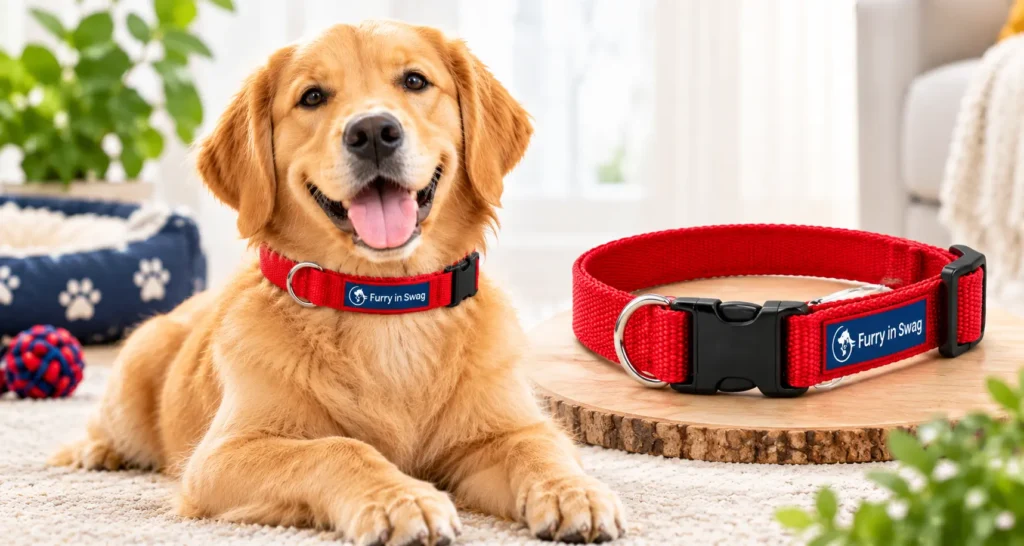
Ready to pick one? Measure your dog’s neck first, then browse the FurryInSwag collar range in sizes S, M and L and choose the size that passes the finger test.