
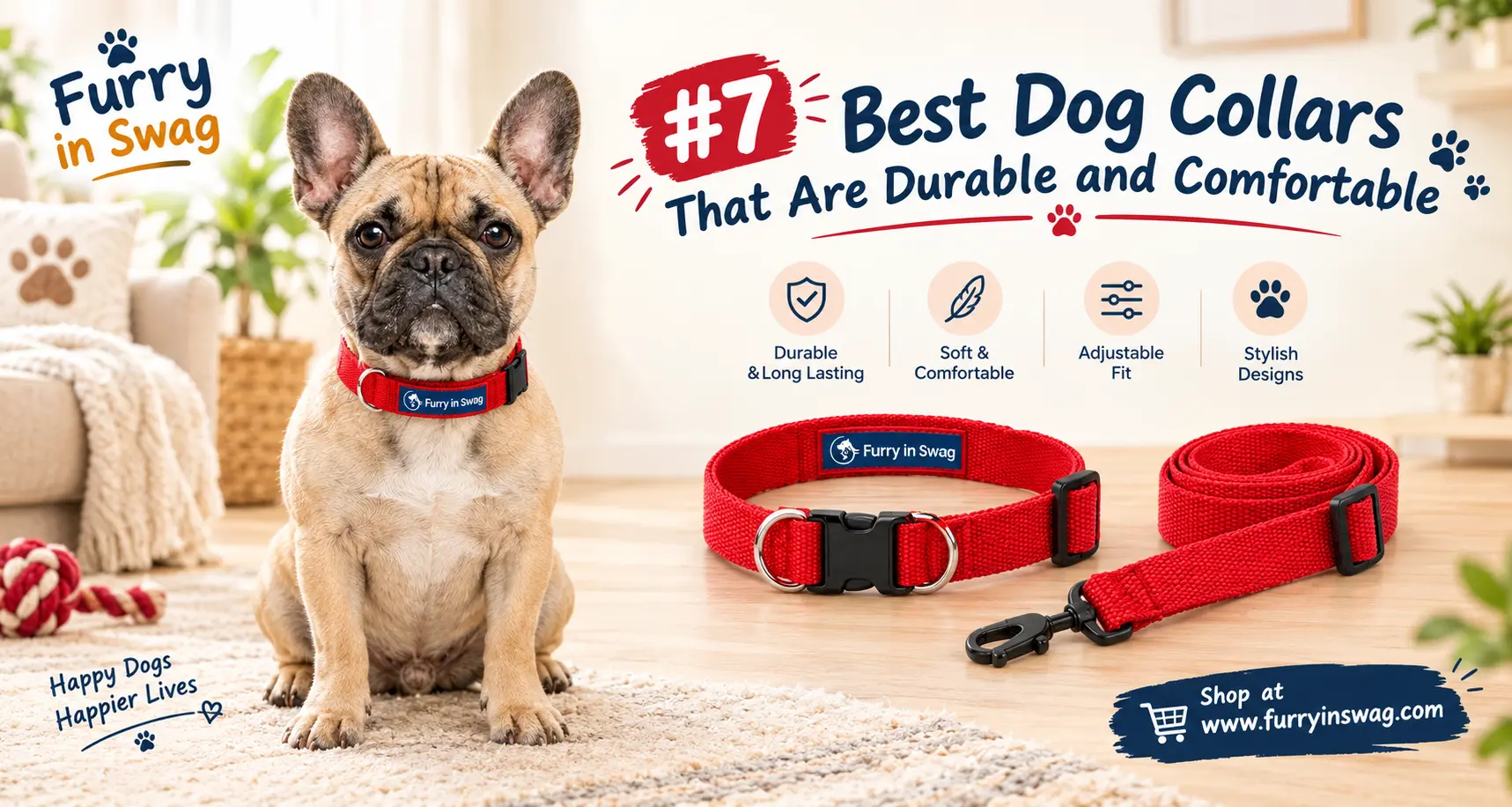
A collar is the one piece of gear your dog wears almost every day, so it has to do two things well: last through daily walks, rain and play, and stay comfortable against the neck. A collar that looks good but rubs, or one that feels soft but frays within a few months, is not worth the money.
Table of Contents
This guide to the best dog collars covers seven styles that balance strength and comfort, from the classic everyday collar to martingale and reflective options. For each one you will see what it does best, which dogs it suits and what to check before you buy. You can start with the collars at Furry in Swag and use this guide to choose the right style.
Key Takeaways
- Durability comes from the details. Firm stitching, a sturdy buckle and a solid metal ring matter more than the label.
- Comfort comes from fit. Two fingers should slide under the collar, and nothing should rub or pinch.
- Match the style to the dog. Everyday collar for most dogs, martingale for slippers, reflective for night walks, wider for big dogs.
- Size matters at every age. Puppies outgrow collars quickly, so choose an adjustable one and recheck the fit often.
- Inspect regularly. Replace a collar at the first sign of fraying, cracked hardware or loose stitching.
What Makes a Dog Collar Durable and Comfortable?
A durable and comfortable dog collar has strong, even stitching, a secure buckle or clasp, a solid metal ring for the leash and a smooth inner edge that does not rub. It fits with about two fingers of space, suits the dog’s size and coat, and holds its shape after washing.
What Should You Check Before Buying a Dog Collar?
Look at the collar closely before you look at the colour. Four things decide how long it lasts and how it feels:
- Stitching. Even, tight stitches at the ends and around the ring. Loose or uneven stitching is the first place a collar fails.
- Hardware. The buckle should click firmly, and the ring should be solid, not hollow or thin. Hardware is the part that carries the load when a dog pulls.
- Edges and lining. Smooth inner edges and a soft lining prevent rubbing, which matters most for short coats and sensitive skin.
- Width. Wider collars spread pressure over more of the neck, which suits larger dogs, while narrow ones suit small breeds.
Which Dog Collars Are Worth Buying?
These seven styles cover most dogs and most daily needs. You can use one for everyday wear and keep another for walks, training or evenings.
1. The Classic Everyday Collar
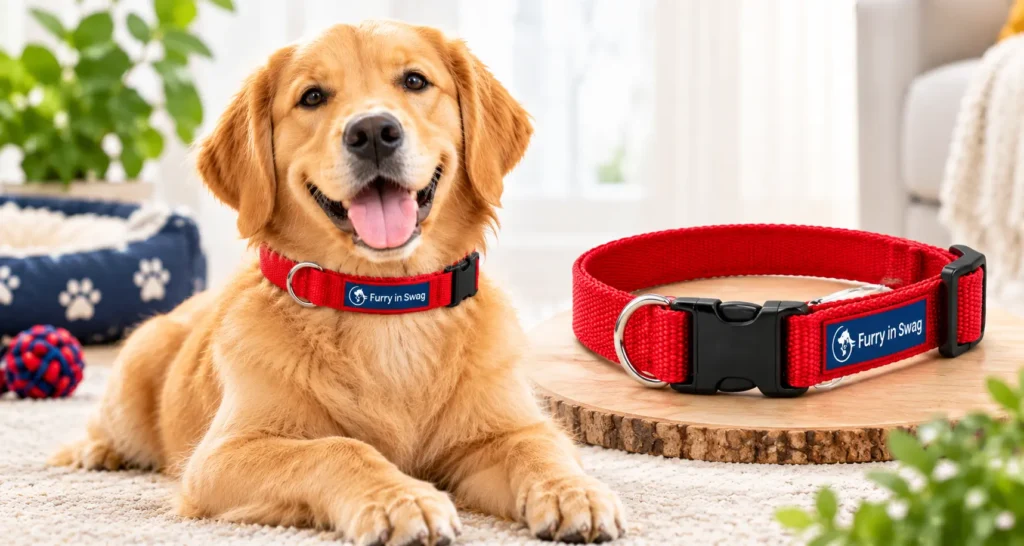
A classic collar is what most dogs wear most days: simple, easy to put on and available in colours that suit any outfit. It is the one to buy first, and the one that holds the ID tag.
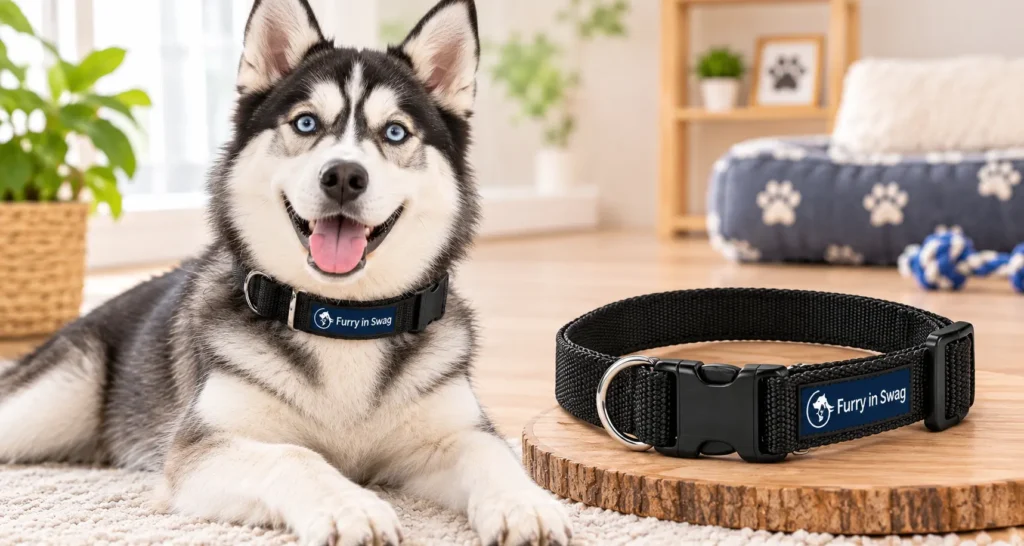
The FIS Premium Classic Collar in Black and the FIS Premium Classic Collar in Red give you two versatile everyday shades. Pair either with a matching leash for a complete walking look.
Best for: everyday wear and carrying an ID tag.
2. The Padded Comfort Collar
A padded or lined collar adds a soft layer between the webbing and the skin. It helps dogs with short coats, sensitive skin or a habit of rubbing, because there is less friction at the neck.
Choose a padding that is washable and dries quickly, so it stays fresh. Padding also makes the collar look thicker, so check that it still suits your dog’s neck size.
Best for: short-coated dogs and sensitive skin.
3. The Martingale Collar
A martingale collar tightens slightly when a dog pulls back, which stops it slipping over the head. It is made for dogs with narrow heads, such as greyhounds and whippets, and for dogs that wriggle out of regular collars.
It should be sized so that it tightens only to the neck size and never closes fully. Use it for walks while you are holding the leash, and avoid leaving it on a dog that is unsupervised.
Best for: narrow-headed breeds and escape artists.
4. The Quick-Release Buckle Collar
A quick-release collar clicks shut and opens with a squeeze. It is useful for dogs that dislike having things pulled over the head, and for owners who take the collar off often for grooming or baths.
Check that the clasp is firm and does not pop open under a hard pull. If your dog is a strong puller, read our guide on how to stop your dog from pulling on the leash.
Best for: fidgety dogs and quick on-and-off use.
5. The Reflective Collar
A collar with reflective stitching or a reflective strip catches headlights and torch beams, which makes your dog easier to see at dusk, at night and on foggy mornings. It is a simple safety upgrade for evening walks.
A reflective collar helps, but it does not replace a light on a dark road. Pair it with a bright bandana or a clip-on light for better visibility.
Best for: evening walks and winter months.
6. The Heavy-Duty Collar for Large Dogs
Large and strong dogs need a wider collar with thicker webbing, strong stitching and robust hardware. The extra width spreads pressure across the neck, and the stronger build copes with sudden pulls.
Match it with a sturdy leash. Browse the leash collection for a durable pairing, and check the fit more often, since a heavy collar can rub if it sits too loose.
Best for: large breeds and strong pullers.
7. The Adjustable Puppy Collar
Puppies grow fast, so a lightweight collar with wide adjustment is the practical choice. It should be soft, light and easy to loosen, because a puppy’s neck is small and sensitive.
Check the fit weekly. The Starter Walkies Set gives new puppy parents a collar and leash together for the first walks, and a simple upgrade later as the puppy grows.
Best for: puppies and first-time dog owners.
Quick Guide: Which Collar for Which Dog?
| Collar type | Best for | Keep in mind |
| Classic everyday | Most dogs, daily wear, ID tag | Check stitching and buckle |
| Padded comfort | Short coats, sensitive skin | Choose washable padding |
| Martingale | Narrow heads, escape artists | Walks only, with supervision |
| Quick-release | Fidgety dogs, easy on and off | Make sure the clasp is firm |
| Reflective | Evening and foggy walks | Add a light on dark roads |
| Heavy-duty | Large breeds, strong pullers | Pair with a sturdy leash |
| Adjustable puppy | Puppies and growing dogs | Recheck the fit weekly |
How Do You Choose the Right Dog Collar?
- Measure the neck. Use a soft tape where the collar will sit, and compare the number with the size details on the product page.
- Choose the style. Think about your dog’s coat, size and habits: everyday, padded, martingale, reflective or heavy-duty.
- Check the build. Look at the stitching, the buckle and the metal ring before you pay.
- Test the fit. Slide two fingers under the collar, and make sure it cannot slip over the head.
- Add a leash. A matching leash or a ready-made set saves time and looks coordinated.
Frequently Asked Questions
How tight should a dog collar be?
Snug enough that it cannot slip over the head, and loose enough to slide two fingers between the collar and your dog’s neck. Check the fit again after a few days, since coats, weight and growth can change how a collar sits.
How do I measure my dog for a collar?
Wrap a soft measuring tape around the neck where the collar will sit, then add about two fingers of space. Compare the number with the size details on the product page. If your dog falls between two sizes, choose the larger one and use the adjuster.
How often should I replace a dog collar?
Replace it as soon as you see fraying, cracked hardware, a loose buckle or stitching that is coming undone, or when your dog outgrows it. Check the collar every few weeks, especially if your dog swims or plays rough.
Is a collar or a harness better for walks?
A collar suits everyday wear and keeps the ID tag on your dog. For dogs that pull hard, small breeds with delicate necks or flat-faced dogs, a harness is often more comfortable for walks. Many owners use both, with the collar for ID and a harness for the leash.
Should my dog wear a collar all the time?
Many owners keep one on so the ID tag is always attached. Check the neck regularly for rubbing or hair loss, and dry the collar properly after swims or baths. Take it off if your dog’s skin looks irritated.
Final Thoughts
The best dog collars are the ones that fit properly, last through daily use and suit your dog’s size, coat and habits. For most dogs, a well-made classic collar is the right start, with a reflective, padded or heavy-duty collar added when the walk or the dog calls for it. Ready to choose? Browse collars, leashes, bandanas and bows at Furry in Swag, or see our guide to dog gift ideas for dog lovers if you are buying for someone else.