
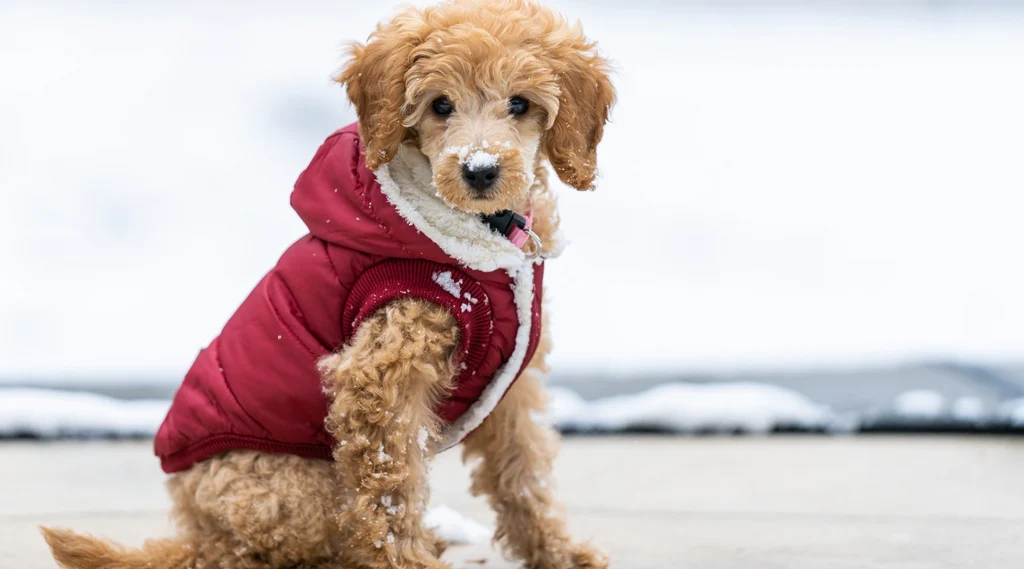
A dog cannot tell you a sweater feels itchy or a raincoat is too stiff to move in comfortably. The only signals you get are scratching, pulling away, or a dog that stiffens up and refuses to walk normally, and by then the fabric has already caused a real problem. Choosing the right material matters just as much as picking the right size.
Table of Contents
This dog clothes fabric guide breaks down which materials actually work for comfort and safety, organized by season and purpose, along with a few fabrics that look fine on the rack but consistently cause issues once a dog actually wears them.
Key Takeaways
- Breathable natural fibers like cotton and bamboo work best for warm weather and sensitive skin.
- Fleece and merino wool provide real insulation for cold weather without feeling stiff or heavy.
- Polyester and nylon blends offer durability and water resistance for active or outdoor focused dogs.
- Silk, low quality synthetic blends, and rayon should generally be avoided due to durability and comfort issues.
- Seam quality and fit matter just as much as the fabric itself in preventing chafing and irritation.
Why Fabric Matters More Than Most Owners Realize
Dogs experience fabric very differently than people do. Their skin is generally more sensitive than human skin, and a material that feels perfectly fine to us can cause real irritation against fur and skin that was never meant to be covered in clothing to begin with.
The right fabric should allow normal movement without restriction, help regulate body temperature rather than fighting against it, and hold up to a dog’s typical activity level, whether that means rolling in the grass, running through mud, or spending an entire winter walk outdoors.
1. Cotton
Cotton remains the most popular fabric for dog clothing for good reason. It is soft, breathable, and gentle even on sensitive skin, making it a safe default choice for everyday t-shirts, light layers, and pajama style clothing.
Because it allows air to circulate freely, cotton helps prevent overheating during warmer months, and its absorbent quality helps pull moisture away from the skin rather than trapping it against the body.
- Soft and breathable, gentle on sensitive or allergy prone skin
- Absorbent quality helps pull moisture away from the skin
- Easy to machine wash and maintain for regular wear
- Best suited to spring, summer, and mild indoor wear
2. Fleece
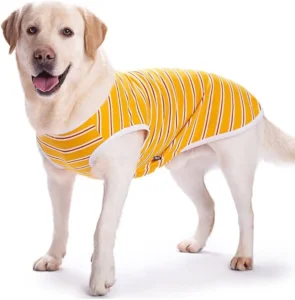
Fleece provides real insulation without adding much weight, which makes it a genuinely practical choice for cold mornings and winter walks. Its soft texture also tends to sit comfortably against the skin without causing the itchiness some other warm fabrics can.
The one downside worth knowing is that fleece tends to attract loose fur and static, which means a bit more lint rolling than some other materials, though this is a minor tradeoff for the warmth it provides.
- Lightweight insulation ideal for cold mornings and winter walks
- Soft texture that rarely causes itchiness against the skin
- Tends to attract loose fur and static more than other fabrics
- Machine washable and generally low maintenance
3. Wool, Specifically Merino Wool
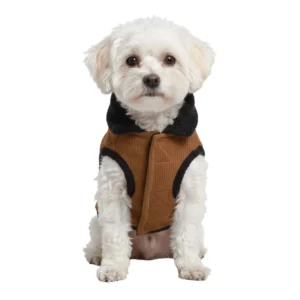
Wool offers strong natural insulation for genuinely cold conditions, but not all wool is created equal when it comes to comfort. Standard wool can feel scratchy or irritating against a dog’s skin, while merino wool is a much softer variety that avoids this issue.
Wool also has a natural ability to wick away moisture while still retaining warmth, which makes it useful for dogs spending extended time outdoors in cold, damp conditions.
- Merino wool offers warmth without the scratchiness of standard wool
- Naturally wicks moisture while retaining insulating warmth
- Best reserved for genuinely cold weather rather than mild temperatures
- Requires gentler washing than cotton or fleece to maintain quality
4. Polyester and Polyester Blends
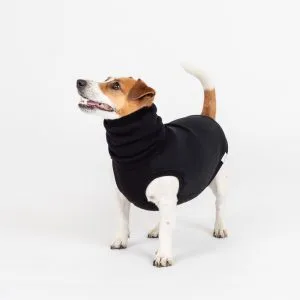
Polyester is valued mainly for its durability, resisting wrinkles, shrinking, and fading far better than most natural fibers. This makes it a common choice for active wear and clothing that needs to hold up to regular outdoor activity.
Quality matters significantly here. A well made polyester blend can be comfortable and functional, while a cheap, low grade version can trap heat and feel stiff against the skin, which is part of why this fabric gets mixed reviews depending on the specific product.
- Highly durable, resists wrinkles, shrinking, and fading
- Quality varies significantly between well made and cheap versions
- Often blended with other fibers to balance durability and comfort
- A practical choice for active dogs who need clothing that holds up
5. Nylon
Nylon is the go to choice for waterproof or water resistant outer layers, commonly used in raincoats and outdoor jackets. It sheds water effectively and dries quickly, which matters a lot for a dog that gets caught in unexpected rain during a walk.
This fabric works best as an outer shell layer rather than something worn directly against the skin, often paired with a softer lining underneath for comfort.
- Excellent water resistance for rainy weather outer layers
- Dries quickly after exposure to rain or wet conditions
- Best used as an outer shell rather than a layer against bare skin
- Lightweight enough not to restrict normal movement

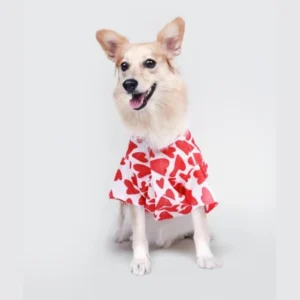
6. Bamboo
Bamboo fabric has grown in popularity for dog clothing thanks to its naturally antibacterial properties and exceptional softness, making it a strong option for dogs with allergies or particularly sensitive skin.
It also tends to be more breathable than standard cotton, which makes it a good choice for warm climates or dogs prone to overheating during summer activity.
- Naturally antibacterial, well suited to sensitive or allergy prone skin
- More breathable than standard cotton in warm conditions
- Soft texture that rarely causes irritation
- An eco friendly option compared to many synthetic alternatives
7. Neoprene
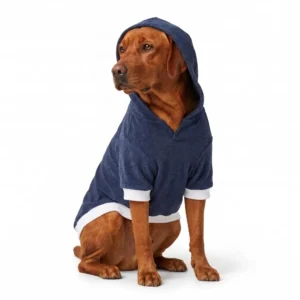
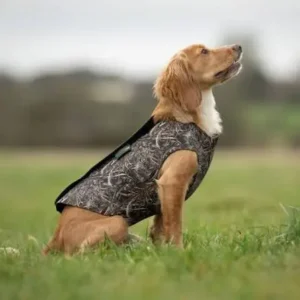
Neoprene is a specialty fabric best known for its use in life jackets and wetsuits, offering genuine water resistance combined with insulation. For dogs that swim regularly or spend time in wet, cold conditions, this material provides functional benefits standard fabrics cannot match.
This is not an everyday fabric choice, but rather a targeted material for specific activities like swimming, boating, or rainy weather adventures where both buoyancy and insulation genuinely matter.
- Provides both water resistance and insulation in one material
- Commonly used for dog life jackets and wetsuits
- Best suited to swimming or wet weather activities specifically
- Rinse and air dry rather than machine washing regularly
Fabric Comparison at a Glance
| Fabric | Best Season | Best For | Care Level |
| Cotton | Spring, summer | Everyday wear, sensitive skin | Easy, machine washable |
| Fleece | Fall, winter | Cold weather warmth | Easy, machine washable |
| Wool (merino) | Winter | Deep cold, natural insulation | Moderate, gentle wash |
| Polyester blend | Any season | Durability, active wear | Easy, low maintenance |
| Nylon | Rainy season | Waterproof outer layers | Easy, wipe or machine wash |
| Bamboo | Spring, summer | Sensitive or allergy prone skin | Easy, machine washable |
| Neoprene | Wet conditions | Swimming, rain, life vests | Rinse and air dry |
Fabrics Worth Avoiding
A few fabrics show up in dog clothing despite consistently causing problems once a dog actually wears them regularly. Knowing what to skip is just as useful as knowing what to look for.
| Fabric | Why to Avoid It |
| Silk | Delicate, tears easily during normal activity |
| Low quality synthetic blends | Poor breathability, can trap heat and moisture |
| Rayon | Weakens significantly when wet, poor durability |
| Stiff, unlined vinyl or plastic | Restricts movement, can cause chafing |
Fit and Comfort Checklist
- Check that seams are smooth and flat, since rough seams cause chafing during movement
- Avoid small embellishments like buttons or sequins that could become choking hazards
- Make sure the fabric allows full range of motion at the shoulders and hips
- Choose machine washable fabrics for anything worn regularly
- Test new clothing for a short period first to watch for scratching or discomfort
Rounding Out Your Dog’s Wardrobe
Fabric choice applies well beyond jackets and sweaters. The same comfort principles matter for bandanas and other accessories your dog wears regularly, and our guide on the best dog bandanas for every season and occasion covers which fabrics work best for that specific accessory across the year.
If you are building out a full wardrobe rather than a single piece, our guide on premium dog accessories for style and comfort covers collars, harnesses, and other everyday pieces worth pairing with the right fabric choices above.
Frequently Asked Questions
What is the most breathable fabric for dog clothes?
Cotton and bamboo are both highly breathable options, making them well suited to warm weather wear and dogs with sensitive skin.
Is fleece too warm for dogs in mild weather?
Fleece can feel warm for mild temperatures, so it is generally better reserved for cooler fall and winter conditions rather than everyday spring or summer wear.
Why should I avoid silk for dog clothing?
Silk is delicate and tears easily during normal dog activity, making it impractical and potentially unsafe for anything beyond very light, supervised wear.
Are synthetic fabrics always bad for dogs?
Not necessarily. Quality matters more than the fabric type itself. Well made polyester or nylon can be comfortable and functional, while low grade synthetic blends often trap heat and feel stiff.
What fabric is best for a dog with allergies?
Bamboo and cotton are generally the safest choices for dogs with skin sensitivities, since both are soft, breathable, and less likely to cause irritation.
Can I put my dog’s clothes in the washing machine?
Most cotton, fleece, and polyester blend clothing is machine washable. Wool and neoprene typically need gentler care, like hand washing or air drying.
What fabric works best for a waterproof dog jacket?
Nylon is the most common choice for waterproof outer layers, since it sheds water effectively and dries quickly after exposure to rain.
Conclusion
Choosing the right fabric for your dog’s clothing comes down to matching the material to the season and activity, cotton or bamboo for warm weather, fleece or merino wool for cold, and polyester or nylon when durability and water resistance matter most.
Avoiding fabrics like silk, low quality synthetic blends, and rayon, while paying attention to seam quality and fit, rounds out what actually keeps a dog comfortable and safe in their clothing, not just stylish for a photo.