
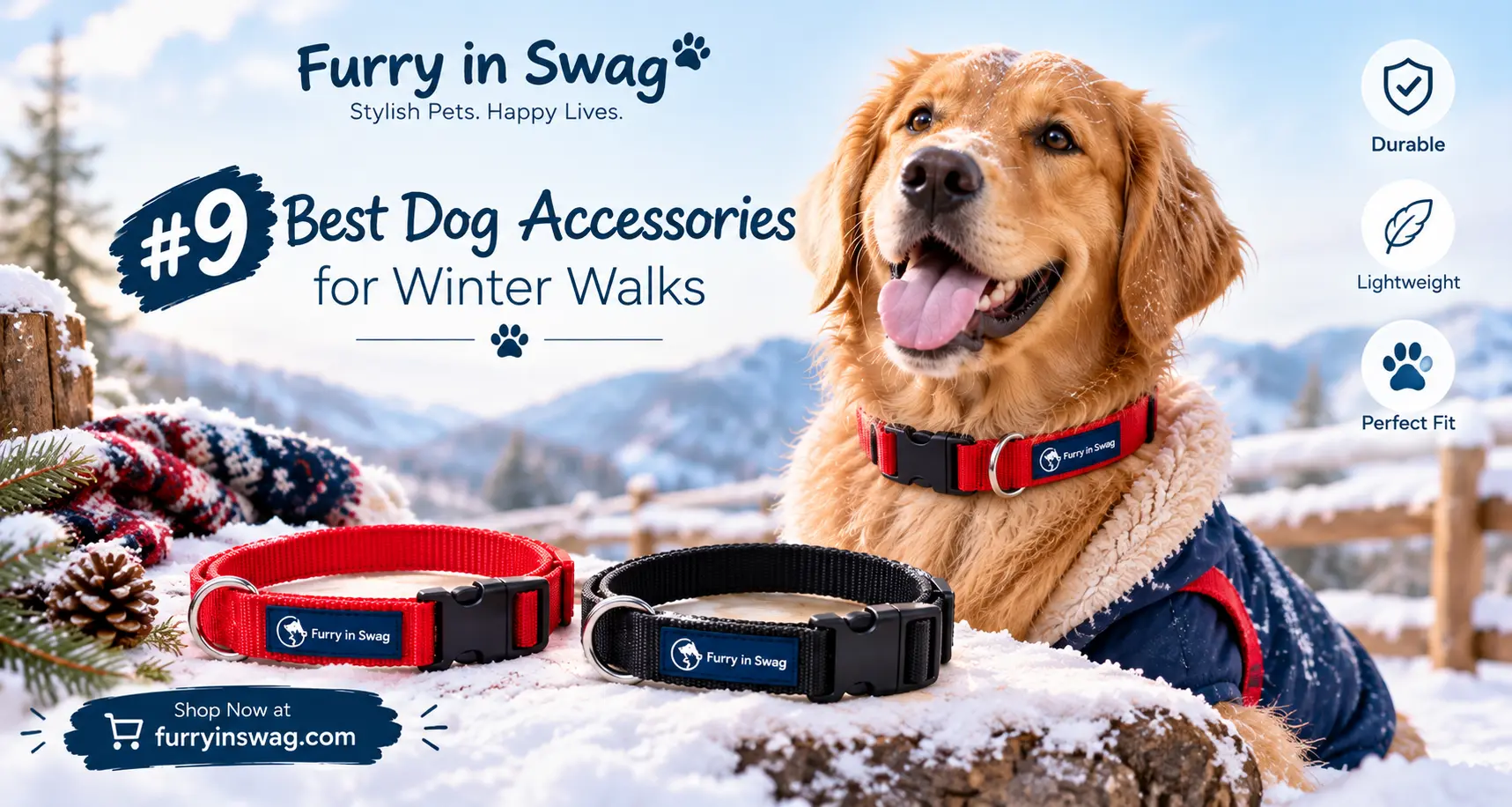
Winter changes how a dog walk feels. The mornings are colder and darker, the pavement is harder on the paws, and a dog that was fine in a collar and leash in October may start shivering by December. A few well-chosen accessories keep the walk comfortable and safe for both of you.
Table of Contents
This guide to the best dog accessories for winter walks covers nine essentials, from a warm bandana and a coat to reflective gear and paw protection. For each one you will see what it does, who needs it and what to check before you buy. You can start with the bandanas, collars and leashes at Furry in Swag.
Key Takeaways
- Layer to suit the dog. Small, short-coated, young and senior dogs need extra warmth, and thick-coated dogs often do not.
- Be seen. Winter mornings and evenings are dark and foggy, so reflective gear matters.
- Protect the paws. Cold, dry ground and road chemicals can irritate the pads, so use a balm or booties and wipe the paws afterwards.
- Choose gloves-friendly gear. A strong leash with a padded handle is easier to hold in the cold.
- Plan the warm-up. A dry towel and a comfortable mat help your dog recover after the walk.
What Are Winter Dog Walking Accessories?
Winter dog walking accessories are items that keep your dog warm, visible and comfortable on cold-weather walks. They include warm layers such as coats and bandanas, reflective and light-up gear, paw protection, and practical items such as a strong leash, a towel and a mat for after the walk.
Which Dogs Need Extra Gear in Winter?
Every dog feels the cold differently. Small breeds lose heat quickly, short-coated dogs have little natural insulation, and puppies and senior dogs struggle to regulate their body temperature. These dogs usually benefit from a coat, a warm bandana and shorter walks.
Thick-coated dogs cope better, but they still need visibility gear, paw care and a warm place to rest afterwards. If you are not sure, watch your dog on a walk: shivering, slowing down or lifting the paws are signs it needs more. Our guide to keeping your dog comfortable on cold nights covers the warm-up at home.
Which Accessories Are Best for Winter Walks?
These nine accessories cover warmth, safety and comfort. You do not need all of them, so pick the ones that match your dog and your weather.
1. A Warm Fleece or Flannel Bandana
A fleece or flannel bandana adds a layer of warmth around the neck, which is a spot that feels the cold on windy mornings. It is light, easy to put on and does not restrict movement, so it works for dogs that dislike coats.
Choose a soft fabric and tie it loosely, with two fingers of space underneath. Browse the dog bandana collection, and read our guide to the best dog bandanas for every season for fabric tips.
Watch out for: tight knots and thick fabric that bunches up. Take it off if it gets wet and stays damp.
Best for: cool mornings and dogs that dislike full coats.
2. A Well-Fitted Dog Coat or Sweater
A coat is the biggest warmth upgrade for small, short-coated, young and senior dogs. Look for a snug fit that covers the back and chest without restricting the legs, with a closure that is easy to fasten with cold hands.
Choose a weatherproof outer layer for wet or windy days, and a soft fleece or knit for dry, cold ones. Measure your dog’s back length and chest before you buy.
Watch out for: coats that ride up, cover the tail or rub under the legs. Remove it indoors to avoid overheating.
Best for: small breeds, short coats, puppies and older dogs.
3. A Strong Leash With a Padded Handle
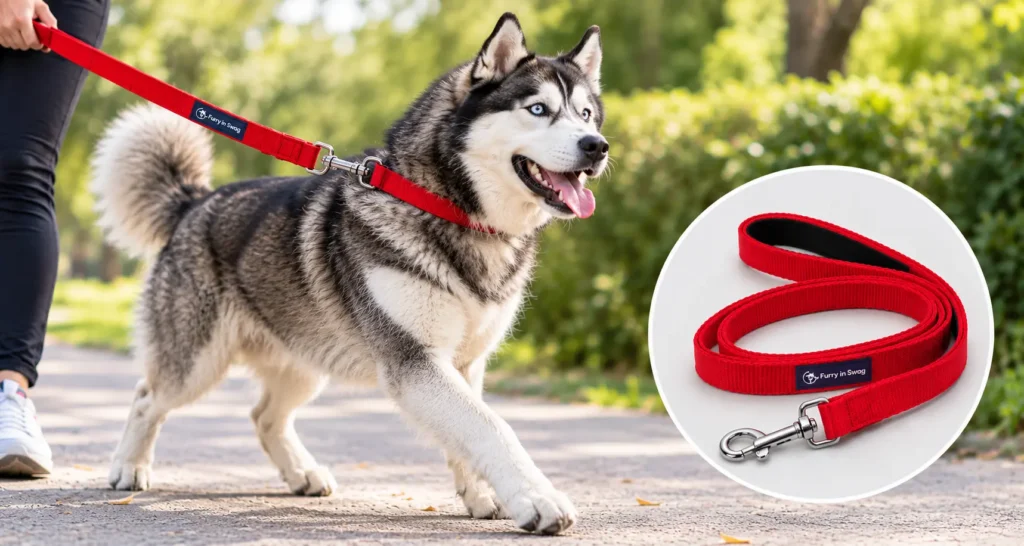
Cold hands and gloves make it harder to hold a leash, and a thin handle becomes uncomfortable fast. A strong leash with a padded handle gives you a secure grip and spreads the force across your hand, even when your dog pulls.
Look for firm stitching, a solid clip and a handle large enough for a gloved hand. The FIS Heavy Duty Leash is a good everyday option, and our heavy-duty leash guide explains what to look for.
Watch out for: handles that are too small for gloves and clips that stiffen in the cold.
Best for: owners who walk in gloves and dogs that pull.
4. Reflective Gear and Clip-On Lights
Winter brings early sunsets and thick fog, and a dark dog is almost invisible to drivers and cyclists. A reflective collar or a clip-on light makes your dog visible from much further away.
Pair reflective gear with a bright bandana for extra visibility, and keep your dog on a short leash near roads. Check our guide to durable and comfortable dog collars for a reflective option.
Watch out for: relying on lights alone. Reflective gear helps, but safe leash handling comes first.
Best for: foggy mornings and evening walks.
5. Dog Booties
Booties protect the paws from cold ground, ice and rough surfaces, and they keep dirt and road chemicals off the pads. They are most useful in places with snow, ice or salted roads.
Fit matters more than anything. Booties that are too loose come off, and tight ones rub. Introduce them gradually, with treats, in short sessions at home.
Watch out for: booties that rub, slip or twist. Take them off if your dog panics or limps.
Best for: icy or salted pavements and dogs with sensitive paws.
6. Paw Balm
If your dog will not wear booties, a paw balm is the next best choice. It forms a thin protective layer on the pads, which helps against dryness and cracking in cold weather.
Apply it before the walk and wipe the paws with a damp cloth afterwards. Choose a balm that is made for dogs, since your dog may lick it, and check the pads regularly for cracks or redness.
Watch out for: balms with strong fragrances or ingredients that are not meant for dogs.
Best for: dogs that refuse booties and dry or cracked paws.
7. A Microfibre Towel
A towel sounds basic, but it is one of the most useful items after a cold, damp walk. A microfibre towel dries quickly and absorbs a lot of water, so your dog does not stay wet and chilly.
Keep one by the door. Dry the paws, the belly and the chest first, then rub the coat gently. It also keeps muddy paws off the floor and the sofa.
Watch out for: leaving a damp coat to dry on its own, which keeps your dog cold.
Best for: wet, muddy or foggy walks.
8. A Warm Mat for After the Walk
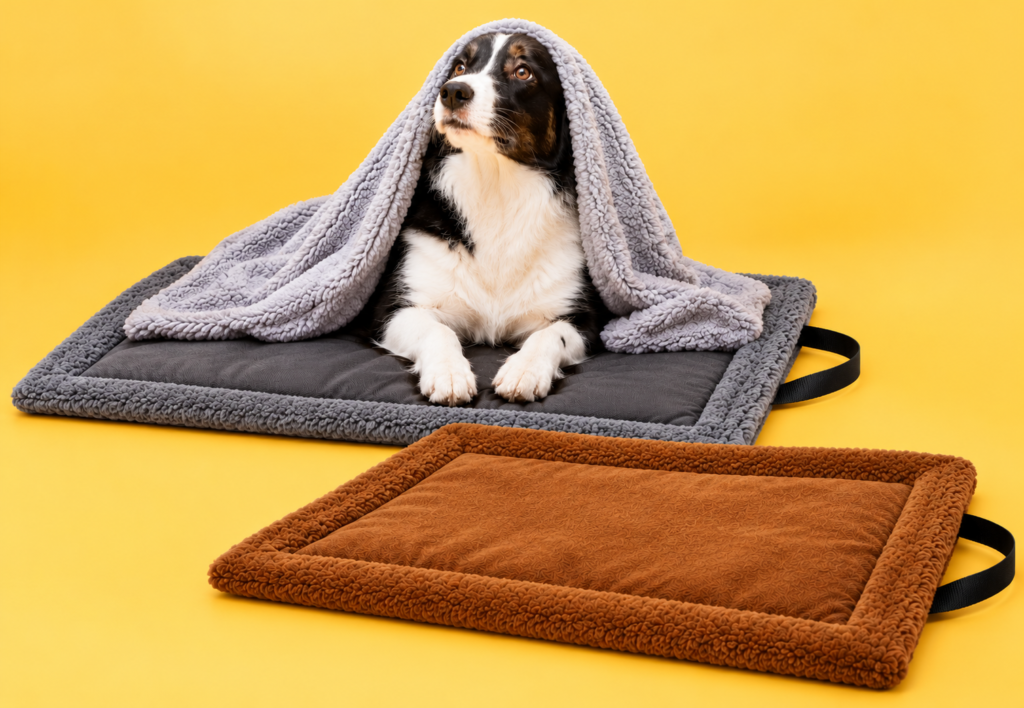
After a cold walk, a dog needs somewhere comfortable to warm up. A thick, soft mat keeps your dog off the cold floor and gives it a spot of its own, which is especially helpful for older dogs.
Read our guide to the best premium dog mats to choose the right size and material, and place it away from draughts and windows.
Watch out for: cold, draughty spots. Keep the mat away from heaters and open flames.
Best for: senior dogs, small dogs and cold floors.
9. A Treat Pouch and Water Bottle
Treats make winter walks easier. A pouch keeps them within reach even with gloves on, so you can reward calm walking and recall in the cold.
Dogs still need water in winter, so carry a small bottle and bowl on longer walks. Cold weather can hide thirst, and a dog that pants or drinks little on a long walk may still need a drink.
Watch out for: treats that freeze or get messy. Choose small, dry treats.
Best for: training walks and longer winter outings.
Quick Guide: Which Accessory for Which Dog?
| Accessory | Best for | Main benefit |
| Warm bandana | Most dogs on cool mornings | Extra warmth at the neck |
| Coat or sweater | Small, short-coated, senior dogs | Body warmth |
| Padded-handle leash | Owners in gloves, strong dogs | Secure, comfortable grip |
| Reflective gear | Foggy and dark walks | Visibility |
| Booties or paw balm | Cold or salted ground | Paw protection |
| Microfibre towel | Wet and muddy walks | Fast drying |
| Warm mat | After the walk | Rest and recovery |
How Do You Prepare Your Dog for a Winter Walk?
- Check the weather. Look at the temperature, wind and fog, and shorten the walk if it is very cold.
- Add the right layers. Put on a coat or sweater if your dog needs one, and add a warm bandana on top or on its own.
- Protect the paws. Apply a balm or fit the booties before you leave.
- Make your dog visible. Check that the reflective collar or light is working, and use a strong, comfortable leash.
- Warm up afterwards. Wipe the paws, towel your dog dry and settle it on a warm mat.
Frequently Asked Questions
How cold is too cold for a dog walk?
It depends on the dog. Small, short-coated, very young and older dogs feel the cold sooner, while thick-coated breeds cope better. Shorten the walk and add layers when your dog shivers, lifts its paws, slows down or tries to turn back toward home.
How do I protect my dog’s paws in winter?
Keep the fur between the pads trimmed, apply a paw balm before walks and wipe the paws afterwards to remove dirt, ice or road chemicals. Booties give the most protection, but many dogs need practice before they will wear them.
Is a bandana enough to keep a dog warm?
A bandana adds a little warmth around the neck, but it will not replace a coat for a dog that feels the cold. Use it as an extra layer on cool mornings, or on top of a coat for style.
What should my dog wear on foggy mornings?
Something that makes it easy to see. A reflective collar, a bright bandana or a clip-on light helps drivers and cyclists spot your dog, and you should keep your dog on a short leash near roads.
Final Thoughts
The best dog accessories for winter walks keep your dog warm, visible and comfortable: a bandana or coat for warmth, reflective gear for safety, paw protection for the pads and a good mat for the warm-up. Start with the pieces your dog needs most, and add the rest as the weather calls for it.
Ready to get your dog winter-ready? Browse bandanas, collars, leashes and bows at Furry in Swag, and see our guide to dog gift ideas for dog lovers if you are buying for someone else. Join the newsletter on our homepage for offers.