
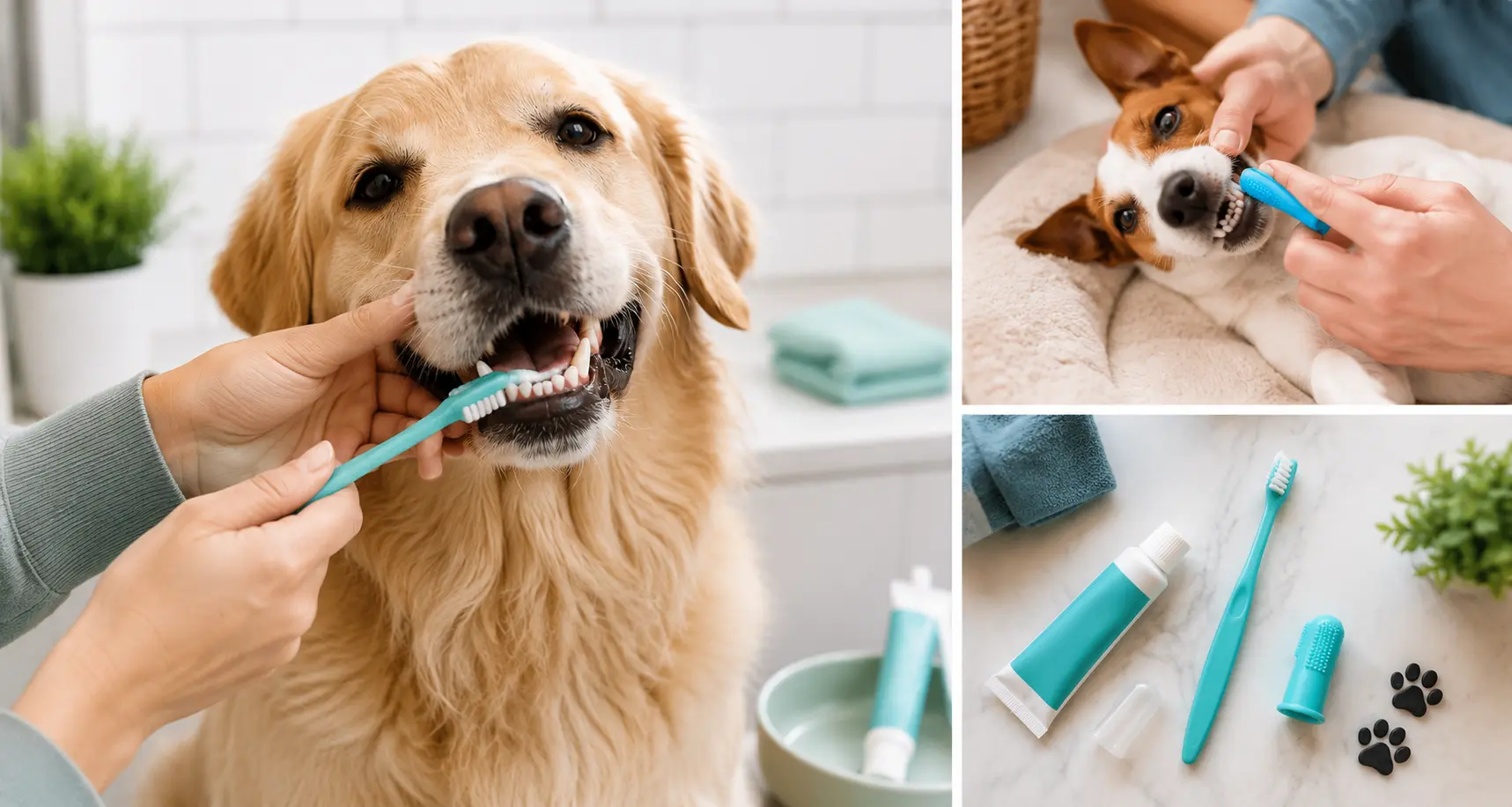
To clean your dog’s teeth at home, use a dog specific toothbrush and toothpaste, brush in small circles along the gumline daily if possible, and introduce the routine gradually with short, positive sessions. Dental chews, water additives, and rubber toys can support brushing but should not fully replace it.
Most dogs show visible signs of dental disease by the time they turn three, and yet dental care remains one of the most overlooked parts of regular pet care. Unlike a walk or a meal, it is easy to skip a teeth cleaning routine day after day without any immediate consequence, until bad breath, tartar buildup, or a painful vet bill eventually makes it impossible to ignore.
Table of Contents
This guide walks through exactly how to clean your dog’s teeth at home, starting with brushing, the method every veterinary dental organization consistently ranks as the most effective, along with realistic alternatives and the warning signs that mean it is time for a professional cleaning.
Key Takeaways
- Daily brushing with dog specific toothpaste is considered the gold standard for at home dental care.
- Human toothpaste should never be used, since it often contains ingredients that are toxic to dogs.
- Introducing brushing gradually, with short positive sessions, makes the routine far easier to stick with.
- Dental chews, water additives, and chew toys support oral health but do not replace brushing entirely.
- Persistent bad breath, bleeding gums, or loose teeth are signs that warrant a vet visit, not just more home care.
Why Dental Care Matters Beyond Fresh Breath
Dental disease in dogs is not just a cosmetic issue. Left unaddressed, plaque and tartar buildup can lead to gum disease, tooth loss, and genuine pain that many dogs simply learn to live with silently, since they cannot tell you their mouth hurts.
Bacteria from an unhealthy mouth can also enter the bloodstream and has been linked to broader health issues affecting the heart, liver, and kidneys over time. Regular at home dental care is genuinely one of the more impactful things you can do for your dog’s long term health, not just their breath.
What You Will Need
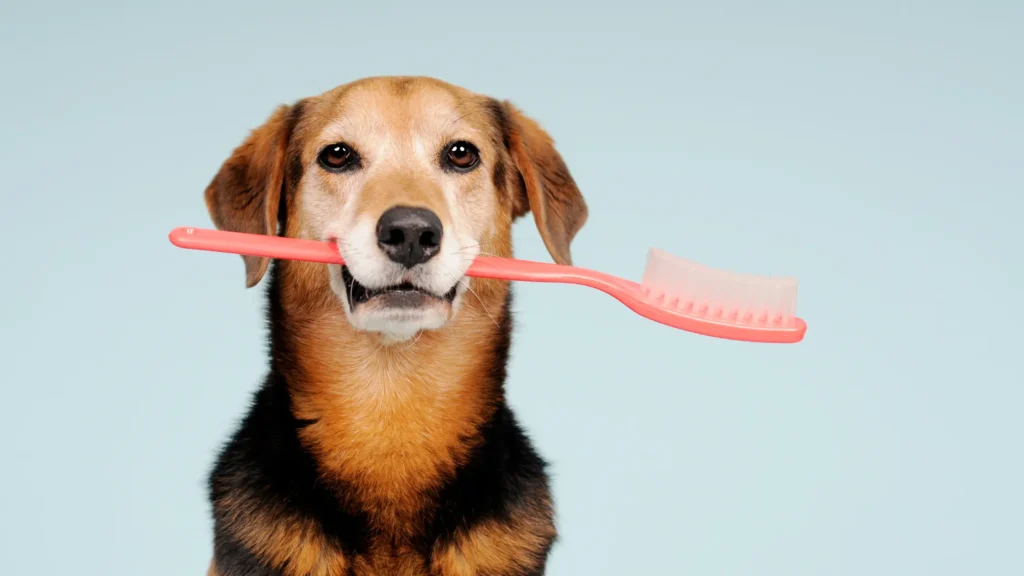
- A dog specific toothbrush, or a finger brush for dogs who are new to the process
- Dog specific toothpaste in a pet friendly flavor like chicken or beef
- Small, high value treats to reward calm behavior during early sessions
- Patience, since building a comfortable routine typically takes several short sessions rather than one long one
Never substitute human toothpaste or baking soda for dog specific products. Human toothpaste often contains xylitol or fluoride levels that are toxic to dogs, and baking soda can upset stomach pH and is not designed for this purpose.
Step by Step: How to Brush Your Dog’s Teeth
Step 1: Let Your Dog Get Familiar With the Tools First
Before attempting any actual brushing, let your dog sniff the toothbrush and taste a small amount of the toothpaste on your finger. This first exposure should feel entirely low pressure, more like introducing a new treat than starting a task.
Step 2: Start With Gentle Gum Massage
Using a clean finger, gently rub along your dog’s gums and teeth for a few seconds at a time, rewarding calm behavior. This step builds comfort with having a hand near their mouth before a brush is ever introduced.
Step 3: Introduce the Brush With a Small Amount of Toothpaste
Once your dog seems comfortable with finger contact, add a small dab of toothpaste to the brush and gently touch it to a few teeth, keeping the session brief. Reward generously and stop before your dog becomes restless.
Step 4: Brush in Small Circles Along the Gumline
Lift your dog’s lip gently and brush in small circular motions where the tooth meets the gum, since this is where plaque accumulates first. Focus primarily on the outside surfaces of the teeth, which are the easiest to reach and where most buildup occurs.
Step 5: Build Toward Full Coverage Gradually
You do not need to brush every tooth perfectly on the first attempt. Expand coverage gradually over several sessions, working toward brushing the entire mouth once your dog is genuinely comfortable with the process.
Step 6: Make It a Consistent Daily Habit
Daily brushing offers the most protection, though even three to four times a week meaningfully reduces plaque buildup compared to no brushing at all. Consistency matters more than perfection, so aim for a realistic routine you can actually maintain.
Alternatives and Supplements to Brushing
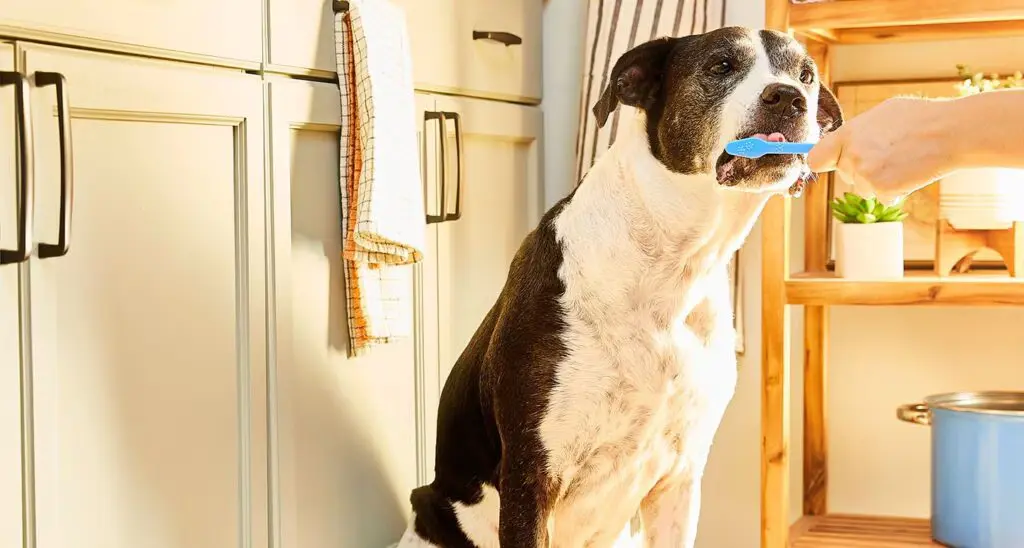
Brushing remains the most effective method, but these options can genuinely help support dental health on days when brushing is not realistic, or as an addition to a regular brushing routine.
| Method | How It Helps | Best Used As |
| Dental chews | Mechanical scraping while chewing | Daily supplement, not a replacement |
| Water additives | Reduces bacteria in the mouth | Easy daily addition for busy schedules |
| Dental wipes or gauze | Manually removes surface plaque | Backup when brushing is not possible |
| Rubber chew toys | Scrapes plaque during normal play | Ongoing supplement to brushing |
| Prescription dental diet | Mechanically cleans with each bite | For dogs with diagnosed dental issues |
When choosing dental chews or treats, look for the Veterinary Oral Health Council seal, commonly known as VOHC, which indicates the product has met established scientific criteria for effectively managing plaque and tartar.
Signs of Dental Disease to Watch For
| Sign | What It Means |
| Persistent bad breath | Often the earliest noticeable sign of plaque or gum disease |
| Yellow or brown buildup on teeth | Indicates tartar accumulation along the gumline |
| Red, swollen, or bleeding gums | Sign of gingivitis, early stage gum disease |
| Loose or missing teeth | Suggests more advanced periodontal disease |
| Pawing at the mouth or reduced appetite | May indicate pain from a dental issue |
If you notice any of these signs, a vet visit is worth scheduling rather than trying to resolve it purely through more aggressive home brushing, since underlying issues below the gumline cannot be addressed at home.
When to Start Brushing Your Dog’s Teeth
Many owners wait far longer than necessary to start a dental routine, assuming it is something to worry about later. In reality, puppies can be introduced to gentle mouth handling and finger brushing as early as eight weeks old, well before their adult teeth even come in around six months of age.
Starting early does two things at once. It builds comfort with the process before your dog is bigger and stronger, and it establishes a habit that carries naturally into adulthood rather than trying to introduce brushing to an adult dog who has never had their mouth handled before.
Do Small Breeds Really Need More Frequent Care?
Yes, and this is a detail worth understanding rather than skipping past. Small breeds often have the same number of teeth as large breeds, packed into a noticeably smaller jaw. That overcrowding leaves less room between teeth, which traps food and plaque more easily and accelerates tartar buildup.
Breeds like Yorkshire Terriers, Chihuahuas, and Dachshunds are particularly prone to this, and often benefit from daily brushing without exception, along with more frequent professional cleanings compared to larger breeds with more naturally spaced teeth.
- Small breeds with crowded jaws generally need daily brushing, not just a few times a week
- Overcrowded teeth trap food and plaque more easily than well spaced teeth
- Professional cleaning frequency often needs to be higher for small breeds prone to this issue
- Large breeds are not exempt from dental disease, but tend to have more forgiving spacing
Why Professional Cleanings Still Matter
Even with excellent home care, professional cleanings under anesthesia remain an important part of a complete dental care plan. A vet can access and clean below the gumline, an area no amount of home brushing can reach, and take dental X-rays to catch issues that are not visible during a routine exam.
Think of home care and professional cleanings as working together rather than one replacing the other. Consistent brushing can reduce how often professional cleanings are needed, but it does not eliminate the need for them entirely.
What Professional Cleaning Actually Costs
This is worth addressing directly, since it rarely gets mentioned but genuinely affects how owners plan for dental care. Professional cleanings require general anesthesia to be done safely and thoroughly, and most standard pet insurance plans do not cover the cost, treating it as a routine or preventive expense rather than an emergency one.
This is exactly why consistent home brushing matters financially, not just medically. Reducing plaque buildup between professional visits can genuinely stretch out how often your dog needs that more expensive appointment, making a five minute daily habit a meaningful long term savings, not just a health nicety.
- Professional cleanings require anesthesia and are rarely covered by standard pet insurance
- Ask your vet for a cost estimate ahead of time so there are no surprises
- Some pet insurance providers offer optional dental add ons, worth asking about specifically
- Consistent home brushing can extend the time between necessary professional cleanings
A Word on Anesthesia Free Cleaning
Anesthesia free dental cleanings, sometimes advertised at grooming salons or pet stores, understandably appeal to owners nervous about putting their dog under anesthesia. These services typically only address visible tartar above the gumline using hand tools on an awake dog.
The concern most veterinary dental organizations raise is that this approach cannot clean below the gumline, where the majority of harmful plaque and early disease actually develops, and it does not allow for dental X-rays that catch problems a visual exam alone would miss. It may look cleaner afterward without addressing what actually matters most for long term dental health.
- Anesthesia free cleanings only address visible tartar above the gumline
- They cannot safely reach below the gumline, where early disease typically starts
- No dental X-rays are possible without anesthesia, missing issues a visual exam cannot catch
- Discuss anesthesia concerns directly with your vet rather than opting for a less thorough alternative
Making It a Positive Routine, Not a Fight
A brushing routine that feels like a struggle every single day rarely lasts. Pairing brushing with something your dog already looks forward to, like right before or after a walk, and keeping every session upbeat with plenty of praise, goes a long way toward making it something your dog tolerates well rather than dreads.
If your dog already responds well to structured training sessions, our guide on the top 15 commands every dog should know covers the same positive reinforcement approach that makes a new routine like tooth brushing much easier to introduce.
Frequently Asked Questions
How often should I clean my dog’s teeth at home?
Daily brushing offers the most protection, though brushing three to four times a week still meaningfully reduces plaque buildup compared to not brushing at all.
What is the best toothbrush for dogs?
A soft bristled toothbrush designed specifically for dogs works well, and a finger brush is often a good starting option for dogs new to the process.
Can I use baking soda to clean my dog’s teeth?
No. Baking soda can upset stomach pH and is not formulated for dental use. Always use a toothpaste specifically designed for dogs.
How do I stop my dog’s bad breath naturally?
Consistent brushing is the most effective long term fix. Fresh water daily and VOHC approved dental chews can also help, and small amounts of finely chopped parsley mixed into food are sometimes used as a mild, safe natural breath freshener alongside, not instead of, regular brushing.
Is anesthesia free teeth cleaning a good alternative to brushing?
Anesthesia free cleanings only remove visible tartar above the gumline and cannot address plaque below it or allow for dental X-rays, so most veterinary dental organizations consider it a limited option rather than a true substitute for either home brushing or full professional cleaning.
Does pet insurance cover dental cleanings?
Most standard pet insurance plans do not cover routine professional dental cleanings, treating them as preventive rather than emergency care, though some providers offer optional dental coverage add ons worth asking about.
Do dental chews really work as well as brushing?
Dental chews can help reduce plaque through mechanical chewing action, but they are considered a supplement to brushing, not a full replacement for it.
Conclusion
Learning how to clean your dog’s teeth at home does not need to be complicated. Starting slow, building comfort gradually, and aiming for consistency over perfection will get you further than trying to do everything right from day one.
Pair a realistic home routine with regular professional cleanings and you will be covering both what happens above the gumline and what only a vet can properly address below it, giving your dog the best shot at a healthy mouth for years to come.