
If you have ever paused halfway through a walk and wondered whether your dog’s collar is too tight or too loose, you are not alone. It is one of the most common questions new and experienced dog owners ask, and getting it wrong in either direction can genuinely affect your dog’s comfort and safety. This guide walks through everything you need to know, from the basic fit test every vet recommends to details many guides skip entirely, like how heat and exercise change the way a collar fits during the day.
Why Getting Collar Fit Right Actually Matters
A collar is not just something your dog wears for a walk. Most dogs wear their collar for hours at a time, sometimes all day, which means even a small fit problem adds up over time.
A collar that is too tight can:
- Put pressure on the trachea and restrict normal breathing
- Cause chafing, hair loss, or skin irritation around the neck
- Lead to coughing, gagging, or visible discomfort during walks
A collar that is too loose can:
- Slip off entirely, putting your dog at risk of running into traffic or getting lost
- Get caught on fences, branches, or furniture
- Make it difficult to control your dog when you need to the most
Neither outcome is something any pet parent wants, which is exactly why fit deserves more attention than most people give it.
The Two Finger Rule Explained Properly
The two finger rule is the most widely recommended method for checking collar fit, and for good reason. It is simple, fast, and works for almost every breed and size.
To do it correctly, slide two fingers flat under the collar while it is fastened on your dog’s neck. You should be able to move your fingers left and right with a small amount of resistance. If your fingers cannot move at all, the collar is too tight. If your fingers slide around with plenty of extra space, the collar is too loose.
This test should be done with the collar sitting in its normal resting position, not pulled to one side, and ideally while your dog is standing calmly rather than sitting or lying down, since posture can change how the collar sits.
The Detail Most Guides Miss: Heat and Swelling
Here is something worth knowing that rarely gets mentioned. Just like your own hands and feet can swell slightly in warm weather or during exercise, your dog’s neck can experience the same effect. Increased blood flow to the jugular area and surrounding muscles during activity or heat can turn a comfortably snug collar into a genuinely tight one within minutes.
This matters even more for flat faced breeds like Pugs, Bulldogs, and Boxers, who already have narrower airways and are more sensitive to any added pressure around the neck.
Because of this, checking fit once when you buy the collar is not enough. Recheck it:
- After a walk or active play session, not just before
- On hot days or during summer months
- Weekly during puppyhood, since young dogs grow quickly
- Every few days for large and giant breed puppies specifically
Clear Signs Your Dog’s Collar Is Too Tight
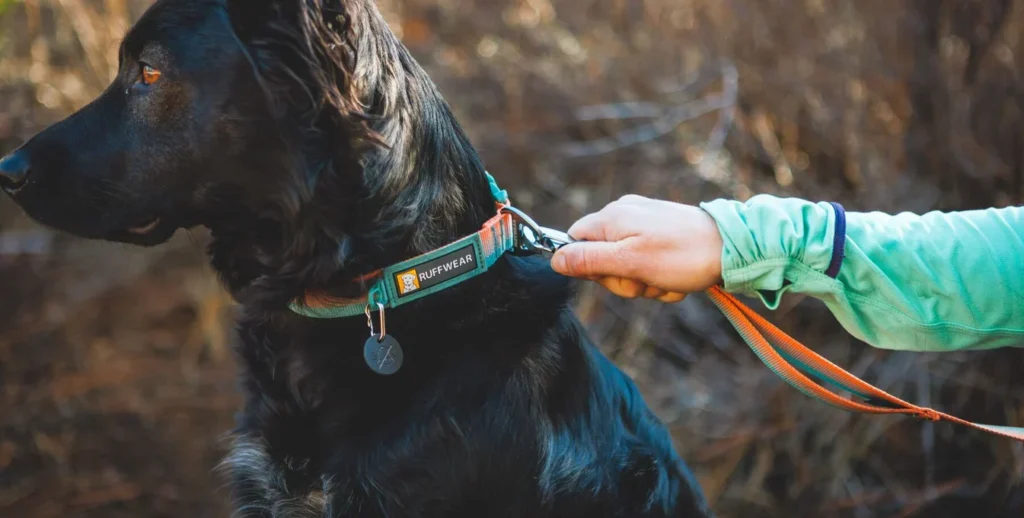
Beyond the finger test, your dog’s body will usually tell you if something is off. Watch for:
- A visible roll of skin bulging out around the edge of the collar
- Redness, rubbing, or thinning fur underneath where the collar sits
- Frequent dry coughing or a raspy sound when your dog breathes
- Your dog pawing at their neck or avoiding contact near the collar area
Any one of these on its own is worth investigating. More than one at the same time usually means it is time to loosen the collar or move up a size.
Clear Signs Your Dog’s Collar Is Too Loose
A collar can be just as much of a problem when it is too loose. Signs include:
- The collar slips over your dog’s head without needing to be unbuckled
- It spins freely around the neck instead of sitting in one place
- Your dog has already slipped out of it once, even briefly
If any of these apply, do not wait for it to happen again. A loose collar that has failed once is likely to fail again at the worst possible moment.
How to Measure Your Dog’s Neck the Right Way
Getting an accurate measurement before buying or adjusting a collar saves a lot of guesswork later.
- Use a soft fabric measuring tape, or a piece of string and a ruler if you do not have one.
- Wrap it around the base of your dog’s neck, exactly where the collar will normally sit.
- Keep the tape snug against the fur without pulling tight.
- Add roughly two fingers worth of extra space to that measurement.
- Compare the final number against the brand’s specific sizing chart, since sizing can vary noticeably between brands.
Adjusting the Collar Step by Step
Once you have the right size collar, adjusting it properly is just as important as the size itself.
- Fasten the buckle or clasp securely around your dog’s neck.
- Slide two fingers underneath and check for gentle, even resistance.
- Watch your dog walk or trot for a minute and observe how the collar sits.
- Recheck after a short walk, especially in warm weather.
- Adjust the strap length slightly if you notice any tightening after activity.
- Repeat this full check every few weeks, or more often for puppies.
Choosing a Collar That Makes Fit Easier to Manage
The design of the collar itself plays a bigger role in day to day comfort than most people realize. A fully adjustable strap means you are never stuck between two fixed sizes that never quite fit right. A soft, lightweight material reduces the chance of chafing even with daily wear. A quick release buckle also makes it far easier to check and adjust fit regularly, since you are not wrestling with a stiff clasp every single time.
This is the exact thinking behind the FIS Classic Collar for Dogs in Black. It is made from soft, durable nylon webbing that sits comfortably against the neck without feeling stiff or scratchy, and it is fully adjustable so you can fine tune that ideal two finger fit as your dog grows or their needs change. The quick release buckle makes frequent fit checks simple, and the sturdy metal D ring keeps leash attachment secure for everyday walks. It is a straightforward, comfort focused everyday collar built around the same fit principles covered throughout this guide.
Whatever collar you choose, the goal stays the same. It should be snug enough to stay secure, loose enough to breathe and move freely, and easy enough to adjust that you will actually check it often.
Frequently Asked Questions
How tight should a dog collar be for a puppy?
Puppies grow quickly, so their collar should be checked weekly using the same two finger rule. Expect to adjust the strap frequently during the first several months.
Can a collar be too tight even if it fit fine last week?
Yes. Growth, weight changes, coat thickness, and even seasonal swelling from heat or activity can all change how a previously well fitted collar feels.
Is the two finger rule accurate for all dog sizes?
It works well for most dogs, but very small or very large breeds may need slight adjustments. Always pair the finger test with a visual check for skin folds or excess slack.
Conclusion
Your dog cannot tell you when a collar feels too tight or too loose, which means it is entirely on us to check, adjust, and recheck regularly. A properly fitted collar takes less than a minute to confirm but makes a real difference in your dog’s comfort, safety, and overall happiness on every walk.