
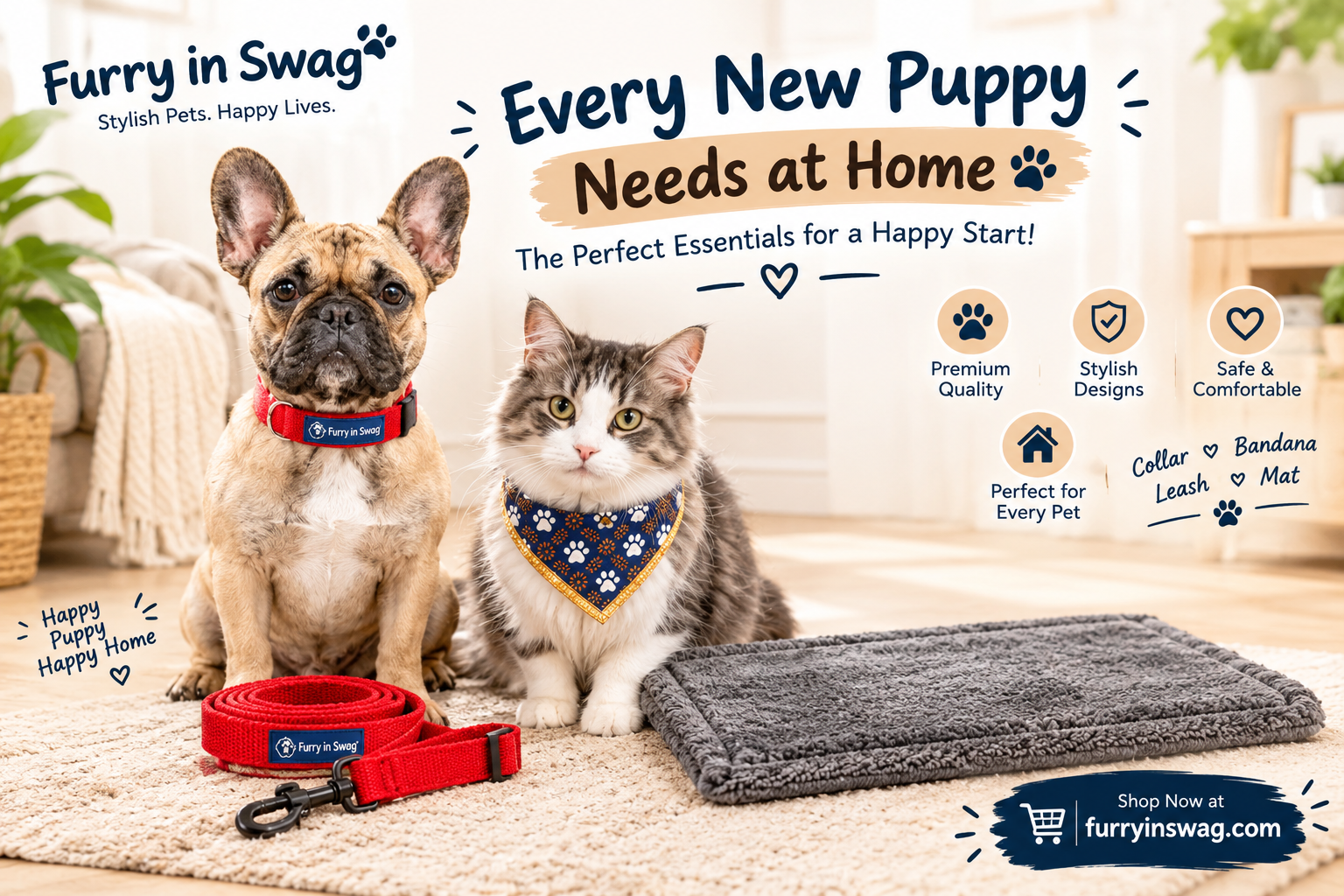
Bringing a puppy home is exciting, and the shopping list can feel endless. Walk into any pet store and you will find walls of products, but a new puppy needs far fewer things than the shelves suggest. What matters is having the right basics ready before the first night.
Table of Contents
This guide covers the nine things every new puppy needs at home, from a collar and leash to a bed, bowls and a safe space. For each one you will see why it matters, what to check and when to buy it. You can start with the Starter Walkies Set and the rest of the range at Furry in Swag.
Key Takeaways
- Start with the basics. A bed, bowls, food, collar and leash, chew toys and a safe space cover the first week.
- Choose adjustable gear. Puppies grow fast, so collars should adjust and need a weekly fit check.
- Prepare before day one. Set up the sleeping spot, bowls and safe area before your puppy arrives.
- Keep it safe. Choose toys that cannot be swallowed, and supervise chewing and play.
- Let the rest wait. Extras such as outfits and large toys are easier to choose once you know your puppy.
What Does a New Puppy Need at Home?
A new puppy needs a place to sleep, food and water bowls, suitable puppy food, a collar with an ID tag, a leash, safe chew toys, a safe space such as a crate or playpen, basic grooming tools and cleaning supplies. These nine things cover comfort, safety, feeding and early training.
Which Puppy Items Matter Most on Day One?
Some things you need before your puppy walks through the door, such as a bed, bowls, food and a safe space. Others, like the collar and leash, are needed for the first trip to the vet and the first days of training. The rest can be added over the first few weeks.
If your budget or time is tight, buy the sleeping area, feeding gear and a starter walking set first. The checklist below is in the order most owners find useful.
What Are the 9 Things Every New Puppy Needs?
1. A Collar, Leash and ID Tag
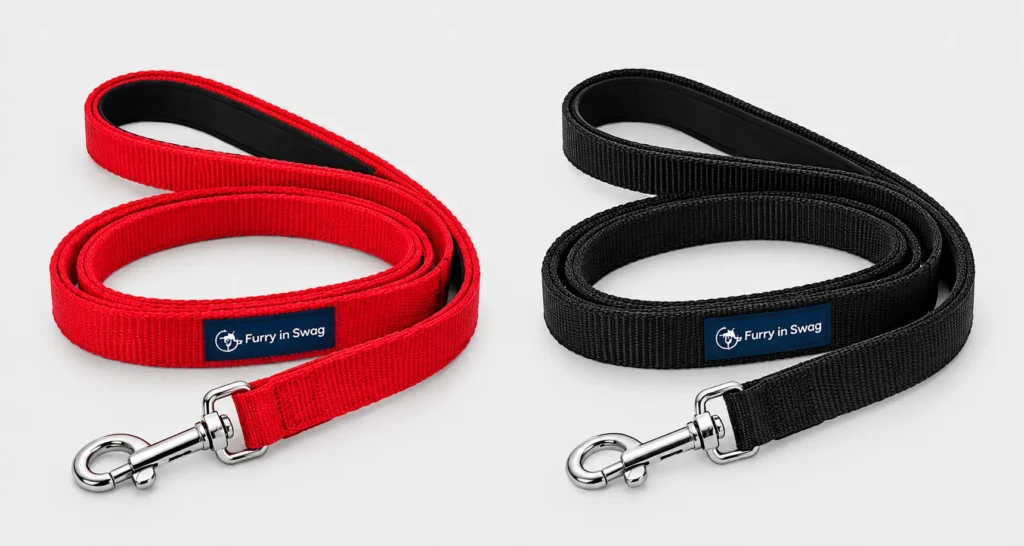
Your puppy needs a collar and leash for the first vet visit, the first trips outside and the start of training. Choose a lightweight, adjustable collar that is soft enough for a small neck, and add an ID tag with your phone number from the first day.
The Starter Walkies Set gives new puppy parents a collar and leash together, so there is one decision less on a busy day. Our guide to durable and comfortable dog collars explains what to look for as your puppy grows.
Watch out for: collars that are too tight or too heavy. Slide two fingers under the collar and check the fit every week.
2. A Comfortable Bed or Mat
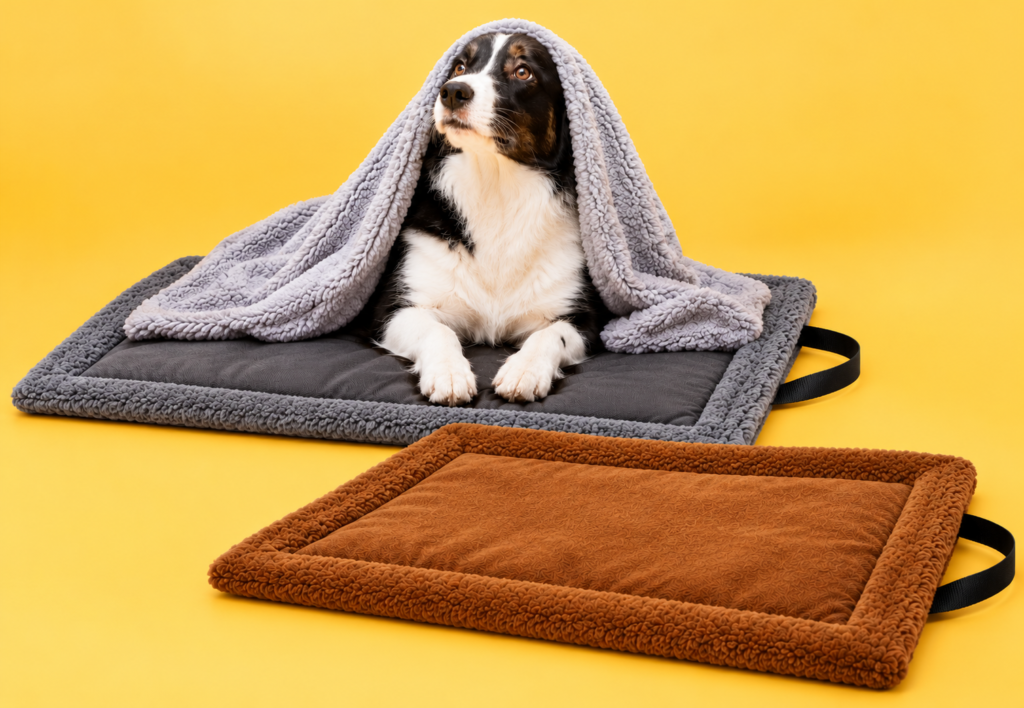
Puppies sleep for much of the day, and a soft, washable bed or mat gives yours a place that feels like its own. It also helps with routine: when the puppy learns that the mat is the place to rest, settling down gets easier.
Choose a size that suits a growing puppy, and place it in a quiet spot away from draughts. Read our guide to the best premium dog mats to see what to look for.
Watch out for: mats that slide on the floor or that are hard to wash. Puppies have accidents, so choose a mat that is easy to clean.
3. Food and Water Bowls
Puppies eat and drink often, so you need two bowls from the start, one for food and one for water. Stainless steel and ceramic bowls are easy to clean and hard to chew, while plastic can crack and hold smells.
Choose a heavy or non-slip bowl so it does not move when your puppy eats, and pick a size that is easy for a small mouth to reach.
Watch out for: bowls that are too deep for small puppies or too light, since they tip easily.
4. Puppy Food
Puppies need food made for growth. Start with the brand the breeder or shelter was using, so your puppy’s stomach is not upset by a sudden change, and ask your vet which food suits the breed and size.
If you plan to switch foods later, mix the new food into the old gradually over about a week. Keep a regular feeding schedule, since it also helps with toilet training.
Watch out for: sudden food changes and treats that add up. Count them as part of the daily meal.
5. A Crate or Safe Space
A crate or playpen gives your puppy a safe, calm place to rest, and gives you somewhere to keep it secure when you cannot watch. It supports house training and prevents chewing on things that are not safe.
Choose a crate that is big enough to stand and turn around in, and make it comfortable with a mat. Introduce it with treats, and never use it as punishment.
Watch out for: leaving a puppy in the crate for too long. Young puppies need regular breaks, meals and toilet trips.
6. Chew Toys
Puppies chew to explore and to ease teething, and chew toys keep that energy away from your furniture and shoes. Offer a few different textures, such as rubber, rope and soft toys, and rotate them to keep things interesting.
Always supervise play and choose toys that are too large to swallow. Replace any that crack, shred or lose pieces.
Watch out for: toys with small parts, sharp edges or stuffing that comes loose.
7. Basic Grooming Tools
Gentle grooming habits start early. A soft brush, puppy-safe nail clippers and a mild puppy shampoo are enough for the first months. Short, calm sessions with treats help your puppy accept handling.
Brush often, even if the coat is short, since it builds trust and helps you notice skin problems early.
Watch out for: human shampoo, which is not made for a dog’s skin. Use a product made for puppies.
8. Cleaning Supplies and Toilet-Training Aids
Accidents are part of house training. An enzymatic cleaner removes the smell that tells your puppy to go in the same spot again, and a pack of washable pads or newspaper gives it a place to learn.
Take your puppy outside after meals, naps and play, and praise it every time it goes in the right place. Patience and routine work better than scolding.
Watch out for: regular household cleaners, which can leave an odour that your puppy still detects.
9. Training Treats
Small, soft treats make training easier. Use them to reward your puppy for sitting, coming when called, walking beside you and settling on the mat. Keep them tiny so they do not fill your puppy up.
Carry a few in your pocket or a pouch, and read our guide on how to stop your dog from pulling on the leash when you start leash training.
Watch out for: too many treats, which can spoil your puppy’s appetite.
Quick Checklist: What to Buy and When
| Item | When to buy | Where to start |
| Collar, leash and ID tag | Before day one | Starter Walkies Set |
| Bed or mat | Before day one | Best premium dog mats |
| Food and water bowls | Before day one | Stainless steel or ceramic |
| Puppy food | Before day one | The food your puppy is used to |
| Crate or safe space | Before day one | Right-sized for a growing puppy |
| Chew toys | Before day one | Different textures, safe sizes |
| Grooming tools | First week | Soft brush, nail clippers |
| Cleaning supplies | Before day one | Enzymatic cleaner, pads |
| Training treats | First week | Small, soft treats |
How Do You Get Your Home Ready for a New Puppy?
- Choose the sleeping area. Pick a quiet corner, set up the bed or crate and keep it away from draughts.
- Puppy-proof the room. Move wires, shoes and anything small that your puppy could chew or swallow.
- Set up the feeding spot. Place the bowls somewhere easy to clean, and decide on the feeding times.
- Plan the first vet visit. Book an appointment and carry the vaccination records, plus the collar and leash for the trip.
- Start the routine. Feed, play, toilet and rest at regular times from day one.
Frequently Asked Questions
What does a new puppy need on the first day?
A comfortable bed or mat, food and water bowls, the food the breeder or shelter was using, a collar with an ID tag, a leash, a few chew toys, cleaning supplies and a safe space such as a crate or playpen. Everything else can wait until you know your puppy better.
How do I choose the right collar size for a puppy?
Measure around the neck with a soft tape, add about two fingers of space and choose an adjustable collar that can grow with your puppy. Check the fit every week, because puppies grow fast and a collar that fit on Monday can be tight by the next weekend.
How many chew toys does a puppy need?
Three or four in different textures is plenty. Rotate them so each one stays interesting, choose sizes that cannot be swallowed and supervise play. Chewing is normal, especially while teething, so give your puppy safe things to chew.
Final Thoughts
What every new puppy needs at home is simple: a safe place to sleep, food and water, a collar and leash, safe things to chew and a patient owner. Get the basics ready before day one, add the rest in the first weeks, and let your puppy’s personality guide the extras.
Ready to get started? Browse the Starter Walkies Set, collars, leashes and bandanas at Furry in Swag, and see our guide to dog gift ideas for dog lovers if you are buying for a friend’s new puppy. Join the newsletter on our homepage for offers.