

A strong bond with a new puppy does not happen the moment they walk through the door. It builds gradually, through small, repeated moments of trust, patience, and shared experience over the first several weeks and months.
Table of Contents
Below are 15 real ways to bond with your new puppy, covering everything from the first quiet days at home to the training and play routines that build a lasting connection over time.
Key Takeaways
- Bonding happens gradually through consistent, positive daily interactions, not through one big gesture.
- Letting a puppy set the pace during new experiences builds trust faster than forcing interaction.
- Training sessions double as bonding time, since they build communication between you and your puppy.
- Quiet, low pressure time together matters just as much as active play or training.
- Every puppy is different, so some may bond quickly while shy or nervous puppies need more patience.
Why Bonding Takes Time, and Why That Is Normal
It is easy to expect an instant connection the moment a new puppy comes home, but for many puppies, the first few days are actually about adjusting to an entirely new environment, not bonding just yet. Some puppies dive in immediately, while others need time to feel safe before they start showing real affection or trust.
This is completely normal, and pushing too hard early on can actually slow things down rather than speed them up. Patience during these first weeks pays off, since the trust built slowly during this period tends to be the foundation for a much deeper bond later on.
1. Hand Feed Meals During the First Week
Hand feeding some or all of your puppy’s meals during the first week is one of the fastest ways to build a direct, positive association between you and something your puppy already values highly, food.
This is especially useful for shy or nervous puppies who might otherwise avoid approaching you directly. Even just a portion of each meal fed by hand, alongside the rest served normally in a bowl, can make a noticeable difference in how quickly a puppy starts seeking you out.
- Start with a portion of each meal fed directly from your hand
- Especially effective for shy or cautious puppies in the first week
- Builds a direct, positive association between you and something they already want
- Can be phased out gradually once your puppy shows consistent comfort around you
2. Start Short, Daily Training Sessions Early
Training is not just about teaching commands, it is one of the most effective bonding tools available, since it builds a shared language between you and your puppy. Every successful command and reward creates a small moment of connection and mutual understanding.
Keep sessions short and positive, five to ten minutes is plenty for a young puppy’s attention span. Our guide on the top 15 commands every dog should know is a solid starting point if you want a structured path through the basics.
- Keep sessions to five or ten minutes to match a puppy’s attention span
- Focus on one command at a time rather than overwhelming a young puppy
- Use positive reinforcement, treats or praise, rather than correction based methods
- Treat every successful repetition as a small bonding win, not just a training milestone
3. Introduce Gentle, Regular Grooming
Grooming sessions, even simple brushing, give you consistent, calm physical contact that helps a puppy build comfort with being handled. This pays off well beyond bonding too, since a puppy accustomed to gentle handling tends to have an easier time at vet visits and nail trims later on.
Keep early sessions short and positive, pairing gentle brushing or paw handling with praise and treats, so your puppy associates the experience with something pleasant rather than something to tolerate.
- Start with very short sessions, just a minute or two at first
- Pair brushing or paw handling with treats and calm praise
- Builds comfort with touch that helps at vet visits and nail trims later
- Gradually increase session length as your puppy shows more comfort
4. Let Your Puppy Set the Pace During Exploration
New sights, sounds, and smells can be overwhelming for a puppy experiencing them for the first time. Letting your puppy approach new things at their own pace, rather than pulling them toward something they seem hesitant about, builds trust in your judgment as their guide.
Over time, a puppy that learns you will not force them into uncomfortable situations tends to look to you for reassurance in new environments, which is really the foundation of a secure, trusting bond.
- Avoid physically pulling a hesitant puppy toward something new
- Let curiosity lead rather than forcing exposure to new experiences
- Offer calm reassurance rather than excessive comfort that reinforces fear
- Builds long term trust in you as a reliable guide in unfamiliar situations
5. Make Time for Physical Affection
Gentle petting, cuddling, and calm physical closeness are simple but genuinely powerful bonding tools. Physical touch between dogs and their owners has been shown to release oxytocin in both, the same bonding hormone involved in other close relationships.
Pay attention to your puppy’s body language during affection, since not every puppy wants to be held or cuddled the same way or at the same times. Respecting those preferences builds trust faster than pushing affection your puppy is not ready for.
- Gentle petting and cuddling release bonding hormones in both of you
- Watch body language to see what kind of affection your puppy actually enjoys
- Let your puppy come to you for affection rather than always initiating it yourself
- Respecting preferences builds trust faster than forcing physical closeness

6. Learn to Read Your Puppy’s Body Language
Puppies communicate constantly through posture, tail movement, ear position, and overall energy, long before they understand many words. Learning to read these signals helps you respond appropriately, which builds trust since your puppy learns you understand what they are trying to say.
A tucked tail, lip licking, or turning away often signals discomfort, while a relaxed body, soft eyes, and a loose wagging tail generally signal comfort and ease. Noticing these cues early helps you adjust your approach in the moment rather than accidentally pushing too far.
- Watch tail position, ear position, and overall body tension for signs of comfort or stress
- Lip licking, yawning, or turning away often signal mild discomfort
- A loose, wagging tail and relaxed posture generally signal ease and enjoyment
- Responding appropriately to these cues builds a puppy’s trust in your understanding
7. Build a Consistent Daily Routine
Predictability helps a puppy feel secure in a brand new environment. Consistent meal times, walk times, and bedtime routines give your puppy a sense of structure that reduces anxiety and helps them settle in faster.
A predictable routine also naturally creates repeated bonding opportunities throughout the day, since your puppy comes to associate specific times with specific positive interactions with you.
- Keep meal times, walks, and bedtime on a consistent daily schedule
- Predictability reduces anxiety in a new environment
- Naturally builds repeated daily bonding touchpoints
- Helps a puppy settle into their new home faster overall
8. Keep Your Puppy Physically Close, Especially Early On
Keeping a puppy’s crate or bed nearby during the first few weeks, rather than isolated in another room, helps them feel secure while adjusting to a completely new environment without you.
This closeness also reduces the chances of house training accidents, since you are more likely to notice early signs your puppy needs to go outside when they are nearby rather than out of sight.
- Keep the crate or bed close by during the first several weeks at home
- Reduces anxiety compared to isolating a puppy in a separate room
- Makes it easier to catch early house training signals
- Distance can be gradually increased as your puppy becomes more settled
9. Choose Positive Reinforcement Over Punishment
Punishment based training methods can genuinely damage trust between you and a puppy, since fear does not build a secure bond the way positive, reward based interaction does. A puppy that associates you with unpredictable punishment is less likely to seek you out or feel safe around you.
Rewarding good behavior consistently, rather than focusing on correcting mistakes harshly, builds a puppy that actively wants to engage with you rather than one that simply learns to avoid punishment.
- Reward desired behavior consistently rather than focusing on punishing mistakes
- Fear based training can damage trust rather than build it
- A puppy that feels safe around you engages more willingly during training
- Consistency in what gets rewarded matters more than strict correction
10. Play Interactive Games Together
Games like gentle tug, fetch, or hide and seek create shared, enjoyable experiences that build positive associations quickly. Unlike solo toy play, interactive games directly involve you, which reinforces that spending time with you specifically is fun and rewarding.
Rotating a few different games keeps things interesting, and matching the game to your puppy’s energy and confidence level, starting simple before moving to more complex games, helps build engagement without overwhelming them.
- Interactive games build stronger bonds than solo toy play alone
- Gentle tug, fetch, and hide and seek are all great starting points
- Rotate games to keep sessions interesting over time
- Match game complexity to your puppy’s current confidence and energy level
11. Take Your Puppy on Socialization Outings
Exposing your puppy to new environments, people, and other animals during the socialization window, roughly eight to sixteen weeks old, builds confidence and positions you as their trusted guide through unfamiliar experiences.
Keep these outings positive and manageable rather than overwhelming, since a scary early experience can have the opposite effect on both confidence and your bond. Short, calm outings tend to work better than long, overstimulating ones. Having the right gear makes these outings smoother too, and our guide on the best leashes for training puppies covers which leash setup works best for early socialization walks.
- Focus socialization outings during the eight to sixteen week developmental window
- Keep experiences positive and calm rather than overwhelming
- Short, frequent outings tend to work better than infrequent long ones
- Being present during new experiences reinforces you as a trusted guide
12. Talk to Your Puppy Often, in a Calm Tone
Puppies respond far more to tone than the actual words being said, and speaking to your puppy regularly, even during everyday tasks, helps them get used to your voice as a source of comfort rather than something unfamiliar.
A calm, warm tone tends to be reassuring, while a harsh or overly excited tone can occasionally overstimulate or startle a young puppy. Simply narrating your day out loud around your puppy is a simple, low effort way to build this familiarity over time.
- Puppies respond more to tone than to the specific words used
- Regular conversation, even casual narration, builds familiarity with your voice
- A calm, warm tone is generally more reassuring than an excited or harsh one
- Consistent vocal presence helps a puppy associate your voice with safety
13. Respect Your Puppy’s Fears Rather Than Dismissing Them
A puppy that seems afraid of something that appears harmless to you is still genuinely afraid, and dismissing or forcing them past that fear can damage trust rather than build confidence. Acknowledging their hesitation and giving them space to approach cautiously respects where they actually are, not where you want them to be.
Over time, most puppies grow more confident on their own timeline when fears are respected rather than pushed through, and that patience reinforces that you are someone who listens to their signals.
- A puppy’s fear is real to them, even if the source seems harmless to you
- Forcing a puppy past fear can damage trust rather than build confidence
- Give space for cautious approach rather than pushing interaction
- Patience with fear reinforces that you listen to your puppy’s signals
14. Spend Quiet, Low Pressure Time Together
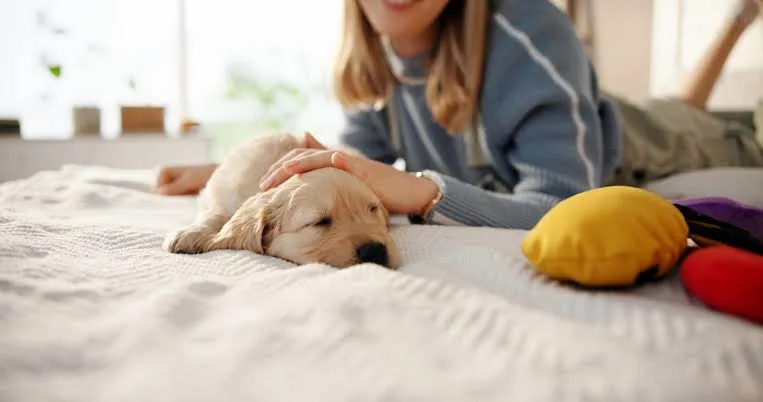
Not every bonding moment needs to be active play or training. Simply being in the same room, reading or working nearby while your puppy naps or explores calmly, builds comfort with your presence without any pressure to perform or engage constantly.
This kind of quiet togetherness teaches a puppy that being near you is inherently comfortable, not just something tied to exciting activities, which rounds out a more complete, secure bond over time. Giving your puppy a comfortable, designated spot nearby helps too, and our guide on the best dog mats for home and travel can help you pick one that fits these quiet moments together.
- Simply being in the same room builds comfort without demanding interaction
- Balances active bonding activities with low pressure, restful togetherness
- Teaches a puppy that your presence itself is comfortable, not just exciting activities
- Especially valuable during rest periods or after a stimulating outing
15. Celebrate Small Wins Along the Way
Bonding is built through hundreds of small moments rather than one dramatic breakthrough, so noticing and celebrating small progress, a successful recall, a calm vet visit, a full night without an accident, reinforces the relationship you are building together.
This mindset also helps you stay patient during harder days, since recognizing genuine progress, even small steps, keeps the overall process feeling rewarding rather than frustrating for both of you.
- Notice and celebrate small progress rather than waiting for one big milestone
- A successful recall, calm vet visit, or accident free night all count as real wins
- Helps maintain patience and perspective during more challenging days
- Reinforces that the process itself is building something real, step by step
Bonding Activities at a Glance
| Activity | Time Needed | Bonding Benefit | Best For |
| Hand feeding meals | 10 to 15 minutes | Builds trust and positive association with you | New arrivals, shy puppies |
| Daily training sessions | 5 to 10 minutes | Builds communication and mutual respect | All puppies |
| Gentle grooming | 5 to 10 minutes | Builds comfort with touch and handling | Puppies of all coat types |
| Following puppy’s pace | Ongoing | Builds confidence and trust in new environments | Nervous or cautious puppies |
| Physical affection | Flexible | Releases bonding hormones for both of you | Affectionate puppies |
| Interactive play | 10 to 20 minutes | Builds enthusiasm and positive shared memories | Playful, energetic puppies |
| Socialization outings | 20 to 30 minutes | Builds confidence with you as a safe guide | Puppies 8 to 16 weeks old |
| Quiet downtime together | Flexible | Builds comfort without demanding interaction | All puppies, especially tired ones |
When Bonding Feels Slower Than Expected
Some puppies bond almost instantly, while others take weeks or even a couple of months to fully settle in and show consistent trust. This does not mean anything is wrong, temperament, past experiences, and individual personality all play a role in the timeline.
If your puppy seems consistently anxious or disengaged rather than simply adjusting on a slower timeline, our guide on signs your dog needs brain training can help you figure out whether additional mental stimulation might help ease some of that underlying stress alongside your bonding efforts.
Frequently Asked Questions
How long does it typically take to bond with a new puppy?
Bonding timelines vary widely, from a few days for some puppies to a couple of months for others, depending on temperament, past experiences, and consistency of interaction.
What if my puppy seems scared of me at first?
This is common, especially with rescue puppies or naturally shy temperaments. Patience, gentle hand feeding, and letting your puppy approach at their own pace usually helps build trust over time.
Is hand feeding really necessary for bonding?
It is not strictly necessary, but it is one of the fastest ways to build a direct positive association, especially useful for shy or nervous puppies during the first week.
Does training really help with bonding, or is it separate?
Training and bonding are closely connected, since training sessions build communication and trust between you and your puppy through consistent positive interaction.
Can bonding happen too quickly in a way that is not healthy?
Bonding itself is not something to slow down, but forcing interaction before a puppy is ready can create a rushed, less secure connection compared to one built gradually and respectfully.
How much daily interaction does bonding actually require?
Consistent, shorter interactions throughout the day tend to build a bond more effectively than one long session, since it reinforces trust across many small, positive moments.
What is the biggest mistake people make when bonding with a new puppy?
Rushing the process is one of the most common mistakes, whether that means forcing physical affection, pushing through fear too quickly, or expecting instant trust rather than allowing it to build gradually.
Final Thoughts
Bonding with a new puppy is built through consistency, patience, and a genuine respect for their individual pace, not through one perfect first day. Hand feeding, training, grooming, play, and quiet time together all contribute small pieces to a much bigger, lasting connection.
Give the process time, celebrate the small moments along the way, and trust that the effort you put in now is building a relationship that will only get stronger as your puppy grows into an adult dog by your side.