
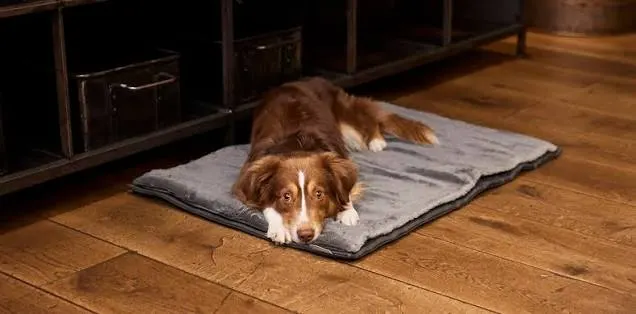
If your floors tell the story of every walk your dog has ever taken, a proper mat by the door can genuinely change your daily routine. Not all dog mats are built the same, though, and a lot of standard doormats simply are not designed to handle real mud, water, and dirt from paws. This guide breaks down exactly what to look for so you actually solve the muddy paw problem instead of just moving it a few feet indoors.
Table of Contents
Key Takeaways
- Chenille microfiber is the material most consistently recommended for absorbing mud, water, and dirt from paws
- Higher fiber density, often measured in GSM, means more moisture and dirt trapped before it reaches your floor
- A non slip backing matters as much as absorbency, since a mat that slides is a tripping hazard for both you and your dog
- Machine washable mats are far more practical long term than ones requiring special cleaning
- Placement matters, a single mat at the main entrance is rarely enough for a genuinely muddy dog
- Size should match your dog, a mat too small only catches part of the mess
Why a Dedicated Mat Actually Matters
Standard doormats, especially coir or thin woven options, are built with human shoes in mind, not paws covered in mud and water. They tend to sit on the surface rather than absorbing anything, which means the mess just gets tracked further into the house on the next step. A mat genuinely designed for paws works differently, trapping moisture and dirt within the fibers themselves rather than letting it sit on top waiting to transfer to your floor.
What to Look For: Material
Material is the single biggest factor separating an effective paw mat from a decorative one that happens to sit near the door.
- Chenille microfiber is the material most consistently recommended across reviews and product comparisons, since its dense, looped fiber structure is specifically effective at grabbing and holding onto mud, water, and dirt.
- Coir mats, the rough, bristly fiber often used in traditional doormats, are far less effective at genuine moisture absorption and can feel harsh on a dog’s paws.
- Rubber or plastic mats handle heavy mud reasonably well but do little for actual moisture absorption, often just relocating wet paw prints rather than absorbing them.
If muddy, wet paws are a regular occurrence in your household, chenille microfiber is worth prioritizing over other material types.
What to Look For: Absorbency and Density
Not all chenille mats perform equally, and fiber density plays a real role here. Mats described with a higher density, sometimes listed in grams per square meter, generally hold more moisture and dirt before becoming saturated. A denser mat also tends to hold up better over repeated use without flattening out and losing its trapping ability.
What to Look For: Non Slip Backing
An absorbent mat that slides around on your floor creates a new problem instead of solving the old one. Look specifically for a rubberized or non slip backing, since this keeps the mat in place during the exact moment your dog is bursting through the door with muddy paws and a lot of momentum. A mat that stays put also holds up better over time, since constant shifting and bunching accelerates wear.
What to Look For: Machine Washability
A mat that traps mud and water is doing its job exactly right, which also means it needs to be cleaned regularly. A machine washable mat turns this into a simple, low effort task, while mats requiring hand washing or special care tend to get cleaned far less often than they should, reducing their effectiveness over time. Quick drying materials are a genuine bonus here too, since a mat that stays damp for days can start to smell or grow mildew.
What to Look For: Size and Placement
A mat that is too small only catches part of the mess, particularly for larger dogs with a wider stride. Measure the entry space you are working with and choose a size that comfortably fits your dog’s full stride, not just a token strip by the door. For households with a genuinely muddy dog, a single mat at the front entrance often is not enough. Consider placing a mat at every door your dog regularly uses, including a back door leading to a yard, since mud tracked in from a secondary entrance defeats the purpose of a well chosen mat at the front.
Comfort Matters Too
A mat that is rough or scratchy on paws can discourage your dog from actually stepping on it consistently, which defeats the purpose entirely. Chenille naturally tends to feel soft underfoot compared to coir or thin rubber options, which is part of why it performs well on both the practical and comfort fronts at once.
Building a Full Muddy Paw Routine
A good mat significantly reduces the mess, but pairing it with a quick paw wipe routine after wet or muddy walks catches what the mat alone cannot. Keeping a towel near your main entrance for a fast wipe down before your dog even steps onto the mat adds another layer of protection, especially during particularly wet or snowy stretches of weather. If you deal with muddy paws mainly during colder months, our guide on winter wear for dogs in cold climates covers boots and other gear that can reduce how much mud and slush actually reaches your dog’s paws in the first place.
Maintenance Tips to Keep a Mat Performing Well
- Shake out loose dirt and debris regularly before it works its way deep into the fibers
- Wash according to the care label, since overly hot water or high heat drying can damage rubber backing over time
- Replace a mat once it noticeably flattens or stops absorbing the way it used to, since fiber density does diminish with heavy use over time
- Keep a spare mat in rotation if your household deals with genuinely frequent mud, so one is always clean and ready
FAQ
What material is best for a dog mat for muddy paws?
Chenille microfiber is the material most consistently recommended, since its dense, looped fiber structure is specifically effective at trapping mud, water, and dirt rather than letting it sit on the surface. Coir and thin rubber mats generally perform noticeably worse at genuine moisture absorption.
How do I choose the right size dog mat?
Measure your dog’s stride and choose a mat that comfortably accommodates a full step or two, rather than a narrow strip that only catches part of each paw print. Larger dogs typically need a noticeably bigger mat than what looks proportionate for a small breed.
Are non slip mats actually necessary?
Yes. A mat without a proper non slip backing can shift or bunch up, particularly when a dog is moving quickly through a doorway, creating a tripping hazard rather than solving the muddy paw problem. A rubberized backing keeps the mat securely in place through regular use.
How often should I wash a dog mat for muddy paws?
This depends on how frequently your dog tracks in mud and water, but as a general guideline, washing weekly during regular use, or more often during particularly wet or muddy seasons, keeps the mat performing at its best and prevents lingering odor or mildew.
Conclusion
The right mat for muddy paws comes down to a handful of concrete factors, chenille microfiber material, solid fiber density, a non slip backing, easy machine washing, and a size that actually matches your dog. Skip the decorative doormat that happens to be nearby and choose one built specifically for the job, and place it at every entrance your dog regularly uses, and you will notice a real difference in how much mess actually makes it past your front door.
Browse our full range of dog mats to find an option that fits your home and your dog’s needs.