
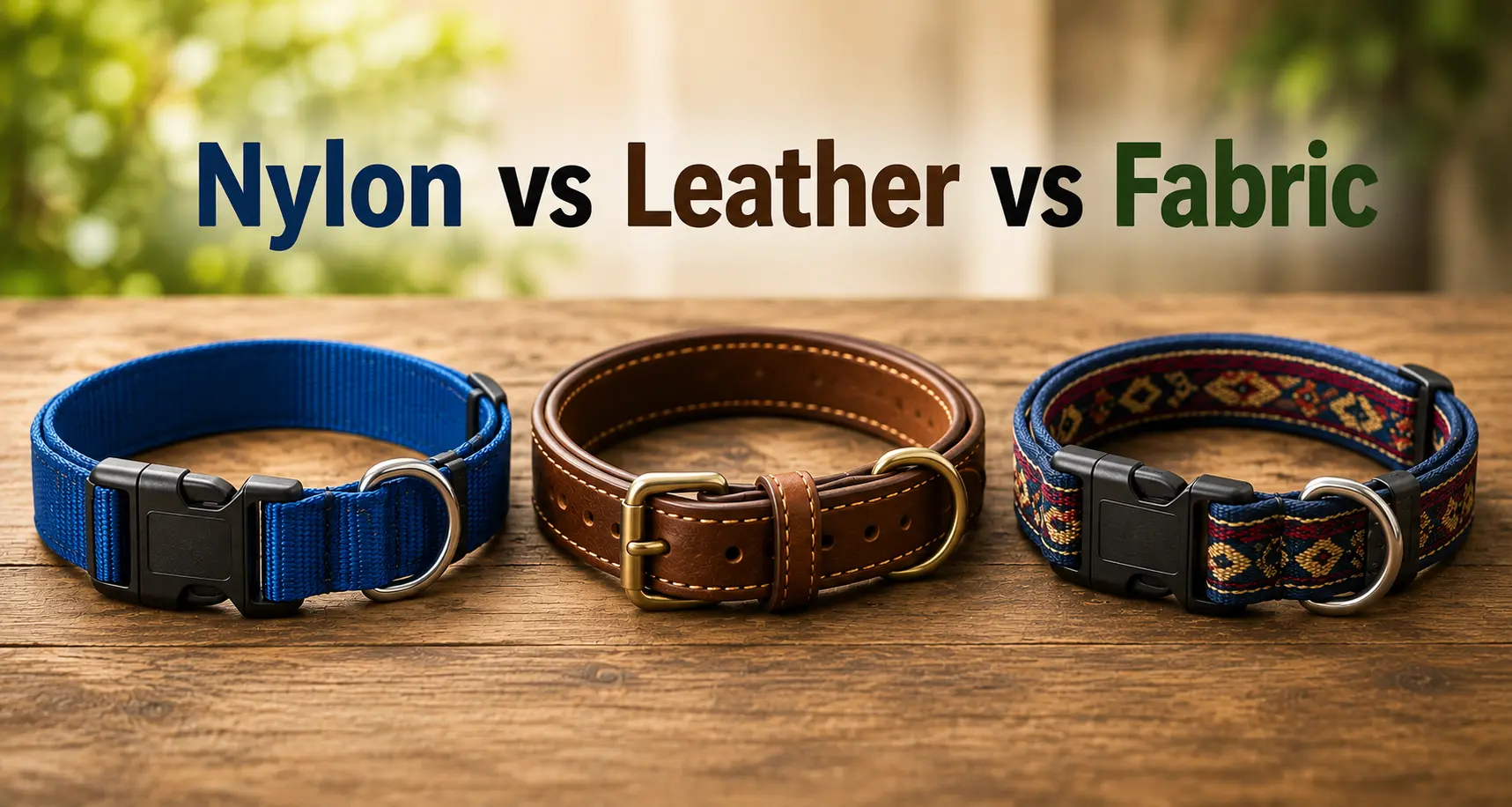
Walk into any pet store and you will find collars made from a handful of different materials, each with a different feel, price point, and set of tradeoffs. The honest answer is that there is no single best material for every dog, only the best fit for your dog’s lifestyle, coat, and how often that collar is going to get wet, muddy, or chewed on. This guide breaks down nylon, leather, and fabric collars honestly, without leaning toward whichever material happens to be more profitable to sell.
Table of Contents
Key Takeaways
- Nylon is the most affordable, water resistant, and low maintenance option, and it comes in the widest range of colors and styles
- Leather is generally more durable long term and often softens comfortably with wear, but it costs more upfront and needs occasional conditioning
- Fabric collars, often cotton or blended weaves, are soft and comfortable but typically the least durable of the three
- No single material is universally hypoallergenic, dogs can react to any material depending on individual sensitivity
- Your dog’s lifestyle, especially water exposure and chewing habits, matters more than brand claims when choosing a material
- Cost per year of use, not just the upfront price, is a more useful way to compare materials
Nylon Dog Collars
Nylon is by far the most common collar material, and for practical reasons. It is affordable, holds up well to water and humidity, and is easy to wipe down or machine wash when it gets dirty.
Advantages
- Highly water and moisture resistant, making it a strong choice for dogs that swim or live in humid climates
- Widely available in a huge range of colors, patterns, and designs
- Machine washable and simple to clean
- Generally the most affordable option upfront
Drawbacks
- Tends to wear out faster than quality leather over years of heavy use
- Plastic side release buckles can become brittle in very cold weather
- Lower quality nylon can feel stiff against the skin until it softens with use
Best For Dogs that swim regularly, live in wet or humid climates, or owners who want an affordable, easy to clean, everyday option available in a wide range of styles.
Leather Dog Collars
Leather has a classic look and a reputation for durability, though the reality depends heavily on the quality of leather used and how well it is cared for.
Advantages
- Genuinely durable when made from full grain leather and properly maintained
- Softens and molds to your dog’s neck shape over time, which many owners find more comfortable for long term wear
- Ages with a natural patina rather than looking worn out
- A natural material, which some owners with sensitive skinned dogs prefer to synthetic alternatives, though this varies by individual dog
Drawbacks
- Higher upfront cost compared to nylon or fabric
- Breaks down faster with frequent water exposure, and is not a good fit for dogs that swim often
- Requires occasional conditioning to stay supple and avoid cracking
- Some dogs, particularly heavy chewers, may be tempted to chew on leather
Best For Dogs with a low to moderate water exposure lifestyle, owners who want a collar that improves in comfort over time, and anyone prioritizing long term durability over upfront cost.
Fabric Dog Collars
Fabric collars, often made from cotton, canvas, or blended weaves, prioritize softness and comfort, frequently built around an inner nylon core for structural support.
Advantages
- Generally very soft and comfortable right out of the packaging, with no real break in period
- Wide variety of patterns and designs, often even more varied than nylon webbing
- Comfortable option for dogs with particularly sensitive skin, assuming the fabric quality is high
Drawbacks
- Typically the least durable of the three main materials
- Lower quality fabric or fraying edges can cause skin irritation over time
- May absorb odor more readily than nylon or leather if not washed regularly
Best For Dogs with sensitive skin who need a soft, comfortable everyday collar, and owners who prioritize a huge range of decorative pattern options.
Quick Comparison
| Material | Durability | Water Resistance | Comfort | Maintenance | Typical Cost |
| Nylon | Good | Excellent | Good once broken in | Low, machine washable | Low |
| Leather | Very good with care | Poor | Improves over time | Moderate, needs conditioning | Higher |
| Fabric | Fair | Fair | Excellent immediately | Low to moderate | Low to moderate |
Is Any Material Truly Hypoallergenic?
No collar material is universally hypoallergenic. Some owners find their dogs react less to natural materials like leather, while others find synthetic materials like nylon cause fewer issues, and much of it comes down to your individual dog rather than the material category as a whole. If your dog shows signs of irritation, redness, or hair loss specifically around the collar area regardless of material, it is worth having your vet take a look, since it could point to an allergy, a fit issue, or a skin sensitivity unrelated to the collar itself.
Thinking About Cost Per Year, Not Just Upfront Price
A cheaper collar that needs replacing every year is not necessarily a better deal than a pricier one that lasts three or four years. When comparing materials, it helps to think in terms of cost per year of actual use rather than the sticker price alone. That said, for many owners, having a couple of affordable, easily replaceable nylon collars, rotated as needed, works out just as practically as investing in a single premium leather piece.
How Fit Matters More Than Material
Regardless of which material you choose, a properly fitted collar matters more for your dog’s comfort and safety than the material itself. A high quality leather collar that is too tight causes the same problems as an ill fitting nylon one. Our guide on how tight a dog collar should be covers the two finger rule and other signs to check for, regardless of which material you land on. If you are also weighing a collar against a harness altogether, our collar versus harness comparison breaks down which fits your dog’s needs best.
A Practical, Everyday Nylon Option
For owners looking for the practical, low maintenance benefits nylon offers, the FIS Classic Collar for Dogs in Black is built from soft, durable nylon webbing designed to stay comfortable against the neck without the stiffness sometimes associated with lower quality nylon. It includes a fully adjustable strap for a proper two finger fit, a quick release buckle for easy on and off, and a sturdy metal D ring for secure leash attachment, a solid everyday choice if water resistance, affordability, and easy care top your priority list.
Frequently Asked Questions
Which collar material lasts the longest?
High quality, properly maintained leather generally outlasts nylon and fabric over several years, though nylon holds up better specifically against frequent water exposure.
Is nylon or leather better for dogs that swim?
Nylon is the better choice for dogs that swim regularly, since leather breaks down faster with frequent water exposure and requires more maintenance to recover from it.
Are fabric collars safe for dogs with sensitive skin?
Good quality fabric collars are often comfortable for sensitive skinned dogs, but low quality fabric with rough or fraying edges can actually cause irritation, so quality matters more than the material category itself.
Do leather collars really soften over time?
Yes, genuine leather typically softens and molds somewhat to your dog’s neck with regular wear, which is part of why some owners find it more comfortable long term compared to stiffer synthetic materials.
Conclusion
There is no single best collar material for every dog, only the best fit for your specific dog’s lifestyle, sensitivities, and how much water or rough wear that collar is going to see. Nylon wins on affordability, water resistance, and easy care. Leather wins on long term durability and a natural feel that improves with age. Fabric wins on immediate softness and pattern variety. Whichever material you choose, prioritize proper fit and quality construction over marketing claims about which material is objectively superior.