
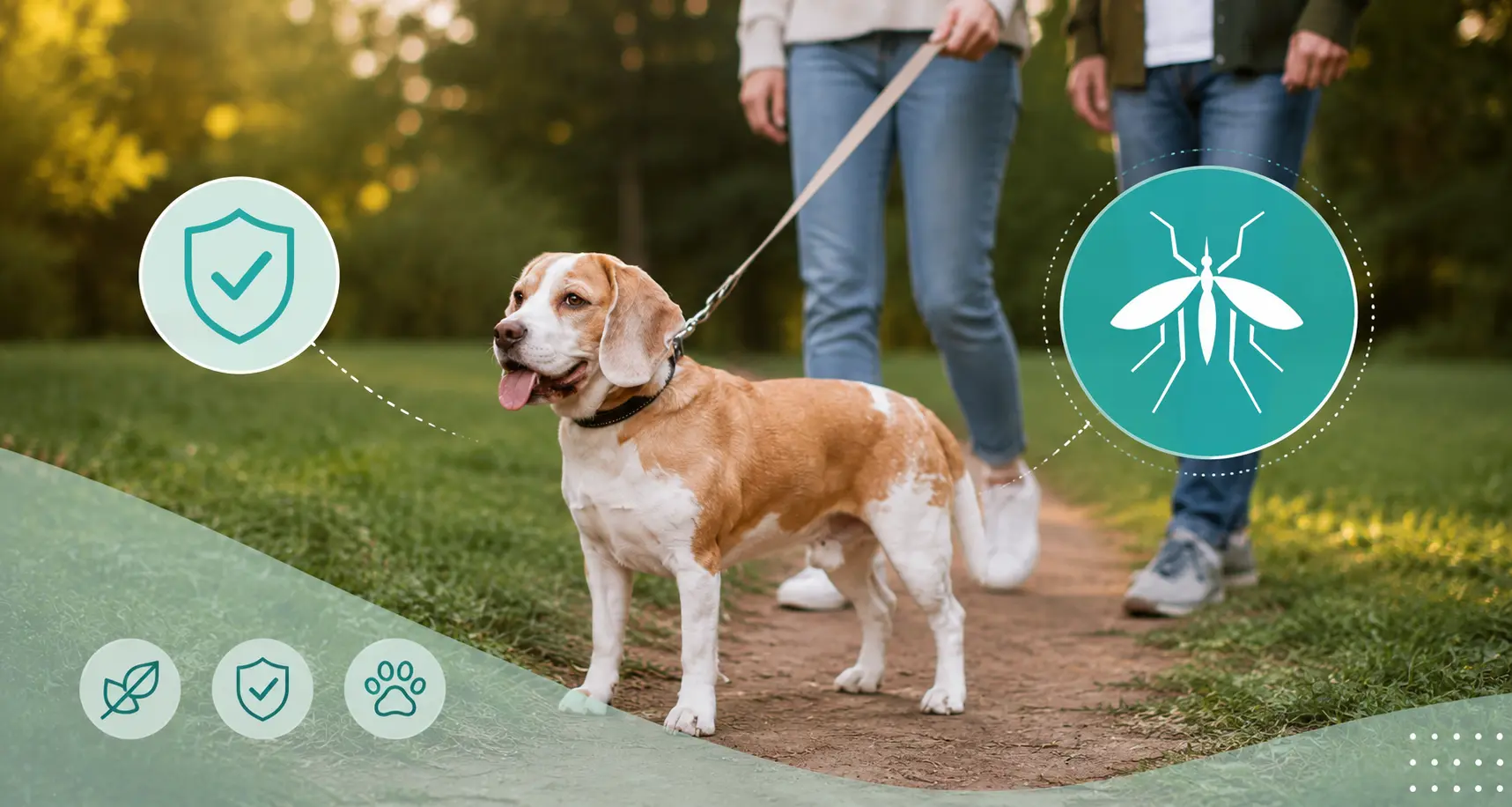
A mosquito bite might seem like a minor annoyance, a small itchy welt that disappears in a day or two. For dogs, though, mosquitoes carry a risk that goes well beyond itching, since they are the primary way dogs contract heartworm disease, a condition that is serious and expensive to treat but genuinely simple to prevent.
Table of Contents
Below is a complete breakdown of how to keep your dog safe from mosquito bites, covering practical prevention around your home, safe repellent options, and the warning signs that mean it is time to call your vet.
Key Takeaways
- Mosquitoes can bite straight through a dog’s fur, so coat thickness offers very little natural protection.
- Heartworm disease, transmitted through mosquito bites, is the most serious long term risk, not the bite itself.
- Human insect repellents containing DEET should never be applied to dogs.
- Eliminating standing water around your home is one of the most effective prevention steps you can take.
- Most single bites resolve on their own within a day or two, but excessive swelling or scratching warrants a vet check.
Why Mosquito Bites Matter More Than They Seem
It is easy to assume a dog’s fur offers real protection against mosquitoes, but a mosquito’s proboscis can reach right through fur to the skin underneath, which means coat thickness does very little to prevent bites. Mosquitoes also tend to target areas with thinner fur, like the ears, nose, belly, and around the eyes.
The bite itself is usually the least concerning part. The bigger risk is heartworm disease, a serious and potentially fatal condition transmitted when an infected mosquito bites a dog, injecting immature heartworm larvae into the bloodstream. This is exactly why consistent prevention matters so much more than treating individual bites after the fact. Mosquitoes are just one of several warm weather health risks worth knowing about, and our guide on common dog diseases in summer and how to prevent them covers the broader picture of what to watch for during the hottest months.
1. Eliminate Standing Water Around Your Home
Mosquitoes need standing water to breed, and it takes surprisingly little, sometimes as little as an inch, for them to lay eggs successfully. Regularly checking your yard for anywhere water can collect is one of the single most effective ways to reduce the mosquito population your dog is exposed to.
- Empty and refill bird baths, flowerpot saucers, and buckets regularly
- Check gutters for clogs that allow water to pool
- Change your dog’s outdoor water bowl daily rather than letting it sit
- Consider a fountain feature for bird baths, since moving water discourages breeding
2. Time Walks Around Peak Mosquito Hours
Mosquitoes are generally most active around dawn and dusk, though this varies somewhat by species and region. Shifting outdoor time to the middle of the day, when mosquito activity tends to be lower, can meaningfully reduce your dog’s exposure without changing your overall routine much.
- Dawn and dusk tend to be peak mosquito activity windows in most regions
- Midday walks generally carry lower mosquito exposure risk
- Local mosquito activity patterns can vary, so pay attention to your specific area
- Marshy, wet, or heavily vegetated areas tend to have higher mosquito activity
3. Use a Pet Safe Repellent, Never Human Insect Repellent
This is one of the most important safety points in this entire guide. Human insect repellents containing DEET should never be applied to dogs, since dogs are prone to licking their fur and ingesting the product, which can lead to genuine toxicity.
Pet specific repellent sprays exist and are formulated to be safe for regular use on dogs. Always check with your vet before introducing a new repellent product, especially if your dog has sensitive skin or existing health conditions.
- Never apply DEET or other human insect repellents to a dog
- Choose products specifically labeled and formulated for pets
- Ask your vet before trying a new repellent, especially for dogs with sensitive skin
- Reapply pet safe sprays as directed, since effectiveness typically fades within a few hours
4. Stay Current on Heartworm Prevention
Consistent heartworm prevention is genuinely the most important step on this entire list. Monthly preventive medications, prescribed by your vet, are highly effective at stopping an infection before it can take hold, even if your dog does get bitten by an infected mosquito.
Heartworm symptoms often do not appear until the disease has progressed significantly, which is why an annual vet screening matters even for dogs that are consistently on preventive medication, catching any gaps in protection before they become a serious problem.
- Ask your vet about the right monthly heartworm preventive for your dog
- Consistency matters more than the specific product, missed doses create real risk
- Schedule an annual heartworm screening even if your dog is on preventive medication
- Heartworm treatment, if needed later, is far more difficult and expensive than prevention

5. Repair Window and Door Screens
Mosquitoes getting indoors is more common than most owners realize, especially through small gaps in window screens or around air conditioning units. If you notice new bites on yourself or your dog after time spent indoors, a gap somewhere is worth investigating.
- Check window and door screens regularly for tears or gaps
- Seal gaps around air conditioning units and window sills
- New bites appearing indoors are a sign mosquitoes have found a way in
- Running fans indoors can also help, since mosquitoes are weak fliers
6. Set Up a Mosquito Trap in Your Yard
Mosquito traps, particularly ones that emit carbon dioxide, work by luring mosquitoes away from the areas your dog actually spends time in. Since mosquitoes are drawn to carbon dioxide, a trap essentially competes with your dog for the mosquito’s attention, and the trap wins.
- Place traps strategically near where your dog spends the most outdoor time
- Carbon dioxide emitting traps tend to be especially effective
- Works well combined with standing water elimination for a bigger overall impact
- A worthwhile investment for yards with consistently high mosquito activity
7. Use Natural Deterrents Carefully
Certain scents, citronella, lavender, and peppermint among them, are known to discourage mosquitoes. Citronella candles or citronella grass planted around a yard can provide a mild layer of extra deterrence, particularly during outdoor gatherings.
Caution matters here, though. Concentrated essential oils can be genuinely harmful if ingested or applied directly to a dog’s skin, and some are particularly dangerous for cats in multi pet households. Keep any essential oil products out of reach rather than applying them directly.
- Citronella candles or grass offer mild, ambient mosquito deterrence
- Never apply concentrated essential oils directly to a dog’s skin or fur
- Keep essential oil products stored well out of reach, especially in homes with cats
- Treat natural deterrents as a supplement to prevention, not a replacement for it
8. Add Extra Coverage During High Risk Outings
For camping trips, hikes through wooded or marshy areas, or evenings spent outdoors during peak mosquito season, a lightweight, breathable dog shirt can add a bit of physical barrier over thin skinned areas like the belly.
- Lightweight breathable fabric works best to avoid overheating
- Most useful for high risk environments like camping or marshy trails
- Not a replacement for repellent or heartworm prevention, just an added layer
- Particularly helpful for short haired breeds with less natural coverage
Recognizing a Bite Reaction vs a Bigger Problem
| Situation | What You Will See | What to Do |
| Normal bite reaction | Small raised welt, mild itching | Monitor, discourage scratching, usually resolves in 1 to 2 days |
| Allergic reaction | Excessive swelling, hives, widespread itching | Contact your vet the same day |
| Scratched or infected bite | Scabbing, swelling, foul odor, discharge | Vet visit needed for treatment |
| Possible heartworm exposure | No visible signs at first, symptoms appear later | Stay current on prevention, annual vet screening |
Most single mosquito bites are genuinely minor and resolve without any treatment. The exceptions worth watching for are excessive swelling, signs of infection from scratching, or any indication your dog may not be current on heartworm prevention. If scratching or licking becomes a persistent habit beyond just a fresh bite, our guide on why your dog keeps licking their paws can help you figure out whether something beyond a single bite is going on.
Prevention Checklist
- Eliminate standing water around your home and yard weekly
- Confirm heartworm prevention is current and consistent, not just occasional
- Use only vet approved, pet specific repellent products
- Check and repair window screens as needed
- Time outdoor activities around lower mosquito activity when possible
- Schedule an annual heartworm screening with your vet
Frequently Asked Questions
Does a dog’s fur protect them from mosquito bites?
Not much. A mosquito’s proboscis can reach through fur to the skin underneath, so coat thickness offers very little real protection.
Can I use human mosquito repellent on my dog?
No. Repellents containing DEET should never be applied to dogs, since they are prone to licking their fur and ingesting the product, which can cause toxicity.
Are mosquito bites actually dangerous to dogs?
A single bite is usually minor, but mosquitoes are the primary way dogs contract heartworm disease, which is genuinely serious. Consistent prevention matters more than treating individual bites.
How do I know if my dog has heartworm disease?
Early stage heartworm disease often shows no visible symptoms, which is why an annual vet screening is important even for dogs on consistent preventive medication.
What does a mosquito bite look like on a dog?
Typically a small, raised welt, sometimes accompanied by mild itching. Most resolve within one to two days without treatment.
Are essential oils safe for repelling mosquitoes from dogs?
Concentrated essential oils can be harmful if ingested or applied directly to skin, and some are especially dangerous for cats. Ambient use, like citronella candles, is generally safer than direct application.
Conclusion
Keeping your dog safe from mosquito bites comes down to a handful of consistent habits, removing standing water, timing outdoor activities thoughtfully, using only pet safe repellents, and never skipping heartworm prevention. None of these steps require much effort individually, but together they meaningfully reduce your dog’s risk.
The bite itself is rarely the real concern. Staying consistent with heartworm prevention and annual screenings is what actually protects your dog from the more serious risk mosquitoes carry, long after the itch from a single bite has faded.