
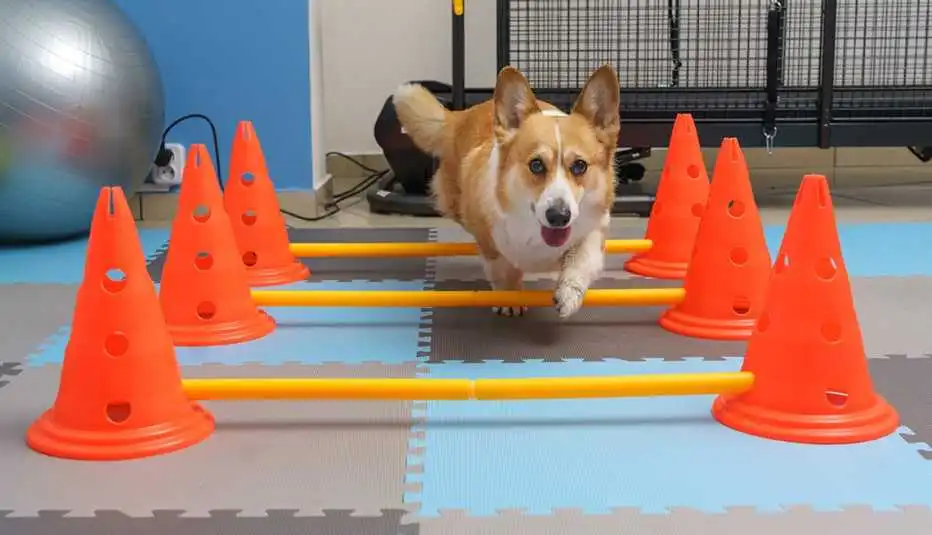
Rainy days, extreme heat, or just a packed schedule can turn regular outdoor exercise into a challenge. A bored dog left without an outlet often finds one on their own, usually in the form of chewed furniture or nonstop pacing, so having a few reliable indoor games ready makes a real difference.
Table of Contents
Below are 12 indoor games to keep your dog entertained, covering both mental and physical stimulation, so you have options no matter how much space or energy you are working with on a given day.
Key Takeaways
- A mix of mental and physical games covers boredom more completely than physical exercise alone.
- Many effective indoor games use household items you already have, not expensive toys.
- Mental games can tire out a dog just as effectively as physical play, often in less time.
- Rotating games keeps things interesting rather than relying on just one favorite activity.
- Supervision matters during higher energy indoor games to avoid knocked over furniture or accidents.
Why Indoor Games Matter More Than People Expect
It is easy to assume a dog only needs a walk to feel satisfied, but mental stimulation plays just as large a role in a dog’s overall wellbeing. Problem solving activities, like puzzles and scent games, can genuinely tire a dog out faster than a walk, since working through a mental challenge takes real focus and energy.
Indoor games also come in handy during unavoidable situations, extreme weather, an injury recovery period, or simply a day where getting outside is not realistic. Having a rotation of go to indoor games means boredom does not have to turn into a behavior problem just because the usual routine gets disrupted.
1. Muffin Tin Puzzle
This simple DIY puzzle uses a standard muffin tin with treats placed in a few of the cups, each one covered by a tennis ball. Your dog has to figure out which balls to move to find the hidden treats, turning a two minute snack into a genuine problem solving session.
Changing which cups hold treats each round keeps your dog from simply memorizing the pattern, which extends how long the puzzle stays genuinely challenging and engaging over repeated use.
- Uses items most households already have on hand
- Great low energy option for a rainy day or after a long walk
- Change up which cups hold treats to keep the challenge fresh
- Works well for dogs of nearly any size or age

2. Hide and Seek
Hide and seek taps into a dog’s natural instincts around searching and scent tracking. Start by having your dog stay while you hide in a nearby room, then call their name and celebrate enthusiastically once they find you.
This game doubles as informal recall practice, reinforcing that coming to find you is always rewarding. As your dog gets better at it, you can hide in trickier spots throughout the house to extend the challenge.
- Reinforces recall in a fun, low pressure way
- Taps into natural scent tracking and searching instincts
- Easy to make harder over time by choosing trickier hiding spots
- Works well as a quick energy burner between other activities
3. Indoor Fetch
A long hallway or open staircase makes an ideal spot for a scaled down version of fetch, letting your dog burn real energy without needing a backyard. A soft ball or plush toy works best to avoid any accidental damage to walls or furniture.
This game is one of the fastest ways to tire out a high energy dog in a small space, since the repeated sprinting adds up quickly even over a relatively short distance.
- A hallway or staircase works well as an indoor fetch space
- Use a soft ball or plush toy to avoid damage to your home
- One of the quickest ways to burn physical energy indoors
- Clear breakable items from the play area before starting
4. Tug of War
Tug of war is a genuinely effective way to raise a dog’s heart rate without needing much space at all, making it perfect for smaller apartments or homes without a big open area to play in.
Teaching a reliable drop it command alongside this game keeps things controlled and fun rather than overly rough, and it doubles as useful practice for that exact command in a low stakes, playful context.
- Raises heart rate quickly with very little space required
- Pair with a reliable drop it command for controlled play
- Use a dedicated tug toy rather than random household items
- Let your dog win occasionally to keep the game motivating
5. Frozen Puzzle Feeder
Stuffing a hollow rubber toy with wet food or peanut butter and freezing it overnight turns a quick snack into a longer lasting activity that keeps a dog occupied and focused for a solid stretch of time.
This works especially well during particularly hot days or busy mornings when you need your dog settled and calm for an extended period without active supervision required the entire time.
- Extends engagement time far beyond a regular treat or meal
- Great option for keeping a dog calm and settled for a longer stretch
- Freezing adds a cooling element that is especially nice in warmer months
- Pairs well with a genuinely tough, chew resistant toy for durability
If your dog goes through frozen puzzle feeders quickly and you need something tougher, our guide on the best chew toys for aggressive chewers covers durable options built to handle serious, prolonged gnawing.
6. DIY Cardboard Box Puzzle
Empty cardboard boxes, toilet paper rolls, and paper towel tubes can all be repurposed into a simple treat hiding puzzle. Place treats inside a few of the items, then let your dog figure out how to get them open.
This is one of the most budget friendly options on this list, since it uses items that would otherwise go straight into the recycling bin, and it can be assembled in just a couple of minutes.
- Uses free household items instead of store bought puzzles
- Quick to set up, usually just a couple of minutes
- Great option to try before investing in a specialty puzzle toy
- Supervise closely if your dog tends to shred cardboard rather than just open it
7. Indoor Agility Course
Stacked pillows, blankets, and household furniture can form a simple obstacle course, letting your dog practice jumping, weaving, and climbing in a small, controlled space.
Walk your dog through the course a few times first so they understand what is expected, then gradually add distance by calling them through it from further away. This combines real physical exercise with a bit of problem solving as your dog learns the sequence.
- Combines physical exercise with sequence based problem solving
- Uses household items like pillows, blankets, and furniture
- Clear the space of anything fragile before starting
- Walk your dog through slowly at first before adding speed or distance
8. Find It Scent Game
Hiding treats or a favorite toy around the house and encouraging your dog to sniff them out taps directly into their natural scenting ability, an instinct that takes real mental effort to use effectively.
Start with easy, visible hiding spots and gradually make them trickier as your dog gets better at the game. Strongly scented treats tend to work best for beginners, since they are easier to track initially.
- Taps directly into a dog’s natural scenting instincts
- Start easy and gradually increase hiding difficulty
- Strongly scented treats work best for dogs new to the game
- Genuinely mentally tiring, often more so than a regular walk
9. Command Chaining
Once your dog knows several basic commands, stringing them together in a quick sequence, sit, down, spin, come, adds a mental challenge on top of familiar skills, keeping training sessions fresh and engaging.
Our guide on the top 15 commands every dog should know is a great foundation if your dog does not yet have enough commands down to make chaining interesting.
- Builds on commands your dog already knows in a new, engaging way
- Keeps training sessions feeling fresh rather than repetitive
- Varying the order occasionally adds an extra mental challenge
- A great option when you want mental stimulation in a small space
10. Shell Game
Using three cups and a treat, hide the treat under one cup, then shuffle them slowly while your dog watches. Let your dog choose which cup they think holds the treat, and reward them with it if they get it right.
This classic game builds focus and patience, and it works particularly well for dogs that need practice waiting calmly rather than immediately grabbing at things, since they have to watch and think before acting.
- Builds focus and patience in a low energy format
- Easy setup using cups and a treat you already have on hand
- Good option for dogs working on impulse control
- Can be made harder by shuffling more quickly or adding a fourth cup
11. Toy Basket Rotation
Keeping every toy out all the time often means a dog stops noticing any of them individually. Rotating a smaller selection of toys in and out of a basket every few days keeps things feeling new and interesting without needing to buy anything additional.
Some owners designate a couple of special toys that only come out on particularly boring days, like a rainy afternoon stuck inside, which adds an extra layer of novelty and excitement when they finally reappear.
- Prevents toy fatigue by limiting what is available at any given time
- Costs nothing beyond toys you likely already own
- Designating special rainy day toys adds extra novelty when needed most
- Simple to maintain with just a quick swap every few days
12. Trick Training
Beyond basic obedience, teaching fun tricks like spin, roll over, or sit pretty gives your dog a new mental and physical challenge while strengthening your bond through positive, engaged training time.
Tricks also make a great option for showing off a bit to visiting friends or family, which adds a fun social element on top of the mental stimulation benefit for your dog.
- Adds variety beyond standard obedience commands
- Combines mental engagement with light physical activity
- Strengthens your bond through focused, positive training time
- A fun way to show off your dog’s skills to visitors
Indoor Games at a Glance
| Game | Energy Level | Mental or Physical | Space Needed |
| Muffin Tin Puzzle | Low | Mental | Small, tabletop |
| Hide and Seek | Moderate | Mental and physical | Whole house |
| Indoor Fetch | High | Physical | Long hallway |
| Tug of War | High | Physical | Small, open area |
| Frozen Puzzle Feeder | Low | Mental | Small, tabletop |
| DIY Cardboard Puzzle | Low to moderate | Mental | Small, open floor |
| Indoor Agility Course | High | Physical | Open room |
| Find It Scent Game | Moderate | Mental | Whole house |
| Command Chaining | Low to moderate | Mental | Small, open area |
| Shell Game | Low | Mental | Small, tabletop |
| Toy Basket Rotation | Low | Mental | Any room |
| Trick Training | Moderate | Mental and physical | Small, open area |
Safety Checklist for Indoor Play
- Clear breakable items from the play area before high energy games
- Use soft toys for indoor fetch to avoid damaging furniture or walls
- Watch for signs of overexertion, especially on hardwood or tile floors that can be slippery
- Supervise puzzle toys the first few times to make sure your dog cannot break off small pieces
- Take breaks between high energy games, especially for puppies or senior dogs
When Indoor Games Are Not Quite Enough
For most dogs, a rotation of these games covers boredom effectively, especially when mixed with regular walks and outdoor time whenever possible. But if your dog seems restless, destructive, or anxious even with consistent mental and physical outlets, something deeper might be going on.
Our guide on signs your dog needs brain training can help you figure out whether your dog needs a more structured approach to mental stimulation beyond casual indoor games.
Frequently Asked Questions
Can mental games really tire out a dog as much as physical exercise?
Yes, often more so. Problem solving activities require sustained focus, which can be mentally exhausting in a way that produces genuine tiredness, sometimes faster than a regular walk.
What indoor games work best for small apartments?
Tug of war, puzzle feeders, the shell game, and trick training all work well in small spaces, since none of them require much room to be effective.
Are puzzle toys safe to leave with my dog unsupervised?
It depends on the toy and your dog’s chewing style. Supervise the first several uses, and only leave a puzzle unattended once you are confident your dog cannot break off or swallow small pieces.
How often should I rotate my dog’s toys?
Every few days to a week tends to work well for most dogs, keeping toys feeling fresh without requiring constant effort on your part.
What household items make good DIY dog puzzles?
Muffin tins, cardboard boxes, toilet paper rolls, and paper towel tubes all work well for simple, budget friendly treat hiding puzzles.
Can indoor games replace daily walks entirely?
Indoor games are a great supplement, but they generally should not fully replace regular walks, since walks also provide outdoor sensory experiences and consistent physical exercise.
Final Thoughts
Keeping a dog entertained indoors does not require expensive equipment or a big backyard. A mix of mental puzzles, quick physical games, and a bit of creative use of household items covers most of what a bored dog actually needs on a day stuck inside.
Try rotating through a few different games from this list rather than relying on just one, and pay attention to which ones your dog responds to best. A little variety goes a long way toward keeping both mind and body genuinely satisfied, rain or shine.