

It happens fast. One minute your dog is chewing a toy, the next minute they are gagging, pawing at their mouth and looking at you as if you should know exactly what to do.
Most dog owners do not. And that’s the problem, because in a real emergency, those first few minutes can change everything. Knowing the common dog emergencies and what to do about them is one of the most useful things a dog parent can learn.
Table of Contents
This guide walks through eleven of the most common ones, what they look like, what to do right away, and what to avoid. Read it once now, while everything is calm, and you’ll be far steadier on the day you need it.
Key Takeaways
- Stay calm, call your vet or emergency clinic early, and tell them you are on your way.
- Never “wait and see” with bloat, heatstroke, poisoning, seizures or trouble breathing.
- Do not make your dog vomit or give human medicines unless a vet tells you to.
- First aid buys time. It does not replace professional treatment.
- Save your vet’s number and the nearest 24-hour clinic in your phone today.
What Is a Dog Emergency?
A dog emergency is any sudden injury or illness that threatens your dog’s life, breathing, comfort or long-term health and needs a vet right away. Common examples include choking, heatstroke, poisoning, bloat, seizures and heavy bleeding. Quick, calm action before reaching the clinic can improve the outcome.
Emergency or Wait-and-See? Know the Red Flags
Not every worry is an emergency. A single bout of mild stomach upset is different from a dog who is collapsing. But some signs should send you to a vet immediately, no waiting for the morning.
Treat any of these as an emergency:
- Trouble breathing, blue or pale gums, or collapse
- Heavy bleeding that won’t stop
- Suspected poisoning, even if your dog seems fine
- A swollen, hard belly with retching and nothing coming up
- A seizure that lasts more than a couple of minutes, or several in a row
- Signs of heatstroke, like extreme panting, drooling and weakness
- Repeated vomiting, or being unable to pass urine
- Major trauma, a fall, a car accident or severe pain
Why Quick Action Matters
Your dog can’t tell you what’s wrong, and many emergencies get worse by the hour. With poisoning, treatment is often most effective in the first few hours. With bloat and heatstroke, every minute counts.
The good news is that you don’t need to be a vet. A calm owner who knows the basics, has the clinic’s number handy and gets moving quickly can make a real difference.
Key Benefits of Being Prepared
A little preparation brings real peace of mind:
- You act within seconds instead of freezing or panicking
- You give your vet clear, useful information when you call
- You avoid well-meant mistakes that make things worse
- You reach the clinic faster, with the right things in hand
- Your whole family knows what to do, not just you
11 Common Dog Emergencies and What to Do
Here are the eleven emergencies every dog owner should recognise, with the key steps for each. Remember, call ahead while you’re getting ready to go.
1. Choking
What it looks like: Gagging, pawing at the mouth, drooling, panicked behaviour, struggling to breathe or blue-tinged gums.
What to do: Look inside the mouth. If you can see the object and can remove it easily, do so carefully. Do not push fingers deep into the throat. If your dog is still choking or stops breathing, a canine version of the Heimlich manoeuvre may be needed. Ask your vet clinic to show you how, before you ever need it.
Then: Even if the object comes out, get your dog checked by a vet.
| Remember: A frightened, choking dog may bite out of panic. Move calmly and protect your hands. |
2. Heatstroke
What it looks like: Heavy, noisy panting, thick drool, bright red gums, wobbliness, vomiting or collapse. It often happens after a hot-car stay, hard exercise on a warm day, or no shade and water.
What to do: Move your dog to shade or air conditioning at once. Wet them with cool, not ice-cold, water, especially on the belly, paws and inner thighs. Offer small sips of water, and head to the vet immediately, even if they seem to recover.
Never: Do not use ice water or immerse the dog in freezing water. Do not leave your dog alone in a parked car, ever.
3. Poisoning
What it looks like: Vomiting, drooling, tremors, wobbling, lethargy, seizures or unusual behaviour. Sometimes there are no signs at first.
Common culprits: Chocolate, grapes and raisins, onions and garlic, sugar-free products containing xylitol, rat bait, human medicines, cleaning products and certain plants.
What to do: Remove your dog from the source. Call your vet or a pet poison helpline straight away and tell them what, how much and when. Take the packaging with you.
Never: Do not make your dog vomit at home unless a vet specifically tells you to. With some substances, it makes things worse.
| Remember: With poisoning, never “wait and see.” Treatment works best early. |
4. Bloat (Gastric Dilatation and Volvulus)
What it looks like: A swollen, hard belly, repeated retching with nothing coming up, drooling, restlessness and obvious discomfort. It mainly affects large, deep-chested breeds.
What to do: Go to the nearest emergency vet immediately and call ahead on the way. Bloat can twist the stomach, which cuts off blood flow and needs surgery.
Never: Do not wait to see if it settles overnight, and do not try home remedies.
| Remember: Of all the emergencies in this guide, bloat is one of the fastest. Treat it as urgent, always. |
5. Seizures
What it looks like: Sudden collapse, stiffening, paddling legs, drooling, loss of bladder control and unresponsiveness.
What to do: Stay calm and keep the dog from hurting themselves. Move furniture away, dim the lights, and note the time. Keep your hands away from their mouth. Dogs can’t swallow their tongues.
Then: Contact your vet if it’s their first seizure, if it lasts more than a couple of minutes, or if several happen close together. After it ends, keep your dog quiet and cool.
6. Severe Bleeding and Wounds
What to do: Press a clean cloth or gauze firmly on the wound. If blood soaks through, add more on top rather than removing the first layer. Keep pressure on while you travel to the vet.
Careful: An injured dog in pain may snap. If needed, use a soft muzzle, but never on a dog who is vomiting or struggling to breathe.
Never: Avoid using tight tourniquets unless a vet instructs you. Do not apply creams or human antiseptics to deep wounds.
7. Difficulty Breathing or Collapse
What it looks like: Open-mouth breathing at rest, loud or laboured breaths, blue or grey gums, weakness or fainting.
What to do: Keep your dog calm and cool, avoid stress and movement, and go to the vet at once. Drive with someone else if you can, so one person can watch your dog.
Never: Do not wait for the symptoms to pass. Breathing trouble can have many causes, and all of them need a professional.
8. Bites, Stings and Allergic Reactions
What it looks like: Sudden facial swelling, hives, itching, vomiting, drooling, or a bite wound after meeting a snake, insect or another animal.
What to do: Keep your dog as still and calm as possible and head to the vet right away. For a snake bite, note the time and, if safe, try to remember what the snake looked like, but never chase or handle it.
Never: Do not cut the wound, try to suck out venom or tie a tight band above the bite.
9. Eye Injuries
What it looks like: Squinting, tearing, redness, a cloudy eye, swelling or pawing at the face.
What to do: Stop your dog from rubbing or scratching. A soft e-collar (cone) can help. See a vet the same day, since even small eye injuries can get worse very quickly.
Never: Do not use human eye drops or press on the eye.
10. Trauma: Falls, Car Accidents and Broken Bones
What it looks like: Limping, a limb at a strange angle, crying out, refusing to move, pale gums or sudden weakness. Internal injuries may not be visible at first.
What to do: Move your dog as little as possible. Slide a flat surface, like a board or a firm blanket, underneath for carrying. Keep them warm and calm, and go straight to the vet.
Careful: Even if your dog seems fine after a bad fall or a car hit, get a check-up. Hidden injuries are common.
11. Persistent Vomiting and Diarrhoea
What it looks like: Repeated vomiting, watery or bloody diarrhoea, weakness, a painful belly, or not being able to keep water down.
What to do: Call your vet the same day. Puppies, small dogs and older dogs can dehydrate very quickly, so they should be seen sooner.
Never: Do not give human anti-diarrhoea or anti-nausea medicine without a vet’s go-ahead.
Be Prepared: Your Simple Dog First-Aid Kit
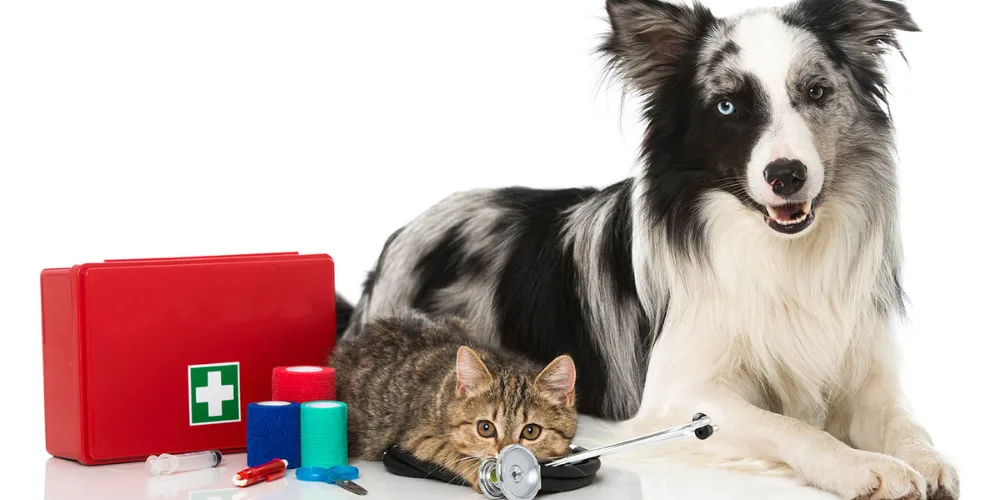
You don’t need to buy much. Keep these in one box at home and a smaller version in the car:
- Your vet’s number and the nearest 24-hour clinic’s number, written down
- Clean gauze, bandage rolls and self-sticking wrap
- Saline solution for rinsing
- Blunt-ended scissors and tweezers
- A soft muzzle sized for your dog
- A thermometer made for pets
- A blanket or towel
- Copies of vaccination records and a recent photo of your dog
Common Mistakes in a Dog Emergency
Panic leads people to do things that feel helpful but make things worse. Watch out for these:
- Waiting and seeing. Bloat, heatstroke and poisoning can become critical within hours.
- Inducing vomiting at home. Some substances cause more damage coming back up.
- Using human medicine. Common painkillers and other tablets can be toxic to dogs.
- Using ice-cold water. It can constrict blood vessels and make cooling less effective.
- Not calling ahead. A quick call lets the clinic prepare and may give you steps to follow on the way.
Expert Tips for Emergency Readiness
- Save your vet’s number and a 24-hour clinic in your phone’s favourites tonight.
- Practise getting your dog used to a muzzle with treats, long before you ever need it.
- Keep a photo of any packaging or plants your dog swallows. It speeds up treatment.
- Know your dog’s normal gum colour, breathing rate and energy, so you can spot a change.
- Make sure everyone in the family knows the plan, not just you.
Frequently Asked Questions
How do I know if my dog’s problem is an emergency?
Trouble breathing, collapse, uncontrolled bleeding, a swollen hard belly, suspected poisoning, seizures and signs of heatstroke are all emergencies. If you aren’t sure, call your vet. It is far better to ask and hear “it’s fine” than to wait and be too late.
Should I make my dog vomit if they eat something toxic?
Not unless a vet tells you to. For some substances, vomiting can cause extra harm. Call your vet or a poison helpline, and tell them what your dog ate and how much.
Can I give my dog human painkillers?
No. Many human medicines, such as common painkillers, can be dangerous to dogs. Only give medicine prescribed or approved by a vet.
What should I do if my dog eats chocolate?
Call your vet. The risk depends on the type of chocolate, the amount eaten and the size of your dog, so you will need to give them those details. Dark chocolate is generally more dangerous than milk chocolate.
How can I safely carry an injured dog?
Move your dog as little as possible. For a small dog, support the chest and hindquarters. For a large one, use a firm blanket or board as a stretcher, and ask someone to help you.
How can I prevent dog emergencies?
Keep toxic foods, medicines and chemicals out of reach, never leave your dog in a hot car, use a sturdy leash and harness outdoors, and take your dog for regular vet checkups. Prevention won’t stop every emergency, but it prevents many.
Final Thoughts
Nobody wants to think about emergencies, but a few minutes of preparation now can help you stay calm when it counts. Remember the basics: stay calm, call ahead, don’t try risky home fixes, and get to a vet quickly.
Take five minutes today to save your vet’s and nearest emergency clinic’s numbers, put together a simple first-aid kit, and share this guide with everyone who looks after your dog.
And for everyday walks, a well-fitted collar, a secure leash and a clear ID tag help keep your dog out of danger in the first place. Take a look at the FurryInSwag range, made for small paws and big adventures.