
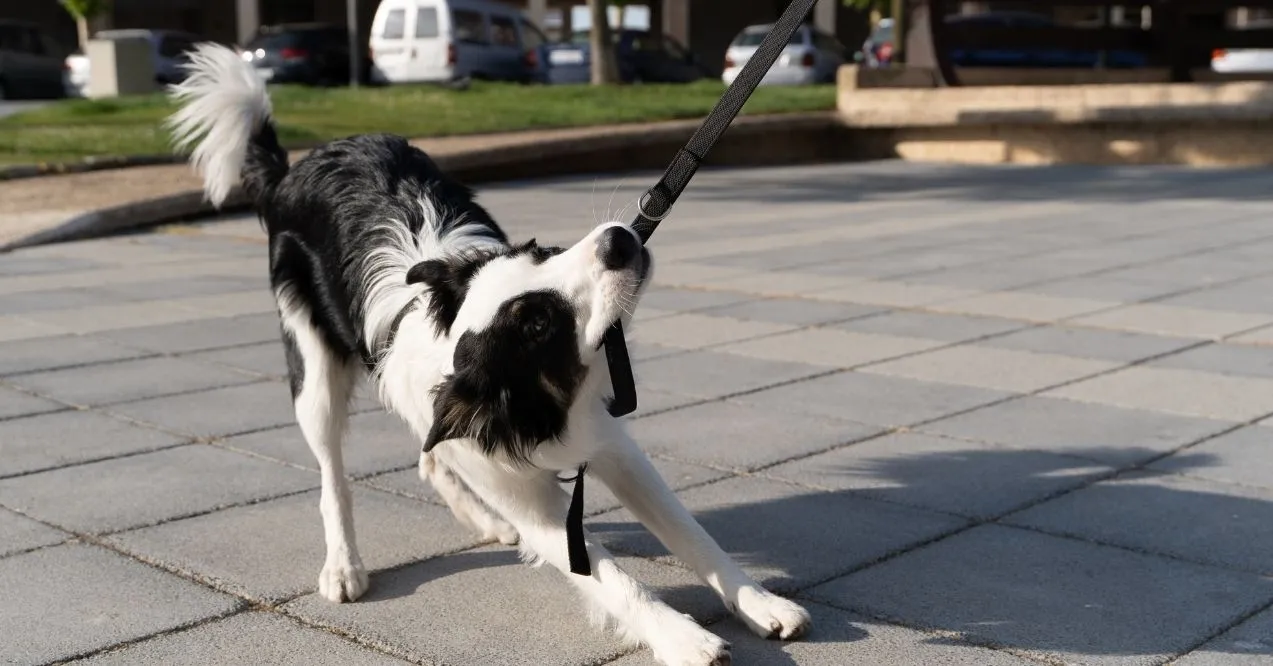
You clip on the leash, ready for a peaceful walk and within minutes, your dog has the leash in their mouth, gnawing away like it’s a chew toy. Sound familiar? You’re not alone. Leash chewing is one of the most common complaints among dog owners, and it can be both dangerous and expensive.
Table of Contents
The good news? With the right approach, you can train your dog to stop chewing the leash completely. In this guide, we’ll cover exactly why dogs chew their leash and the best step-by-step methods to fix it no frustration required.
Why Do Dogs Chew Their Leash?
Before you can fix the problem, you need to understand the cause. Dogs chew the leash for several reasons:
1. Boredom or Under-Stimulation
Dogs with excess energy often redirect that energy into chewing. If your dog isn’t getting enough mental and physical exercise, the leash becomes an easy target.
2. Anxiety or Overstimulation
For some dogs, the leash represents the beginning of an exciting (or stressful) event. This emotional overload can trigger mouthing and chewing behaviors.
3. Attention-Seeking
If you’ve reacted even negatively when your dog chewed the leash before, they may have learned it’s a great way to get your attention.
4. Teething (Puppies)
Puppies between 3–6 months old are teething and will chew on anything within reach including leashes.
5. The Leash Feels Like a Toy
Many dogs simply haven’t been taught the difference between their toys and the leash. To them, it’s just another fun thing to put in their mouth.
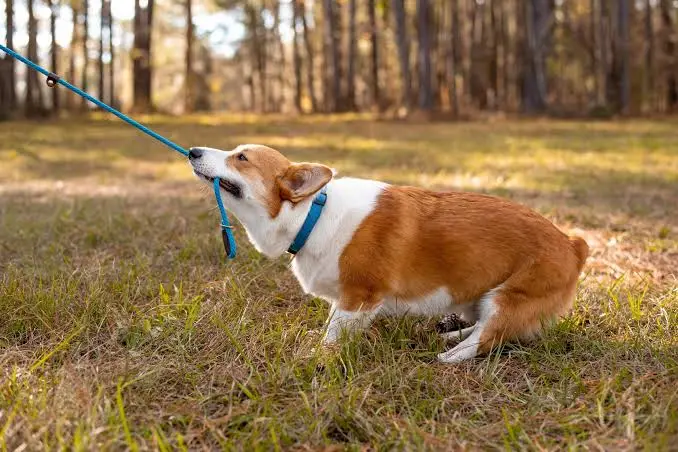
How to Stop Your Dog From Chewing the Leash
Method 1: The “Leave It” Command
Teaching a solid “Leave It“ command is one of the most powerful tools in your training toolbox.
Steps:
- Hold a treat in your closed fist and let your dog sniff and paw at it.
- Wait. The moment your dog pulls away and stops trying, say “Yes!” and reward them.
- Practice until your dog backs away immediately when you say “Leave It.”
- Now apply it to the leash the moment your dog goes for the leash, say “Leave It” firmly.
Consistency is key. Practice this 5-10 minutes daily.
Method 2: Redirect to an Appropriate Chew
Always redirect, don’t just correct. When your dog goes for the leash, immediately offer an acceptable alternative like:
- A rubber chew toy
- A frozen KONG treat
- A bully stick
This teaches your dog what they can chew, not just what they can’t
Method 3: Bitter Apple Spray
Bitter apple spray is a safe, non-toxic deterrent that makes the leash taste unpleasant.
How to use it:
- Spray the leash before every walk.
- Let it dry for 30 seconds.
- Reapply as needed it wears off with time and rain.
Most dogs hate the taste and quickly lose interest in chewing. Available at most pet stores, it’s a simple and affordable fix.
Method 4: Keep Your Dog Engaged During Walks
A distracted dog doesn’t chew the leash. Try these tips to keep focus:
- Use a treat pouch and reward calm walking behavior every few minutes.
- Practice “watch me” train your dog to make eye contact with you on command.
- Change your pace frequently to keep your dog mentally engaged.
- Try sniff breaks letting your dog sniff (on your terms) helps drain mental energy.
Method 5: Exercise Before the Walk
If your dog is chewing from excitement or pent-up energy, tire them out first:
- 10–15 minutes of fetch in the yard
- A short tug-of-war session
- Mental puzzle toys before clipping the leash
A calmer dog = a calmer walk.
Method 6: Switch to a Different Leash Type
Some leashes are more chewable than others. If your dog is obsessed with your current leash, consider switching to:
- Chain leash – unpleasant to chew, durable, though heavier
- Nylon leash with a protective sleeve – harder to get teeth into
- Shorter leash – gives your dog less slack to maneuver the leash into their mouth
Method 7: Address Anxiety at the Root
If your dog’s leash chewing is anxiety-driven, walking won’t fix it alone. Signs of anxiety include:
- Panting before walks begin
- Spinning in circles when the leash comes out
- Whining or jumping uncontrollably
Solutions for anxious dogs:
- Practice calm leash-clipping drills at home (clip, unclip, reward calm behavior – no walk yet)
- Use a calming wrap or anxiety vest
- Consult your vet if anxiety is severe there are safe, natural calming supplements available
What NOT to Do
Avoid these common mistakes that make leash chewing worse:
- Don’t yell or jerk the leash – this adds stress and can increase anxiety-driven chewing
- Don’t give up and go back inside – this rewards the behavior (the dog learns chewing = walk ends = they get what they want)
- Don’t laugh it off – what seems cute in a puppy becomes a dangerous habit in an adult dog
When to See a Professional
If you’ve tried the above methods consistently for 4 – 6 weeks with no improvement, it may be time to consult a certified dog trainer or veterinary behaviorist. Persistent chewing can sometimes be linked to OCD-like compulsive behaviors that need professional intervention.
Conclusion
Stopping your dog from chewing the leash takes patience, consistency, and understanding why they’re doing it in the first place. Whether it’s a simple redirection fix or a deeper anxiety issue, every dog can learn it just takes the right approach.
Start with the Leave It command and bitter apple spray as your first two tools. Combine those with regular exercise and engagement, and most dogs show significant improvement within 2–3 weeks.