
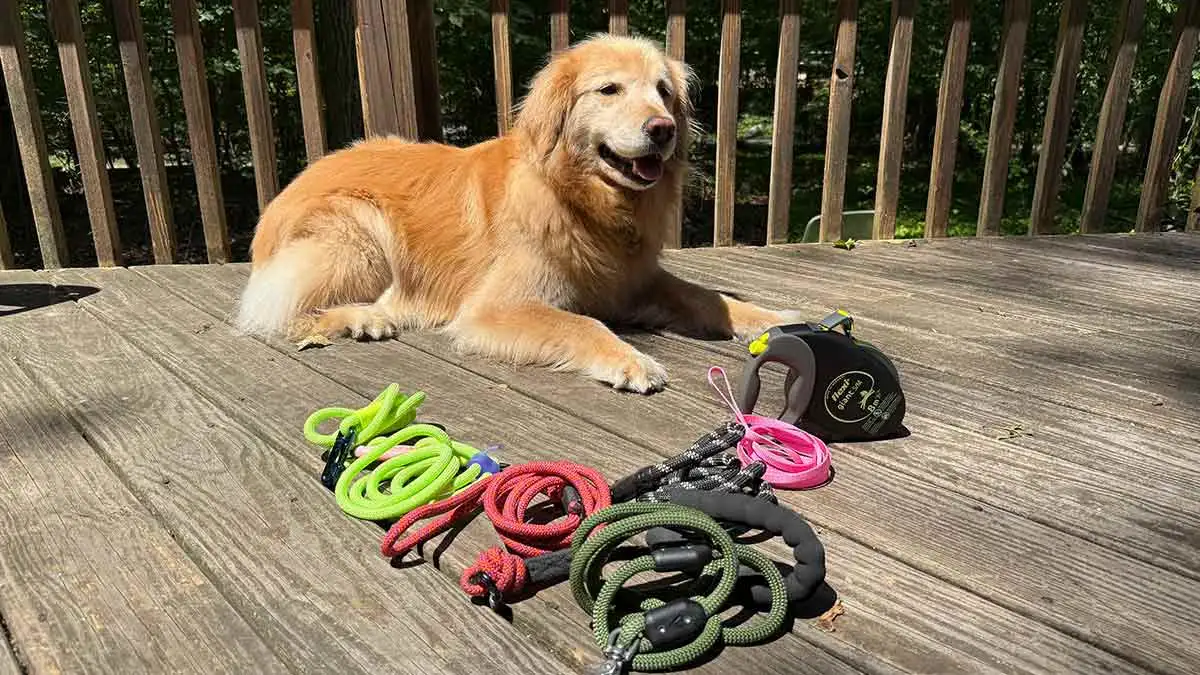
A leash that works fine on a thirty pound dog can fail completely on an eighty pound dog putting real force behind a lunge. Strong and large breeds need gear built for actual physics, not just a bigger version of a standard leash, since the stitching, hardware, and material all take a very different kind of stress during daily walks.
Table of Contents
Below are 10 of the best leash types for strong or large breeds, covering different materials and designs so you can match the right option to your dog’s size, strength, and walking habits.
Key Takeaways
- The best leashes for strong dogs prioritize hardware quality and reinforced stitching over anything else.
- Bungee style leashes absorb sudden lunges, which reduces strain on both your dog’s neck and your shoulder.
- A four to six foot length gives the best balance of control and freedom for most large or strong dogs.
- Material choice should match your lifestyle, leather for long term durability, biothane for wet conditions, nylon for everyday affordability.
- A strong leash pairs best with a properly fitted harness, since even the toughest leash cannot fix poor pressure distribution on its own.
What Actually Matters for a Strong Dog Leash
A lot of leash shopping comes down to color and price, but for strong or large breeds, the details that actually matter are hardware quality and stitching. Cheap zinc alloy clips can bend or snap under real pulling force, while solid brass or stainless steel hardware holds up to repeated stress without weakening over time.
Stitching matters just as much as the clip itself. Look for box stitching or bar tack stitching at the handle loop and where the hardware attaches, since these are the two points that take the most strain when a dog pulls hard or lunges suddenly. A leash can look sturdy overall and still fail at a weak seam, so it is worth checking these specific spots closely before buying.
Swivel clips are another detail worth looking for, since they reduce tangling and distribute rotational stress more evenly than a fixed attachment point, which matters a lot for a dog that spins or changes direction frequently during walks.
1. Padded Nylon Leash
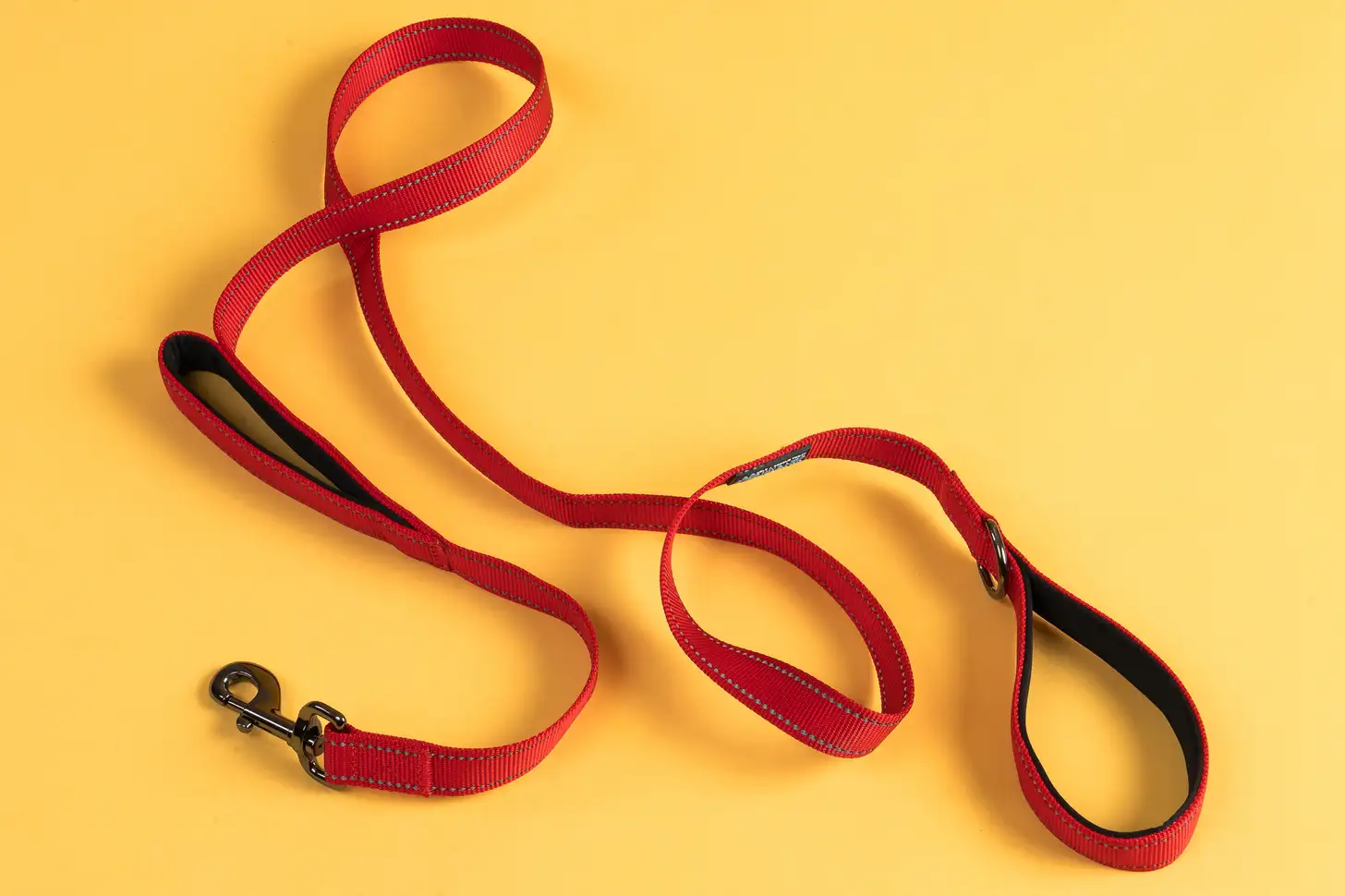
A padded nylon leash is the most common everyday option, and for good reason. Quality nylon webbing, especially at a width of one inch or more, holds up well to regular pulling, and a padded handle reduces the hand fatigue that comes from walking a strong dog for extended periods.
Look for double or triple layered nylon rather than a single thin layer, since the extra thickness adds real strength without making the leash significantly heavier. This style is also the most affordable option on this list, which makes it a practical default for most large breed owners who do not need a specialty leash for specific conditions.
2. Leather Leash
A quality leather leash is one of the most durable options available, often outlasting nylon by years with proper care. Leather also softens and becomes more comfortable in hand over time, developing a worn in feel similar to a good leather belt or wallet.
The tradeoff is maintenance and price. Leather needs occasional conditioning to prevent cracking, and it is generally more expensive upfront than nylon. For owners who want a leash that will genuinely last through years of daily walks with a strong dog, the investment tends to pay off in longevity.
3. Bungee Shock Absorbing Leash
Bungee leashes include an elastic section built into the design, which absorbs the sudden jolt when a strong dog lunges toward something exciting. This reduces strain on both your shoulder and your dog’s neck compared to a completely rigid leash.
This style is especially useful for dogs still working on loose leash walking, since the give in the material softens sudden movements while training progresses. It is worth pairing this leash type with actual training rather than relying on it alone, since it manages the physical impact of pulling but does not teach a dog not to pull in the first place.
4. Rope Slip Lead
A rope slip lead combines a collar and leash into one piece, which makes it fast to put on and take off, a favorite among trainers for exactly that reason. The braided rope construction tends to be genuinely strong, often rated for a serious amount of pulling force.
Because it tightens around the neck when a dog pulls, this style works best for dogs with some leash manners already in place, or under close supervision during training. It is not the ideal choice for a dog that pulls constantly and hard, since repeated tightening around the neck is not comfortable for daily use.
5. Chain Leash
A chain leash solves a very specific problem, dogs that chew through fabric or rope leashes during walks. The metal construction is essentially indestructible from a chewing standpoint, which makes it a practical choice for a small number of strong dogs with this particular habit.
The tradeoff is comfort. Chain leashes are heavier and less pleasant to hold for long walks compared to nylon or leather, so this style tends to work best as a targeted solution rather than an everyday choice, often paired with a padded handle attachment to improve grip.
6. Biothane Waterproof Leash
Biothane is a coated synthetic material that combines the strength of nylon webbing with a waterproof, easy to wipe clean surface. For owners in wetter climates or dogs that love mud and water, this material solves a problem nylon and leather both struggle with, since both can hold onto moisture and odor over time.
Biothane leashes are also resistant to cracking and fading from sun exposure, which makes them a strong choice for dogs that spend a lot of time outdoors in varied weather. They tend to sit at a similar price point to quality leather, reflecting the added durability and low maintenance.
7. Traffic Handle Leash
A traffic handle leash includes a second grip point closer to the collar, in addition to the standard handle at the end. This gives you quick, close range control in situations that call for it, like crossing a busy street or passing another dog on a narrow sidewalk.
This style is particularly useful for strong breeds in urban environments, where sudden control matters more than long range freedom. Many owners find it becomes their go to leash for city walks specifically, while switching to a standard leash for quieter, more open areas.
8. Hands Free Waist Leash
A hands free leash attaches around your waist rather than requiring a hand grip, which is especially popular for running or hiking with a strong dog. Many versions include a bungee section as well, combining shock absorption with the hands free design.
This style requires a certain level of trust in your dog’s behavior, since a strong sudden pull transfers directly to your body rather than being absorbed through your arm and shoulder first. It works best for dogs with solid leash manners already established, used during active exercise rather than a casual neighborhood stroll.
9. Heavy Duty Retractable Leash
Standard retractable leashes are often discouraged for strong dogs, since thin cord retractables can snap or cause injury under serious pulling force. Heavy duty versions built specifically for larger breeds use a reinforced tape style cord and a stronger locking mechanism designed to handle more weight.
This style works best in open spaces where a dog can safely explore at a distance, like a quiet park or trail, rather than crowded sidewalks where quick control matters more than extended range. Even with a heavy duty design, it is worth locking the leash to a shorter length in any situation with foot traffic or other dogs nearby.
10. Combo Slip Leash
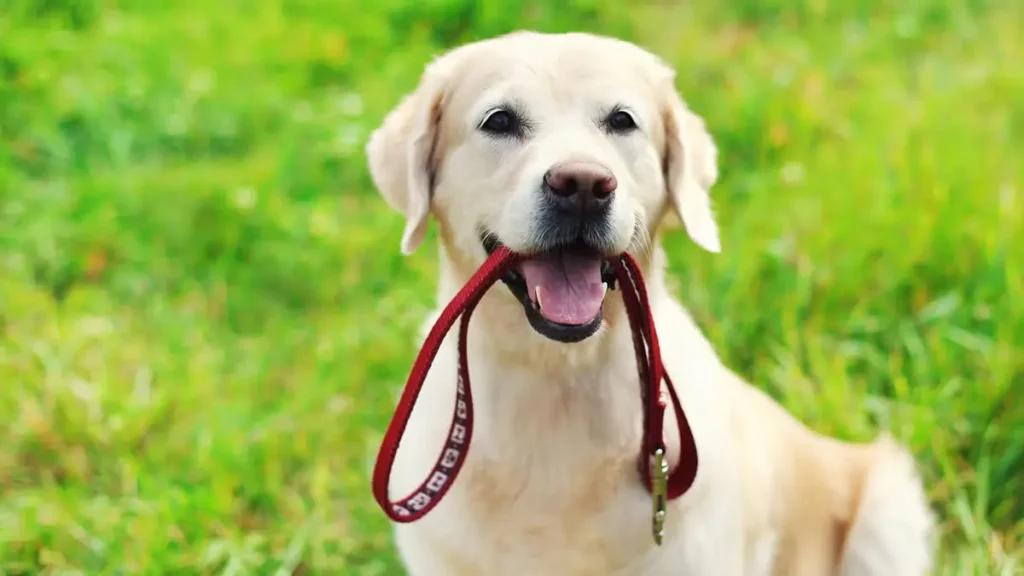
A combo slip leash functions similarly to a rope slip lead but is often made from nylon webbing instead of rope, offering a bit more comfort in hand while still combining collar and leash into a single piece. This makes it a convenient travel option, since there is one less item to pack or lose track of.
This style is a practical backup leash to keep in the car or a bag for unexpected situations, like a vet visit or a quick walk somewhere unfamiliar, even if it is not your primary leash for daily use with a strong puller.
Comparison Table: Leash Types at a Glance
| Leash Type | Material | Best For | Key Feature |
| Padded Nylon Leash | Nylon webbing | Everyday walks | Comfortable grip, affordable |
| Leather Leash | Genuine leather | Long term durability | Softens with age, strong hold |
| Bungee Shock Leash | Nylon with elastic core | Dogs that lunge or pull | Absorbs sudden force |
| Rope Slip Lead | Braided rope | Quick control, training | No separate collar needed |
| Chain Leash | Metal links | Heavy chewers | Chew resistant |
| Biothane Leash | Coated synthetic material | Wet or muddy conditions | Waterproof, easy to clean |
| Traffic Handle Leash | Nylon or leather | Crowded areas, close control | Second grip point near collar |
| Hands Free Waist Leash | Nylon with waist belt | Running, hiking | Frees up both hands |
| Heavy Duty Retractable | Reinforced cord or tape | Open spaces, sniff time | Adjustable length control |
| Combo Slip Leash | Nylon or rope | Multi use, travel | Doubles as collar and leash |
A Leash Is Only Half the Equation
Even the strongest, best built leash cannot fully solve a serious pulling problem on its own. Pairing a quality leash with a properly fitted front clip harness distributes pressure more evenly across your dog’s chest rather than concentrating it on the neck, which makes a real difference for both comfort and control.
Training also plays a bigger role than gear alone. If pulling is a consistent problem regardless of which leash you use, our guide on how to stop a dog from pulling on the leash breaks down a practical training method that works alongside the right equipment rather than relying on the leash to do all the work.
If you are still deciding on the full walking setup, our guide on premium dog accessories for style and comfort covers harness and collar options that pair well with any of the leash styles above.
Checklist for Choosing a Leash for a Strong Dog
- Check for solid brass or stainless steel hardware, not lightweight zinc alloy clips
- Look for reinforced stitching at the handle loop and clip attachment point
- Choose a width of at least one inch for dogs over 50 pounds
- Pick a length between four and six feet for the best balance of control and freedom
- Consider a swivel clip to reduce tangling and rotational stress
- Match the material to your climate and lifestyle, waterproof for wet areas, leather for long term daily use
Frequently Asked Questions
What is the strongest material for a dog leash?
Leather and biothane are generally considered the most durable materials for long term use, while thick, multi layered nylon offers a strong and more affordable alternative.
Are retractable leashes safe for large dogs?
Standard retractable leashes are often not recommended for strong dogs, since thin cords can snap under force. Heavy duty versions built specifically for larger breeds are a safer alternative if you want the retractable feature.
What leash length is best for a strong dog?
A four to six foot leash offers the best balance of control and freedom for most strong or large breeds, especially in areas with foot traffic or other dogs nearby.
Do bungee leashes actually help with pulling?
Bungee leashes absorb the sudden force of a lunge, which reduces strain on both the dog and owner, though they work best alongside actual leash training rather than as a standalone fix.
Is a chain leash a good everyday option?
Chain leashes are mainly useful for dogs that chew through other materials. For most strong dogs without a chewing habit, nylon or leather is more comfortable for everyday use.
Can a leash alone stop a dog from pulling?
No. A well built leash can make pulling more manageable, but consistent training is what actually teaches a dog not to pull in the first place.
How often should I replace a dog leash?
Check regularly for fraying, cracked material, or weakened stitching, and replace the leash immediately if you notice any of these signs, since a failure during a walk can be dangerous.
Final Thoughts
Finding the best leash for a strong or large breed comes down to matching material, hardware, and design to how your dog actually walks. A calm, well trained large dog might do perfectly well with a simple padded nylon leash, while a determined puller may benefit more from a bungee style leash paired with a front clip harness.
Whichever style you choose, prioritize the hardware and stitching quality over anything else, since that is where a leash actually proves whether it can handle real strength. The right combination of gear and training makes daily walks safer and far less of a workout for everyone involved.