
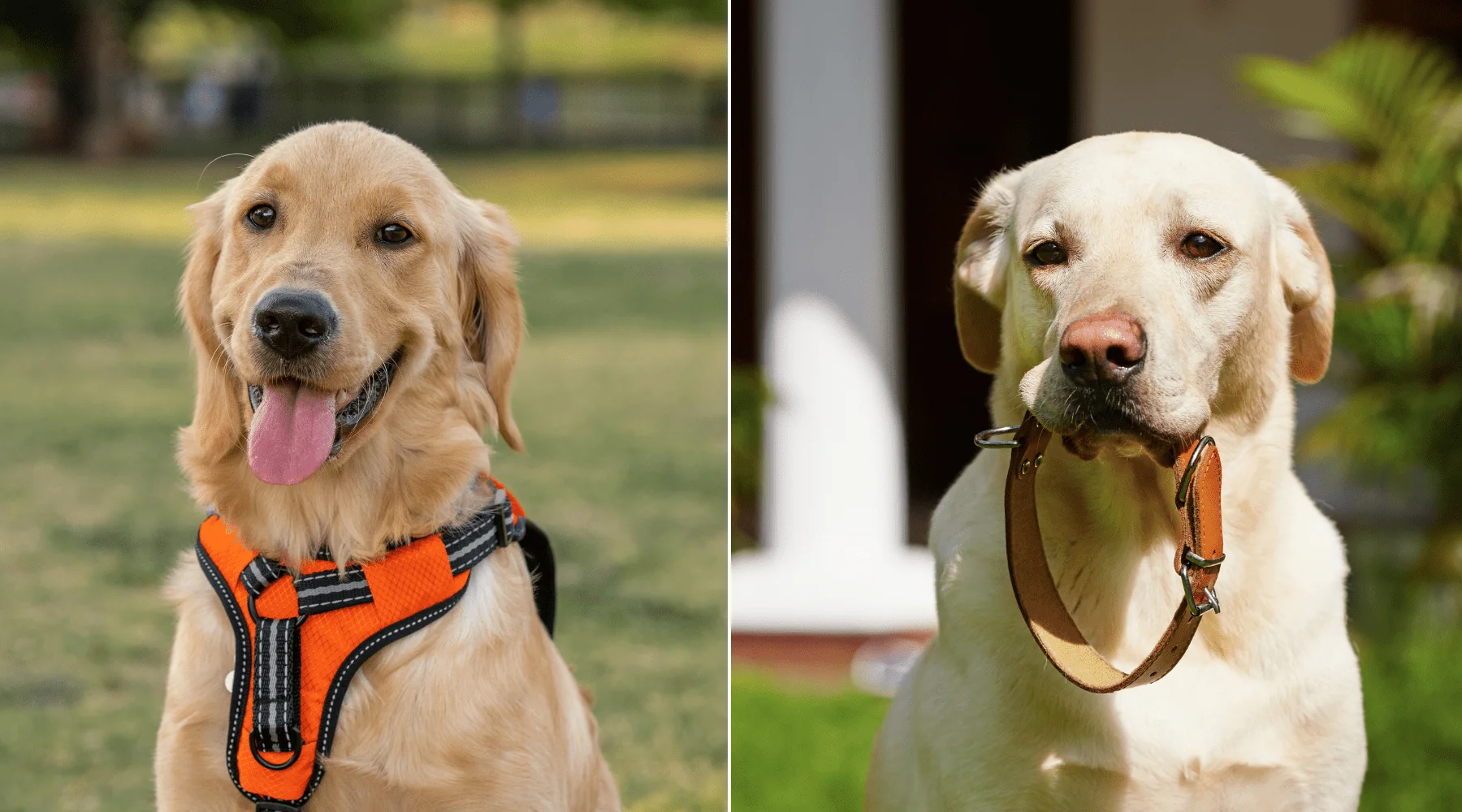
If you have stood in a pet store aisle staring at rows of collars and harnesses, unsure which one your dog actually needs, you are not alone. This is one of the most common questions new and experienced dog owners ask, and the honest answer is that there is no single right choice for every dog. The right pick depends on your dog’s size, breed, behavior on leash, and even their coat type. This guide breaks down exactly how to decide.
Table of Contents
Key Takeaways
- A collar concentrates pulling force on the neck, while a harness spreads it across the chest, shoulders, and back.
- Collars work best for calm, well trained, adult dogs who mainly need ID tags and short, low distraction walks.
- Harnesses work best for dogs that pull, puppies still learning leash manners, reactive dogs, and neck sensitive breeds.
- Small, toy, flat faced, and sighthound breeds benefit most from a harness due to airway or slip risk concerns.
- Large, strong dogs that pull hard get more control from a front clip harness.
- Many trainers recommend using both together, a collar for everyday ID and a harness for walks and training.
- A simple five question checklist helps you decide quickly based on pulling behavior, age, breed, and daily needs.
- Fit and build quality matter no matter which option you choose.
The Core Difference Between a Collar and a Harness
A collar sits around your dog’s neck and concentrates any pulling force directly on the throat area. A harness wraps around the chest, shoulders, and back, spreading that same force across a much larger surface area of the body instead of the neck alone.
That single difference explains almost every other point in this guide. Anywhere a collar concentrates pressure, a harness distributes it, and anywhere a harness adds bulk and complexity, a collar stays simple and lightweight.
Collar: Pros and Cons
Where a collar works well:
- Everyday identification, since it holds ID tags, rabies tags, and GPS trackers your dog can wear all day
- Lightweight and comfortable for dogs who already walk calmly on leash
- Simple to put on and take off, with no straps to untangle
- A good fit for well trained, older, or low energy dogs
Where a collar falls short:
- Puts direct pressure on the trachea and neck if your dog pulls
- Not ideal for dogs prone to tracheal collapse, especially small breeds
- Easier for narrow headed dogs to slip out of during a struggle
- Offers less control over strong or reactive dogs in busy areas
Harness: Pros and Cons
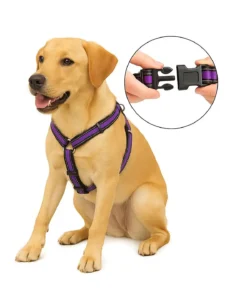
Where a harness works well:
- Spreads pulling force across the chest and shoulders instead of the neck
- Gives you noticeably more control over dogs that pull, lunge, or react to distractions
- A safer option for puppies still learning leash manners
- Reduces strain for toy breeds and dogs with existing neck or breathing sensitivity
- Front clip designs actively help discourage pulling during training
Where a harness falls short:
- Costs more than most collars due to extra material and hardware
- Can feel restrictive or unfamiliar to some dogs at first
- Not meant to be worn all day the way a collar can be
- Slightly more fiddly to put on, especially with wriggly or nervous dogs
When a Collar Is the Better Choice
A collar is usually the right call if your dog already walks politely beside you without pulling, is an adult with a fully developed neck and trachea, and mainly needs it for holding ID tags around the house or yard. Short, calm walks in low distraction areas are exactly where a simple, well fitted collar does its job well.
When a Harness Is the Better Choice
A harness becomes the smarter option if your dog pulls on the leash, is still in training, gets easily distracted or reactive around people and other dogs, or belongs to a breed known for neck sensitivity. Puppies fall into this category almost by default, since they have not yet learned proper leash manners and their bodies are still developing.
Breed Considerations Worth Knowing
Certain dogs benefit from a harness more than others, regardless of training level.
- Small and toy breeds like Chihuahuas, Yorkies, and Pomeranians are more prone to tracheal collapse, making a harness the safer everyday choice
- Flat faced breeds like Pugs, Bulldogs, and Boxers already have narrower airways, so avoiding extra neck pressure matters even more
- Sighthounds like Greyhounds and Whippets have narrow heads and can slip out of a standard collar, so a well fitted harness or a martingale collar works better
- Large, strong breeds that pull hard benefit from the added control a harness provides, especially front clip styles
The Option Most Guides Skip: Using Both Together
Here is something worth knowing that a lot of comparisons leave out. This is not actually an either or decision. Many trainers and veterinarians recommend using a collar and a harness together, each doing a different job. The collar stays on at all times holding ID tags, while the harness gets clipped to the leash for walks and training sessions. This gives you the identification benefit of a collar with the safety and control benefit of a harness, without asking either one to do a job it is not built for.
A Simple Decision Checklist
Ask yourself these questions before choosing:
- Does my dog pull consistently on the leash. If yes, lean toward a harness.
- Is my dog a puppy still learning leash manners. If yes, a harness is generally safer.
- Does my dog belong to a breed prone to neck or airway sensitivity. If yes, choose a harness.
- Does my dog already walk calmly and just need something for ID tags. A collar is likely enough.
- Do I want both control during walks and all day identification. Use a collar and harness together.
Choosing a Collar That Does Its Job Well
If your dog is a good fit for a collar, either as their primary walking gear or as the everyday piece they wear alongside a harness, the fit and build quality still matter. A soft, adjustable design avoids the chafing and pressure points that give collars a bad reputation in the first place. If you are unsure whether your dog’s current collar actually fits correctly, our guide on how tight a dog collar should be walks through the two finger rule and other signs to check for.
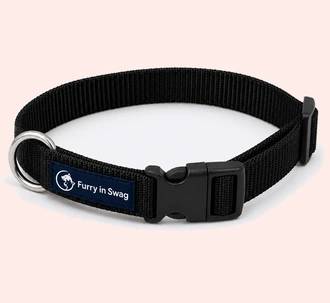
This is exactly the thinking behind the FIS Classic Collar for Dogs in Black. It is made from soft, durable nylon webbing that stays comfortable against the neck for all day wear, with a fully adjustable strap so you can get a proper two finger fit as your dog grows or changes. The quick release buckle makes it easy to take on and off, and the sturdy metal D ring holds an ID tag securely or clips onto a leash for shorter, calmer walks. It works well on its own for dogs who do not pull, or as the everyday ID collar paired with a harness for walks and training.
Frequently Asked Questio
Is a harness always safer than a collar?
Not always. A harness reduces neck pressure, which matters most for dogs that pull or have respiratory sensitivity. A well trained dog that walks calmly can be perfectly safe on a properly fitted collar.
Can I use a collar and harness at the same time?
Yes, and many trainers recommend it. The collar holds ID tags while the harness handles the leash and walking control.
Which is better for puppies, a collar or a harness?
A harness is generally the safer starting point for puppies, since their necks are still developing and they have not yet learned not to pull.
Do harnesses stop dogs from pulling completely?
Not on their own. Front clip, no pull harnesses can reduce and discourage pulling, but consistent leash training is still the most effective long term solution.
Conclusion
There is no universal winner between a collar and a harness, only the right tool for your specific dog. Consider their size, breed, training level, and how they behave on a leash, and let those factors guide the decision. For many dogs, the real answer is not choosing one over the other, but using a comfortable collar for everyday identification and a well fitted harness for walks and training.