
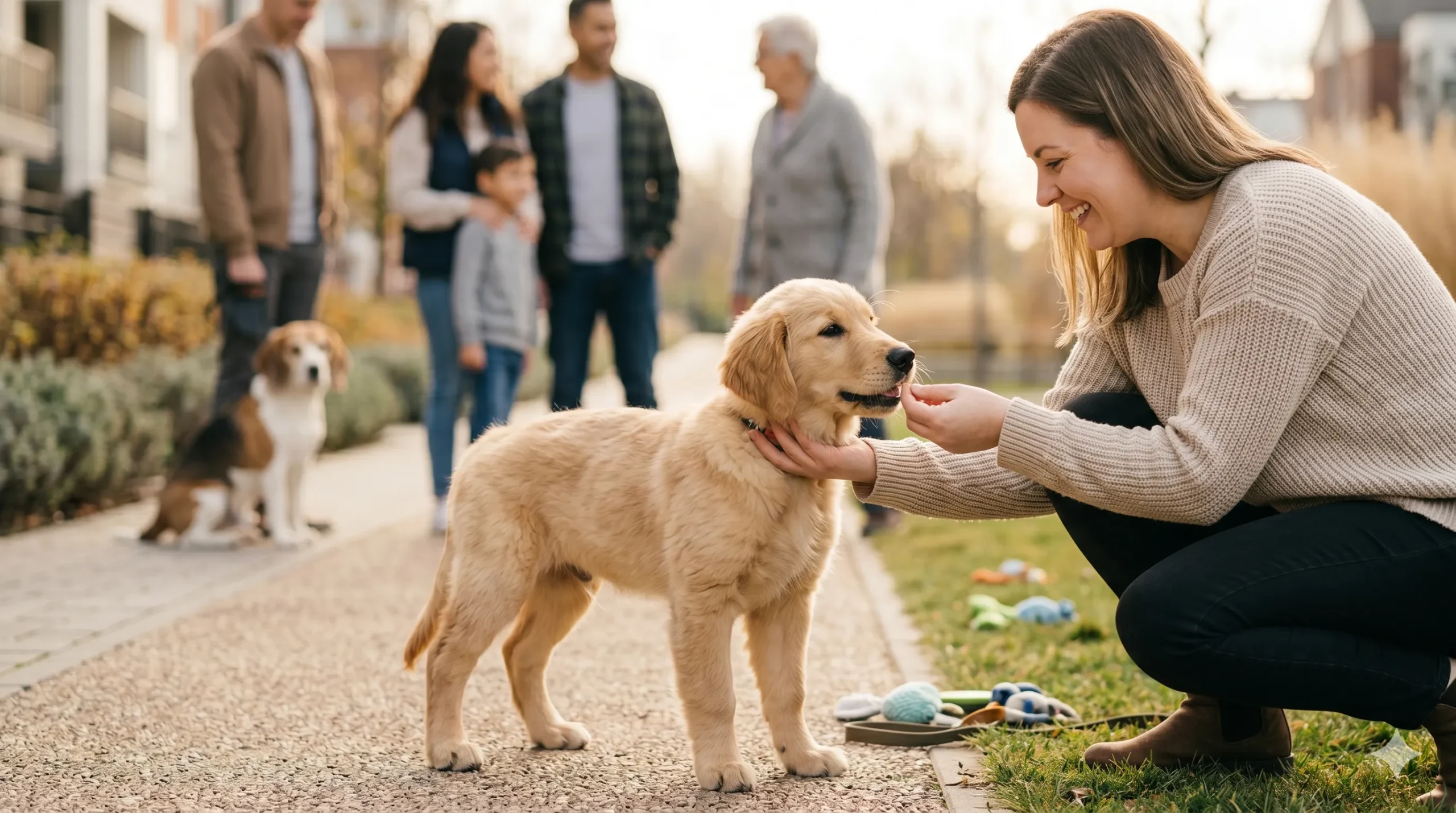
Socializing a puppy with other dogs is one of the most important things you can do in their first few months, but it is also one of the most misunderstood. Many owners think it simply means letting their puppy play with as many dogs as possible, as often as possible. In reality, a few calm, well managed interactions do far more good than frequent chaotic ones, and doing it the wrong way can actually create the fear or reactivity you were trying to prevent. This guide walks through how to do it properly, safely, and at the right pace for your puppy.
Table of Contents
Key Takeaways
- The primary socialization window is roughly three to sixteen weeks old, when a puppy’s brain is most open to new experiences
- Quality matters far more than quantity, a few calm, positive interactions are more valuable than frequent overwhelming ones
- Vaccination status affects when and how your puppy can safely interact with unfamiliar dogs
- Dog parks and large group play are not required for good socialization and can sometimes do more harm than good for young puppies
- Watching for stress signals during interactions lets you step in before a bad experience happens
- One negative encounter with an aggressive dog can create lasting fear, so supervision and control matter more than volume of exposure
Understanding the Socialization Window
Puppies go through a critical developmental period, generally between three and sixteen weeks of age, when their brains are especially open to new experiences, people, and other animals. Positive exposure during this window plays a major role in shaping how confident and comfortable your dog becomes around other dogs later in life. This does not mean socialization stops after sixteen weeks, but it does mean this early period deserves extra attention and care.
Balancing Vaccination Safety With Socialization Timing
Before your puppy is fully vaccinated, it is important to be selective about which dogs they interact with. Until your puppy has completed their core vaccination series, avoid contact with dogs of unknown vaccination status, and stick to puppy classes or playgroups that require proof of vaccination for every participant. Well socialized adult dogs belonging to friends or family, whose vaccination and health status you know, are generally a safer option during this early window than unfamiliar dogs at a park.
Why More Is Not Always Better
It is tempting to think that the more dogs your puppy meets, the more socialized they will become, but this is not accurate. What actually matters is the quality of each interaction. A puppy that has a handful of calm, positive experiences with well matched dogs will typically end up more confident than one who has dozens of overwhelming or poorly supervised encounters. Large, chaotic group settings like dog parks can actually backfire for young puppies, since a single bad experience with an overly rough or aggressive dog can create lasting fear that is far harder to undo than it was to prevent.
Step by Step: How to Introduce Your Puppy to Other Dogs
- Start with one calm, known dog. Choose an adult dog with a reliable, gentle temperament, ideally one you already know well, for your puppy’s first few interactions.
- Keep initial sessions short. Five to ten minutes is often enough for a first meeting. Ending on a positive note matters more than the length of the session.
- Let both dogs approach at their own pace. Avoid forcing your puppy toward another dog if they seem hesitant, and never force the interaction from either side.
- Supervise closely and stay nearby. Be ready to calmly interrupt if play becomes too rough or if either dog shows signs of discomfort.
- Allow the adult dog to give appropriate feedback. A brief, appropriate correction from a well socialized adult dog, such as a growl or a body block, actually teaches your puppy valuable social boundaries.
- Gradually increase variety. Once your puppy is comfortable with one on one meetings, introduce them to a small, controlled group, or a properly run puppy class that screens for vaccination and temperament.
- End on a good note every time. Wrap up sessions while your puppy is still calm and engaged, rather than letting things run until they become tired or overstimulated.
Signs Your Puppy Is Uncomfortable During an Interaction
Watching your puppy’s body language during introductions lets you step in before a small stressor becomes a real problem. Signs to watch for include lip licking, yawning outside of tiredness, a tucked tail, trying to hide behind you, stiff or frozen posture, or attempting to move away repeatedly. Our guide on signs your dog is stressed or anxious covers these body language cues in more depth, and the same signals apply directly to puppy introductions. If you notice any of these, calmly remove your puppy from the situation rather than pushing through it.
Common Mistakes to Avoid
- Forcing interactions when your puppy is clearly hesitant or trying to avoid another dog
- Assuming a dog park is necessary for good socialization, when controlled, one on one meetings are often more effective for young puppies
- Letting play get too rough without stepping in, which can teach your puppy that overly physical play is normal with every dog they meet
- Skipping vaccination checks before group settings, which puts your puppy’s health at risk during a vulnerable stage
- Ending sessions on a bad note, such as after a scuffle or once your puppy is visibly overwhelmed
Gear That Supports Calm, Confident Introductions
Comfortable, well fitted gear plays a bigger role in socialization walks and meetups than most owners expect. A collar that pinches or slips can add an extra layer of stress to a puppy who is already navigating a new and slightly overwhelming situation. If you are training loose leash walking alongside socialization, our guide on how to train a dog to walk nicely on a collar pairs well with this one, since calm leash manners make introductions far easier to manage. The FIS Classic Collar for Dogs in Black is a good fit for this stage, with a soft, adjustable nylon design that grows with your puppy and a quick release buckle that makes frequent fit checks simple as they develop.
Frequently Asked Questions
At what age should I start socializing my puppy with other dogs?
The primary socialization window runs roughly from three to sixteen weeks old, though controlled, safe interactions with known, vaccinated dogs can often begin earlier under a vet’s guidance.
Is the dog park a good place to socialize a puppy?
Not usually, especially for young puppies. Large, unpredictable groups of unfamiliar dogs carry more risk than benefit during this early stage. One on one meetings with calm, known dogs are generally a better choice.
What if my puppy seems scared of other dogs?
Do not force the interaction. Give your puppy space, remove them from the situation calmly, and try again later with a gentler pace, ideally with a very calm, gentle dog in a low pressure setting.
Can I still socialize my puppy after sixteen weeks?
Yes. While the early window is especially important for brain development, socialization is an ongoing process throughout a dog’s life, and continued positive exposure still helps well beyond puppyhood.
Conclusion
Good socialization is less about volume and more about quality, safety, and pacing. A handful of calm, well supervised interactions with the right dogs will do far more for your puppy’s confidence than frequent, chaotic exposure ever could. Watch your puppy’s body language, keep vaccination safety in mind, and let each experience end on a positive note, and you will set them up for a lifetime of comfortable, confident interactions with other dogs.